




01. Edit your form online
Type text, add images, blackout confidential details, add comments, highlights and more.

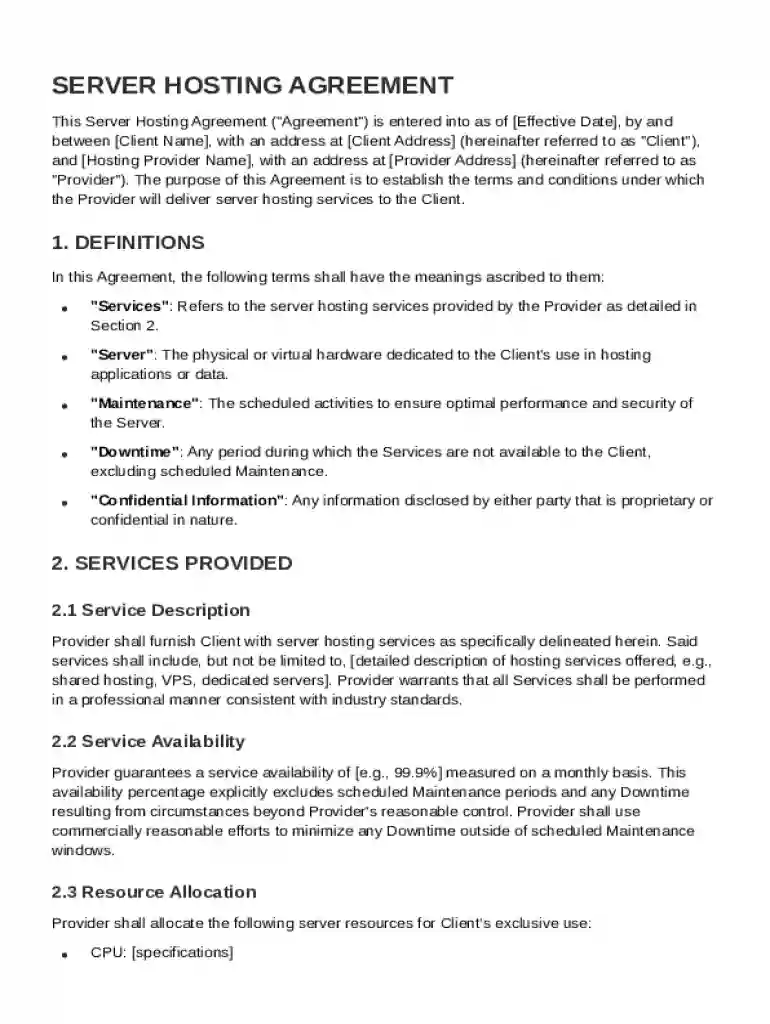
Type text, add images, blackout confidential details, add comments, highlights and more.

Draw your signature, type it, upload its image, or use your mobile device as a signature pad.

Send it via email, link, or fax. You can also download it, export it or print it out.
The Server Hosting Agreement Template is a formal contract that establishes the terms and conditions between a Client and a Hosting Provider for server hosting services. This document outlines the specifics of the services provided, payment arrangements, and the responsibilities each party holds. It includes critical provisions related to service availability, security protocols, and data confidentiality to protect both parties' interests. The agreement serves as a legal foundation to ensure mutual understanding of rights and obligations, reducing potential disputes and fostering a successful business relationship.
To utilize the Server Hosting Agreement Template effectively, one must first thoroughly review the document to comprehend its structure and contents. The template should be customized to reflect the unique circumstances of both the Client and the Hosting Provider, ensuring all pertinent details are accurately included. Importantly, individuals should personalize sections like pricing, duration of service, and specific technical requirements related to the server hosting. Participants may employ the editing tools available on platforms like DocHub to insert relevant information swiftly, making the document precise and legally sound.
The Server Hosting Agreement Template contains several key elements that are crucial for a comprehensive understanding and effective usage:
Understanding important terms related to the Server Hosting Agreement Template is essential for drafting and executing the contract effectively:
The legal use of the Server Hosting Agreement Template requires adherence to several important considerations. Primarily, the document should comply with applicable federal and state laws governing commercial contracts and data protection. Both parties should have the legal capacity to enter into a contract, and the agreement should reflect a mutual understanding without undue influence or coercion. It is advisable for both parties to consult with legal professionals to ensure compliance and protect their respective interests, particularly when it comes to nuances in intellectual property rights and data privacy laws.
Employing a Server Hosting Agreement Template is beneficial for multiple reasons. Firstly, it provides a structured framework to ensure all critical elements of the hosting service are appropriately detailed and agreed upon. For Clients, it safeguards rights and sets clear expectations regarding the services received. For Hosting Providers, it delineates limits of liability and clarifies payment obligations. Furthermore, utilizing a standardized template promotes efficiency by expediting the negotiation and drafting process, enabling quicker commencement of services and minimizing the risk of misunderstandings.
Examples of real-world scenarios illuminate how the Server Hosting Agreement Template can be utilized across different contexts. For instance, a startup looking to host its website may use the template to engage a hosting provider, ensuring server availability is aligned with their business growth projections. Another scenario involves a large e-commerce platform that requires robust security measures and high uptime to mitigate revenue loss during peak shopping periods. In both cases, the agreement ensures that the hosting services meet the specific operational needs and strategic objectives of the Client.
At DocHub, your data security is our priority. We follow HIPAA, SOC2, GDPR, and other standards, so you can work on your documents with confidence.

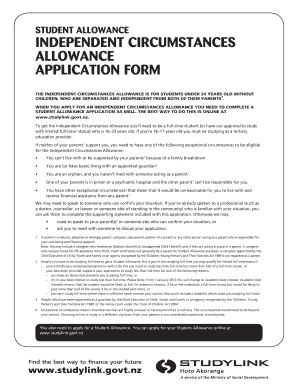
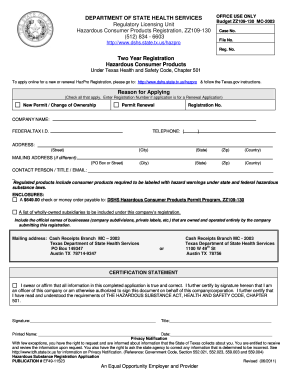
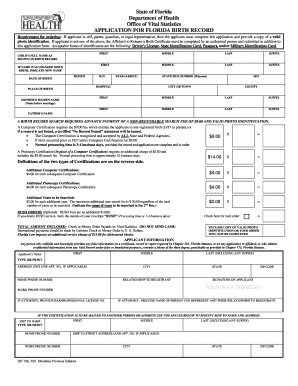


WEBSITE HOSTING AGREEMENT. This Website Hosting Agreement (the Agreement) is entered into as of ,. 20 (the Effective Date) by and between
Jun 23, 2021 This is a Service Level Agreement (SLA) between the campus community and the Information Technology Services Division (ITS) to document:
Please read this manual thoroughly before using this machine on your network. You can view this manual in HTML format from the.


