






Definition & Meaning
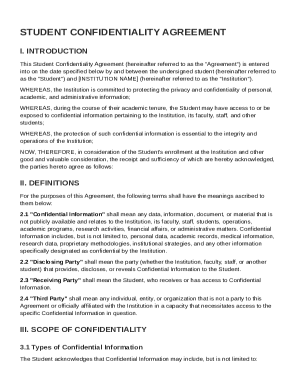
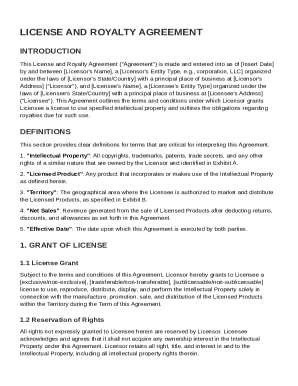
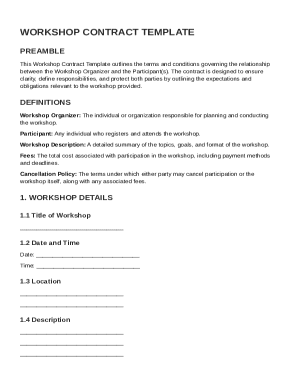
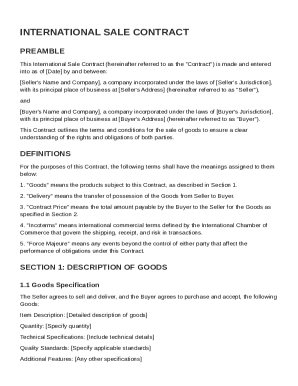
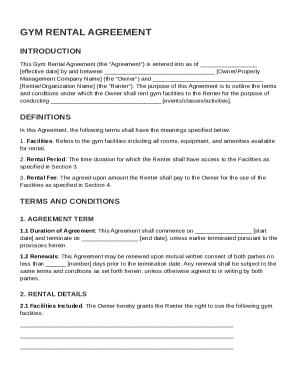
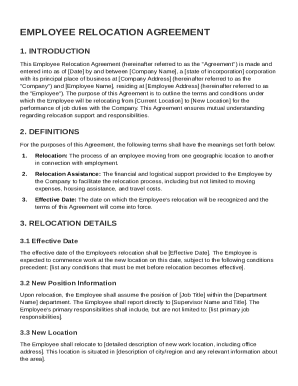
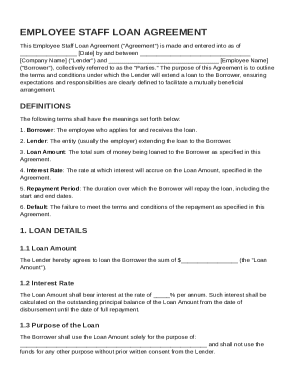
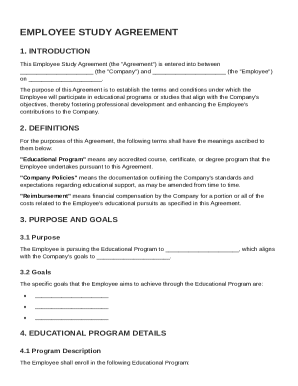
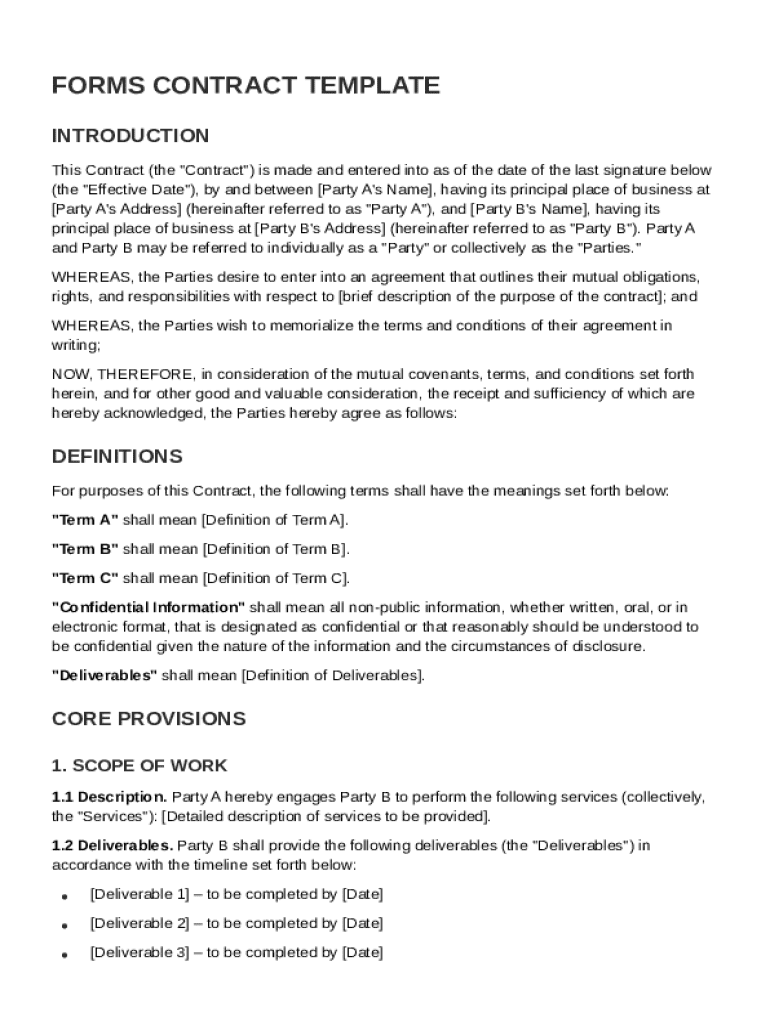
The "Forms Contract Template" is a pre-structured document designed to assist parties in outlining the terms and conditions of an agreement. It serves as a customizable framework that parties can adapt to specify details such as the scope of work, deliverables, payment terms, confidentiality clauses, liability limitations, and dispute resolution methods. By using a template, parties can ensure a comprehensive agreement that addresses all necessary legal elements, minimizing the risk of misunderstandings and disputes.
- Scope of Work: This section defines the obligations and responsibilities of each party involved in the contract.
- Deliverables: Outlines the specific results or products that must be provided.
- Payment Terms: Specifies the payment amounts, schedule, and method of payment.
- Confidentiality Obligations: Details the privacy measures both parties must adhere to regarding sensitive information.
Importance of the Forms Contract Template
The primary purpose of a forms contract template is to streamline the creation of agreements by providing a structured outline. This saves time and reduces errors compared to drafting a contract from scratch. Templates also help standardize contracts across an organization, ensuring that all relevant legal terms are consistently included.
- Standardization: Ensures uniformity in how contracts are drafted and executed.
- Time-Efficiency: Reduces the need for drafting new agreements from the beginning for each situation.
- Accuracy: Minimizes the likelihood of omitting crucial terms or provisions.
Key Elements of the Forms Contract Template
A forms contract template typically includes several critical elements essential to forming a legally binding agreement. Understanding these components can assist in customizing the template to fit specific needs.
- Parties Involved: Identifies all parties entering the agreement, including full names and contact details.
- Term and Termination: Defines the duration of the contract and conditions under which it can be terminated.
- Governing Law: Specifies which state's laws will be used to interpret the contract.
- Amendment Procedures: Outlines how changes to the contract will be agreed upon by the parties.
Scope of Work and Deliverables
- Task Description: Provides detailed information on the responsibilities and tasks each party will perform.
- Outcomes and Milestones: Identifies the key deliverables and related deadlines for the agreement.
Payment and Financial Terms
- Invoice and Payment Schedule: Outlines the process for billing and payments between the parties.
- Fee Structure and Rates: Details how fees are calculated, standard rates, and additional charges if applicable.
Steps to Complete the Forms Contract Template
Proper completion of a forms contract template involves several steps to ensure that all necessary sections are correctly filled out and agreed upon by all parties involved.
- Review Template Sections: Thoroughly examine all sections and sub-sections to understand their implications.
- Fill in Specific Information: Customize sections with relevant party details and contract-specific data.
- Discuss Terms with Other Parties: Ensure that all parties agree on terms and make adjustments as necessary.
- Finalize Contract Details: Complete all fields, ensuring the document is clear and concise.
- Secure Signatures: Collect signatures from all parties to validate the agreement.
Legal Use of the Forms Contract Template
Forms contract templates must comply with legal standards to ensure enforceability. Parties should be familiar with the terms and how they apply within a legal context.
- Compliance with ESIGN Act: Digital signatures used in online templates must comply with the Electronic Signatures in Global and National Commerce Act.
- Binding Agreement: Ensures that the template, once signed, forms a legally enforceable contract.
- Confidentiality and Protection: Legal provisions ensuring sensitive information is protected under applicable privacy laws.
Who Typically Uses the Forms Contract Template
Various individuals and organizations benefit from using forms contract templates due to the template's ability to be tailored for different scenarios and needs.
- Small Businesses and Startups: Require standardized agreements for consistent business operations.
- Freelancers and Consultants: Use templates to establish clear terms with clients regarding services and payment.
- Legal Professionals: Lawyers and legal consultants may utilize templates for clients to ensure legal compliance.


Software Compatibility
The forms contract template is designed to be compatible with various digital platforms and software, making it accessible and easy to amend.
- Document Formats: Available in formats like DOC, PDF, and Google Docs for flexibility.
- Cloud Storage Integration: Compatible with services like Google Drive, Dropbox, and OneDrive for seamless sharing and storage.
- Digital Signature Tools: Supports electronic signature platforms to facilitate the signing process.
Examples of Using the Forms Contract Template
Real-world scenarios where forms contract templates can be applied include, but are not limited to:
-
Service Agreements: Define the relationship between a service provider and client, detailing the services provided and payment terms.
-
Partnership Contracts: Establish guidelines for business partnerships, including profit-sharing ratios and roles.
-
Employment Contracts: Outline employer-employee relationships, including job responsibilities, compensation, and termination conditions.
-
Event Planning Services: Detailing deliverables such as venue booking and catering services.
-
Freelance Graphic Design Projects: Specifying the scope of design work, deadlines, and payment installments.
State-Specific Rules for the Forms Contract Template
While many contract terms are universally applicable, certain provisions may require adaptation to meet state-specific legal requirements within the United States.
- Governing Law Clauses: Ensure the correct state’s laws are cited for legal interpretation.
- State Variances in Statutes: Some states may have unique requirements for contract enforceability, such as consumer protection laws.
- Locale-specific Regulatory Requirements: Adjustments may be necessary to comply with regional business regulations.