




Definition & Meaning
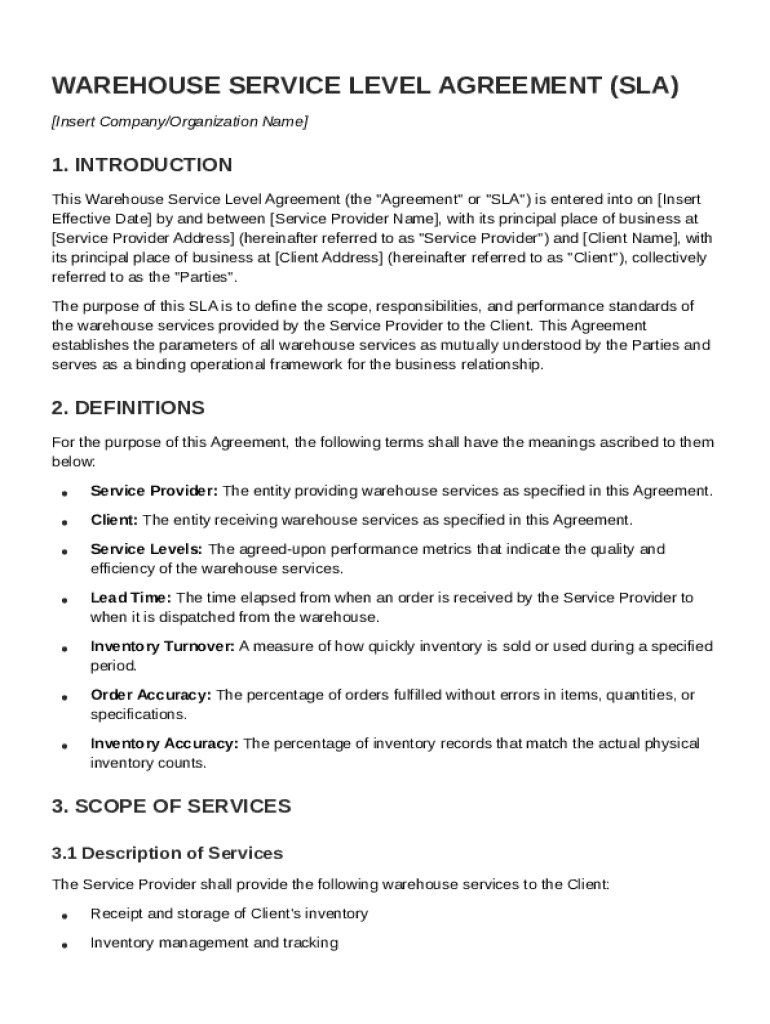
A Warehouse Service Level Agreement (SLA) Template acts as a foundational document that outlines the specific terms and conditions under which a warehouse service provider operates. This template ensures that both parties involved—the service provider and the client—have a mutual understanding of their responsibilities and the expected standards of service. It covers key aspects such as the scope of services, performance metrics, and reporting requirements. By clarifying these elements, the SLA aims to prevent misunderstandings and disputes, laying out a clear path for evaluating the warehouse's performance.
Key Elements of the Warehouse Service Level Agreement Template
The Warehouse SLA Template is composed of several essential components that delineate the framework for service delivery:
- Scope of Services: This section details the specific services the warehouse will provide, including order fulfillment, inventory management, and shipping.
- Responsibility Matrix: Defines the duties of both the service provider and the client to ensure accountability.
- Performance Metrics: Includes measurable indicators such as order accuracy rates, inventory accuracy, and turnaround time for deliveries.
- Issue Resolution: Outlines procedures for addressing and resolving disputes or service failures.
- Confidentiality Obligations: Ensures sensitive information shared between parties is protected and kept confidential.
These components are integral to creating a robust SLA that effectively dictates the terms of collaboration and performance expectations.
Steps to Complete the Warehouse Service Level Agreement Template
Completing the Warehouse SLA Template involves several steps to ensure that all relevant sections are accurately filled out and agreed upon:
- Initial Review: Both parties should review the template to confirm it aligns with their needs.
- Customization: Tailor clauses to fit specific operational requirements and business goals.
- Insert Metrics: Clearly define performance metrics relevant to the warehouse services provided.
- Assign Responsibilities: Clearly outline the responsibilities of each party involved in the agreement.
- Finalize Terms: Discuss and finalize any terms related to confidentiality, liability, and amendments.
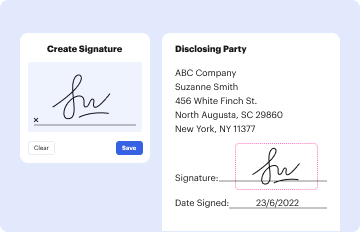
- Signature and Date: Both parties need to sign and date the agreement to make it legally binding.
Carefully following these steps ensures that the SLA is comprehensive and suited to the particular needs of the warehouse operation.
How to Use the Warehouse Service Level Agreement Template
The template serves as a guide for drafting a contractual agreement between a warehouse and its clients. To use it effectively, identify all relevant business processes and services that require formal documentation. The template can either be used to draft a new SLA or update an existing one. Flexibility within the template allows for the addition of bespoke clauses that address unique business requirements or industry standards specific to the warehouse services being provided.
Who Typically Uses the Warehouse Service Level Agreement Template
A wide range of businesses and individuals may make use of the Warehouse SLA Template:
- Logistics and Supply Chain Managers: To ensure service providers meet specified standards.
- Warehouse Operators: To create clear terms and conditions for service provision.
- Contract Managers: To oversee agreement compliance and amendment needs.
- Legal Professionals: In drafting and reviewing agreements for alignment with legal standards.
These users rely on the SLA template to facilitate a well-defined and efficient relationship with warehouse service providers.

Legal Use of the Warehouse Service Level Agreement Template
An SLA must comply with prevailing legal standards to remain enforceable. It incorporates clauses that address liability limitations, indemnifications, and confidentiality to protect the interests of both parties legally. Legal professionals often review these agreements to ensure they conform to regulatory requirements and jurisdiction-specific laws applicable to warehousing and logistics services.
Important Terms Related to Warehouse Service Level Agreement Template
To fully understand and utilize the Warehouse SLA Template, certain key terms are essential:
- Service Level Objectives (SLOs): These are detailed benchmarks that help assess service performance.
- Turnaround Time: The time taken to process and fulfill orders once they are received.
- Order Accuracy: Measures the precision with which orders are picked, packed, and dispatched.
- Inventory Accuracy: Refers to how correctly the warehouse maintains stock levels as recorded.
A thorough comprehension of these terms is crucial for effectively negotiating and applying the SLA within business operations.
Managing Amendments in a Warehouse Service Level Agreement
The dynamic nature of business relationships often necessitates amendments to existing SLAs. The template provides a standard procedure for making amendments, maintaining alignment with evolving business needs. Amendments should be documented, mutually agreed upon by all parties, and signed to remain valid. Thorough documentation of changes ensures transparency and continued alignment with the objectives of both the service provider and the client.