




Definition & Meaning
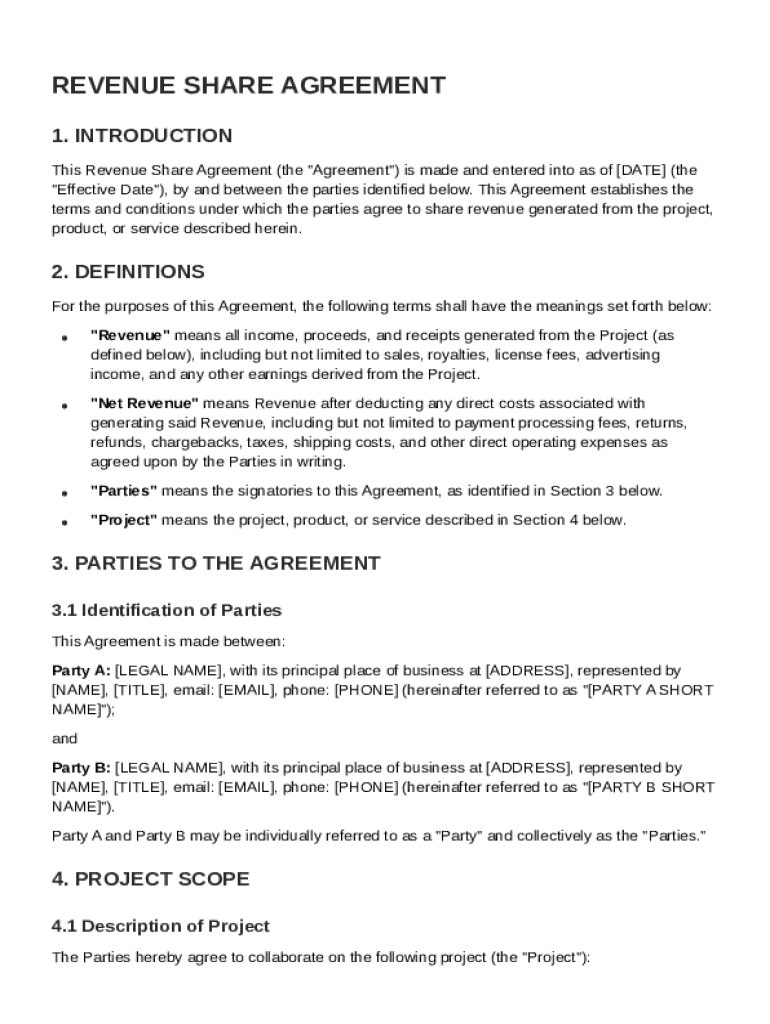
A Revenue Share Agreement Template is a document that outlines the specific terms and conditions for distributing revenue generated from a project between two or more parties. This legally binding agreement clearly defines the meaning of key terms like "Revenue" and "Net Revenue" to ensure all parties have a mutual understanding of how income is calculated and shared. Generally used in joint ventures, partnerships, and collaborative projects, these templates help clarify each party's expectations, obligations, and financial benefits.
Key Elements of the Revenue Share Agreement Template
Parties Involved
This section identifies all parties included in the agreement. It provides full legal names, addresses, and roles within the project. Defining the parties is crucial for establishing accountability and ensuring legal enforcement of the agreement terms.
Revenue Sharing Percentages
One of the most critical components, this clause specifies how revenue will be divided among parties. Percentages are typically determined by factors like contribution levels, investment, or negotiated terms. Clear division details help prevent disputes and foster transparency.
Project Scope and Responsibilities
Here, the template outlines the project's goals and the specific responsibilities of each party. It defines the scope of work and details the contributions required, like resources or expertise, ensuring that all participants are aware of their obligations to achieve successful outcomes.
Legal Use of the Revenue Share Agreement Template
Revenue Share Agreement Templates must comply with applicable laws to be enforceable. U.S.-based agreements must adhere to state and federal regulations. Legal considerations include understanding indemnification clauses, means of dispute resolution like mediation or arbitration, and governing law, which determines jurisdiction in case of legal action.
Steps to Complete the Revenue Share Agreement Template
- Identify Parties: Clearly state the entities or individuals entering the agreement.
- Specify Revenue Terms: Define what revenue constitutes and the percentage allocated to each party.
- Detail Project Scope: Describe the project, timeline, and responsibilities involved.
- Outline Payment Schedule: Set dates and frequency for revenue distribution.
- Include Legal Clauses: Ensure sections on confidentiality, dispute resolution, and indemnification are included.
- Review and Sign: All parties should review the agreement for accuracy and fairness before signing.
Important Terms Related to Revenue Share Agreement Template
- Net Revenue: Total revenue minus specific allowable deductions, such as taxes and expenses.
- Confidentiality: A clause ensuring that sensitive information shared among parties remains protected from unauthorized disclosure.
- Indemnification: Provision that protects parties from financial loss arising from specified events or actions related to the agreement.
State-Specific Rules for the Revenue Share Agreement Template
Each state may have unique requirements for enforcing revenue sharing agreements. For instance, some states mandate specific language for certain clauses to ensure the agreement's validity. It's wise to consult a legal expert familiar with state laws to ensure full compliance.
Who Typically Uses the Revenue Share Agreement Template

Business Collaborations
Often used by companies partnering to launch new products or services, these agreements clarify profit allocation and responsibilities, facilitating cooperative ventures.
Creative Partnerships
Artists, writers, and musicians frequently use revenue-sharing agreements when collaborating on projects to ensure fair distribution of proceeds.
Technology Startups
Tech companies may enter revenue-sharing agreements with developers or contractors when co-creating software or applications, ensuring transparency on revenue models and payments.
Software Compatibility
Document Platforms
The template is commonly used across various document platforms, like DocHub. These tools streamline editing, signing, and sharing processes securely with encryption and authentication protocols.
Integration with Accounting Software
Some users prefer to incorporate revenue-sharing details into accounting software like QuickBooks for comprehensive financial tracking and reporting.
Digital vs. Paper Version
Digital templates offer convenience with ease of modification, storage, and sharing. Featuring cloud integration, platforms like DocHub allow for secure online access and collaboration. In contrast, paper versions might be used where electronic storage is less feasible, demanding manual signatures and physical filing.