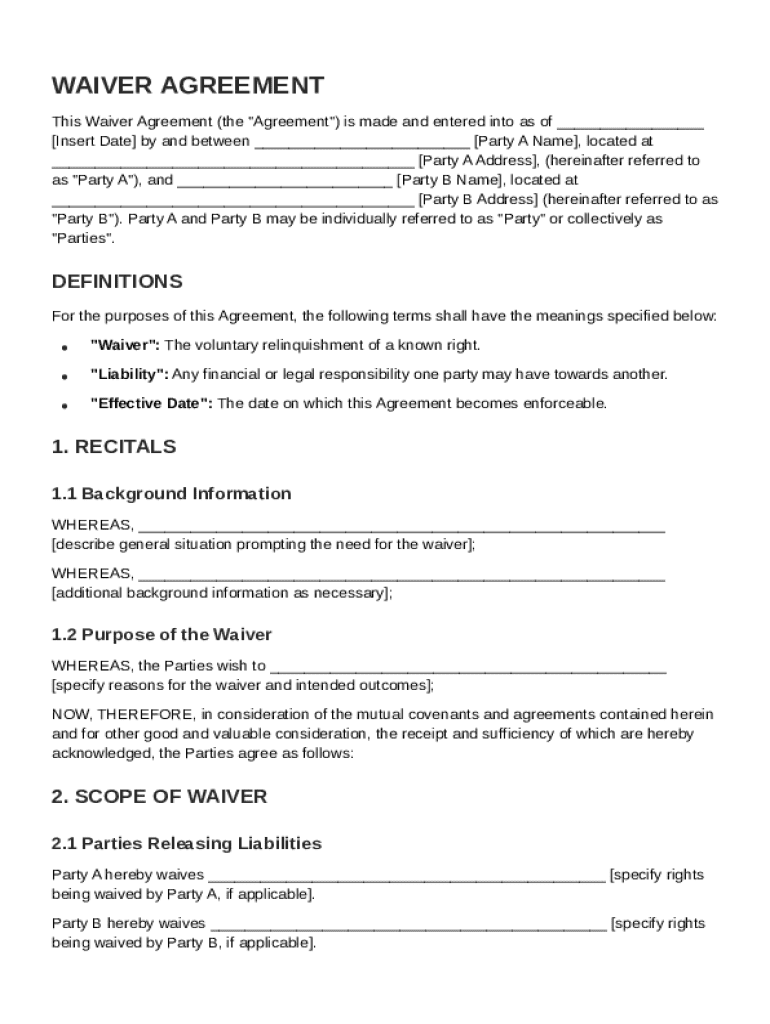







Definition and Meaning of the Waiver Agreement
A Waiver Agreement is a legal document in which two or more parties agree to relinquish certain rights or claims against each other. The purpose of this agreement is to formally acknowledge and document the waiving of rights or assumptions of liability in specific situations or activities. This can include participation in potentially risky events, relinquishment of future claims, or the limitation of legal recourse in the event of a dispute. The agreement typically outlines the scope of the waiver, the risks assumed by each party, indemnification terms, and relevant legal frameworks that govern the arrangement.
Examples of common scenarios where a waiver agreement might be used include sporting events, rental agreements, or service contracts where inherent risks must be acknowledged by all parties involved.
How to Use the Waiver Agreement Template
When utilizing a Waiver Agreement Template, it's essential to tailor the content to suit the specific needs of the parties involved. Here’s a step-by-step guide on how to effectively complete and use the template:
-
Identify the Parties Involved: Clearly state the full names and contact information of all parties involved in the waiver agreement. This includes both individuals and entities that are relinquishing rights and those that are protected under the agreement.
-
Define the Scope and Activities: Specify the activities or situations that the waiver covers. This should be detailed enough to prevent misinterpretation and encompass all aspects where the waiver is applicable.
-
Outline Assumed Risks: Clearly describe any risks associated with the activities or scenarios covered by the waiver. This section should be comprehensive to ensure both parties are fully informed of the potential consequences.
-
Establish Indemnification Clauses: Define the terms under which parties agree to indemnify each other against legal claims or damages arising from the covered activities.
-
Include a Governing Law Clause: Specify the jurisdiction under which the waiver agreement will be interpreted and enforced. This is crucial for resolving any disputes that might arise.
-
Review and Consent: Ensure all parties read, understand, and consent to the terms before signing. This might involve legal counsel to ensure all nuances and legal ramifications are clear.
Parties Typically Using the Waiver Agreement Template
Waiver agreements are commonly used across various fields to facilitate interactions where risk or liability may be a concern. Key users include:
- Event Organizers: For activities such as marathons, concerts, and conferences where participants need to acknowledge and accept potential risks.
- Service Providers: Such as gyms, recreational centers, or personal trainers who require clients to waive liability regarding injuries or accidents.
- Rental and Lease Agencies: In situations where clients rent equipment or vehicles, acknowledging they are assuming responsibility for associated risks.
- Legal and Business Entities: Companies engaged in contracts where mutual risk-sharing or liability waiver is beneficial for all parties involved.
These scenarios underscore the versatility and necessity of waiver agreements in managing risks and liabilities across different sectors.
Key Elements of the Waiver Agreement Template
Every effective Waiver Agreement should include several core elements to ensure its legal validity and practical utility:
- Clear Identification of Parties: Names, addresses, and all relevant identifiers of each signatory should be explicitly detailed.
- Precise Description of Activities: An explicit account of the activities or situations being waived, including dates and locations if applicable.
- Detailed Assumptions of Risk: Comprehensive explanations of the risks each party is accepting, often accompanied by illustrative examples.
- Indemnification Provisions: Terms under which parties will shield each other from potential claims or liabilities related to the waived activities.
- Authority and Capacity: Affirmation that all parties possess the legal capacity and authority to enter into the waiver agreement.
- Signatures and Dates: Proper execution of the agreement, with all parties signing and dating the document to signify their consent and understanding.
State-Specific Rules for Waiver Agreements
In the United States, waiver agreements must adhere to specific state regulations that can affect their enforceability. While federal laws provide broad guidelines, state laws can vary in terms of what constitutes a valid waiver. Considerations include:
- Differing Legal Standards: Some states may have more stringent requirements for enforceability, such as California’s emphasis on clear and conspicuous language.
- Public Policy Exceptions: Certain states may deem waivers void if they conflict with public policy or consumer protection statutes.
- Age and Capacity Requirements: Minors and incapacitated individuals often cannot waive rights without the consent or co-signature of a guardian or representative.
It is crucial to consult state-specific laws or legal experts to ensure compliance and the validity of the waiver in the relevant jurisdiction.
Legal Use and Compliance of Waiver Agreements
Legal compliance is crucial for the enforceability of a waiver agreement. Here are essential aspects to consider:
- Clarity and Simplicity: The document should be drafted in straightforward, unambiguous language to avoid any form of misunderstanding.
- Voluntary Agreement: The waiver must be entered into voluntarily, without coercion or undue pressure on any party involved.
- Full Disclosure: Parties must be fully informed of all terms and potential implications prior to signing.
- Capacity to Contract: All parties must have the legal capacity to enter into a contract, meaning they must be of legal age and sound mind.
These elements ensure that the waiver agreement stands up in court and protects the rights and responsibilities of all parties signed onto it.
Variations and Alternatives to the Waiver Agreement Template
While the Waiver Agreement Template serves many situations, there may be variations or alternatives better suited for specific use cases:
- Liability Release Forms: Often used in more straightforward scenarios, providing a simpler alternative focused solely on releasing one party from liability.
- Assumption of Risk Agreements: Specific agreements where individuals acknowledge and accept the risks involved in an activity, without an explicit waiver of liability.
- Indemnity Agreements: Detailed contracts focusing more on indemnification aspects, especially applicable in business transactions.
In choosing the appropriate document, consider the specific needs and legal requirements of the situation, ensuring all parties’ interests and obligations are adequately addressed.