




Definition & Meaning
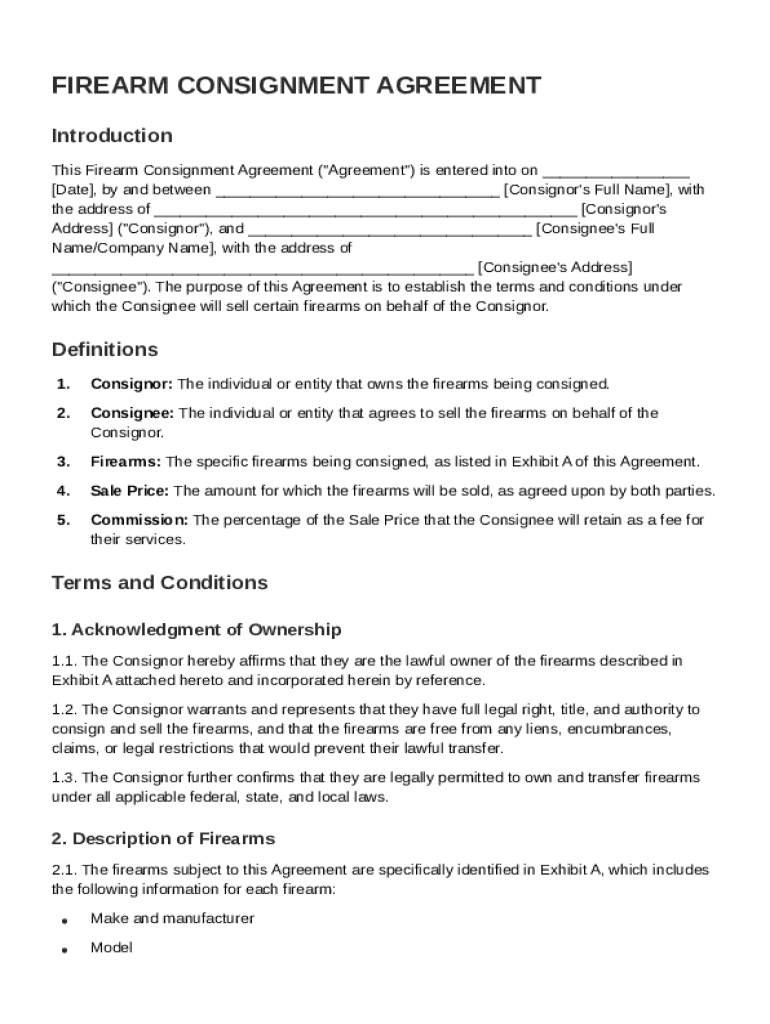
The Firearm Consignment Agreement Template is a legal document outlining the terms and conditions by which a consignee agrees to sell firearms on behalf of a consignor. It specifies crucial aspects such as ownership verification, pricing, commission structures, indemnification clauses, and more. This agreement ensures both parties understand their roles, responsibilities, and legal obligations, facilitating a smooth consignment process.
Key Elements of the Firearm Consignment Agreement Template
-
Ownership Verification: Ensures that the consignor has legitimate ownership of the firearms being consigned. This step is crucial for legal compliance and smooth transaction purposes.
-
Sale Pricing: Details how the sales price for each firearm will be determined and what price adjustments are allowable during the consignment period.
-
Commission Structure: Specifies the percentage or amount the consignee will earn from each sale, emphasizing transparency in financial agreements between parties.
-
Indemnification Clauses: Protects both parties, outlining scenarios where one party would be held harmless against any claims, damages, or losses.
-
Consignment Duration and Termination: Defines the period for which the consignment is valid and the conditions under which either party may terminate the agreement.
Steps to Complete the Firearm Consignment Agreement Template
-
Gather Required Information: Collect all necessary details about the firearms, including make, model, serial numbers, and ownership documents.
-
Fill Out Consignor and Consignee Details: Include accurate contact information and any relevant licensing details for both parties.
-
Outline the Terms and Conditions: Specify the roles, pricing, commissions, and legal obligations as detailed in the template.
-
Include Exhibit A: Attach a detailed list of the firearms being consigned to provide a clear record of what is being handled under the agreement.
-
Review Legal Compliance: Ensure the document complies with state-specific firearm consignment laws and national regulations.
-
Sign and Execute the Agreement: Both parties should review the completed document and provide their signatures to make it legally binding.
Legal Use of the Firearm Consignment Agreement Template
This document must comply with U.S. federal and state laws governing firearm sales. Each party should ensure the agreement follows the Firearm Owners Protection Act and other relevant legislation. Legal counsel may be consulted to confirm compliance and address any potential legal issues involving interstate consignments or specific state requirements.
Important Terms Related to the Firearm Consignment Agreement Template
-
Consignor: The owner of the firearms, responsible for providing accurate ownership documents.
-
Consignee: A licensed dealer or individual who agrees to sell the firearms on behalf of the consignor.
-
Indemnification: A contractual agreement to compensate the other party for any harm, loss, or damages incurred.
-
Exhibit A: A detailed list of firearms included in the consignment, ensuring a clear and comprehensive inventory.
Reasons to Use a Firearm Consignment Agreement Template
Using this template provides a formal structure that protects both the consignor and consignee yet allows for flexibility in terms of pricing and commissions. It also serves as clear documentation of each party's understanding and acceptance of their roles, responsibilities, and the agreed-upon terms, thus minimizing potential disputes.
State-Specific Rules for the Firearm Consignment Agreement Template
Each state may have varying requirements for firearm consignment. Some states may require additional documentation, such as specific endorsement licenses, or impose particular restrictions on firearm sales. Parties should be familiar with their state's regulations to avoid compliance issues.
Examples of Using the Firearm Consignment Agreement Template
A firearms collector in Texas might use this template to consignment their collection via a licensed dealer, ensuring terms like pricing and commissions are clear. Similarly, a gun shop in California could use the agreement to sell firearms from individuals who are liquidating collections, ensuring legal compliance and clear transaction records.