
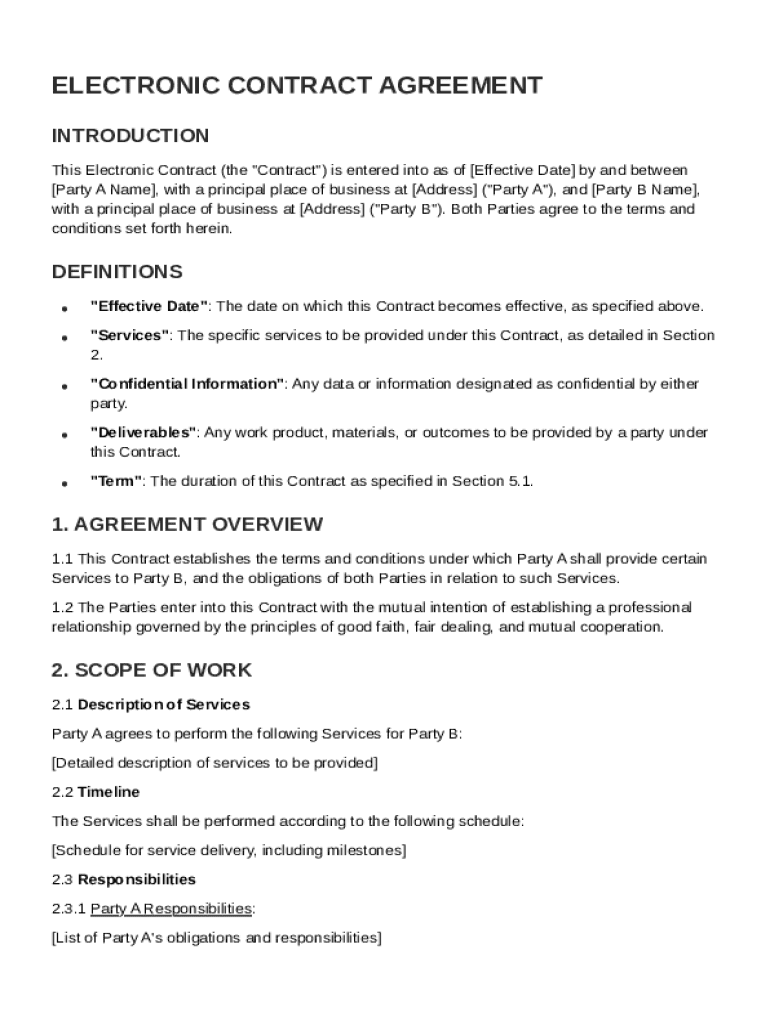







Definition and Meaning of Electronic Contract Template
An electronic contract template is a pre-designed digital document specifically tailored for creating agreements between two or more parties. This template aims to streamline the drafting of contracts by providing a structured layout and predefined fields where users can input their specific information. For businesses, this can significantly reduce the time and effort required for legal documentation. Electronic contracts hold the same legal validity as their paper counterparts under legislation such as the ESIGN Act, making them an efficient alternative in the digital age.
Key Features
- Pre-Structured Layout: Provides a ready-made framework that includes sections like terms and conditions, compensation, and confidentiality.
- Editable Fields: Allows users to customize relevant sections depending on the specific needs of their agreement.
- Legal Compliance: Electronic signatures integrated into these templates are compliant with legal standards, ensuring the contracts are enforceable.
How to Use the Electronic Contract Template
Using an electronic contract template involves straightforward steps, empowering even those with minimal legal knowledge to draft binding agreements.
- Select a Template: Choose a template that closely matches the needs of your agreement type. Many platforms, like DocHub, offer a variety of templates to fit different scenarios.
- Fill in the Details: Input the specific details of the contract, including party names, scope of work, and deadlines. The template typically guides you through the process, offering fields for essential information.
- Review and Edit: Thoroughly review the filled-out template for accuracy and completeness. You can make edits to tailor the terms to your specific situation.
- Sign Electronically: Use the built-in electronic signature feature to legally sign the document. You can invite other parties to add their signatures in a specified order if necessary.
- Save and Share: Once signed, save a digital copy for your records and share it with all relevant parties. Many platforms offer options to export and store contracts in cloud-based services for easy access.
Key Elements of the Electronic Contract Template
Each electronic contract template incorporates essential sections that form the backbone of professional agreements.
Essential Sections
- Parties Involved: Clearly defines the parties entering the agreement, ensuring accountability.
- Scope of Work: Details the tasks, responsibilities, and deliverables expected from each party.
- Compensation Details: Specifies the payment terms, including amounts, schedules, and methods.
- Confidentiality Clauses: Establishes terms for protecting sensitive information shared between parties.
- Termination Conditions: Outlines scenarios and procedures for ending the agreement prematurely.
- Legal Provisions: Includes governing law and dispute resolution to guide legal interpretation and enforcement.
Customization Options
Users can adjust these sections to accommodate specific needs and include additional clauses relevant to their industry or situation.
Legal Use of the Electronic Contract Template
Legally utilizing an electronic contract template ensures that both parties adhere to enforceable terms without extensive legal intervention.
Compliance and Security
- ESIGN Act Compliance: Ensures electronic signatures are recognized as legally binding, provided all parties consent to digital contracting.
- Data Protection: Utilizes secure encryption methods and access controls to secure contract data.
Consent and Acknowledgment
Both parties must provide consent to engage in digital contracting and may need to acknowledge their understanding of the contract's terms, often facilitated through digital initials or additional digital sign-off fields.
State-Specific Rules for the Electronic Contract Template
While electronic contracts are broadly accepted across the United States, certain state-specific considerations might affect their implementation.
Variations by State
- Jurisdictional Laws: Specific states may have unique requirements regarding digital signatures or contract terms.
- Industry-Specific Rules: Certain industries may be subjected to additional state-level regulation, impacting the necessary clauses in your contract.
Cross-State Agreements
For agreements involving parties in different states, it’s crucial to specify the governing law that will prevail in the event of a dispute to mitigate potential jurisdictional conflicts.
Who Typically Uses the Electronic Contract Template
A diverse range of individuals and businesses utilize electronic contract templates to facilitate operations and ensure legally sound transactions.


Common Users
- Small Businesses: Use templates for vendor agreements, service contracts, and client engagements.
- Freelancers and Consultants: Particularly benefit from professional pre-made contracts to present to clients and manage projects.
- Corporations: Employ templates for larger-scale agreements, mergers, acquisitions, and employment contracts.

Benefits of Use
- Efficiency: Reduces time spent on creating documents from scratch.
- Professionalism: Ensures contracts are complete, organized, and standard, enhancing credibility.
- Cost-Effectiveness: Offers a budget-friendly alternative to drafting from scratch or hiring legal professionals for preliminary contracts.
Examples of Using the Electronic Contract Template
Real-world applications illustrate the functionality and versatility of electronic contract templates across various sectors.
Sample Scenarios
- Service Agreements: A small IT company utilizes a contract template to onboard new clients, detailing deliverables, timelines, and payment terms.
- Freelance Writing: A freelance designer sends out electronic contracts to new clients, outlining project scope and intellectual property rights.
- Supplier Contracts: A retail business employs templates to formalize agreements with new suppliers, ensuring a consistent approach to inventory management and supply chain logistics.
Advantages in Practice
- Accessibility: Enables participants to engage from remote locations without the need for physical meetings.
- Streamlining Processes: Simplifies onboarding and project initiation phases across industries.
Important Terms Related to Electronic Contract Template
Understanding key terminology related to electronic contract templates aids in comprehending their application and legal implications.
Key Terms
- Binding Agreement: A contract legally enforceable by law, which electronic contracts fulfill similarly to physical ones.
- Electronic Signature: A digital form of signing with legal validity comparable to handwritten signatures under the ESIGN Act.
- Confidentiality Agreement: A contract clause or separate document protecting sensitive information from unauthorized disclosure.
Usage Context
Grasping these terms enhances the user's ability to negotiate, draft, and finalize agreements confidently and competently.







