




Definition & Meaning
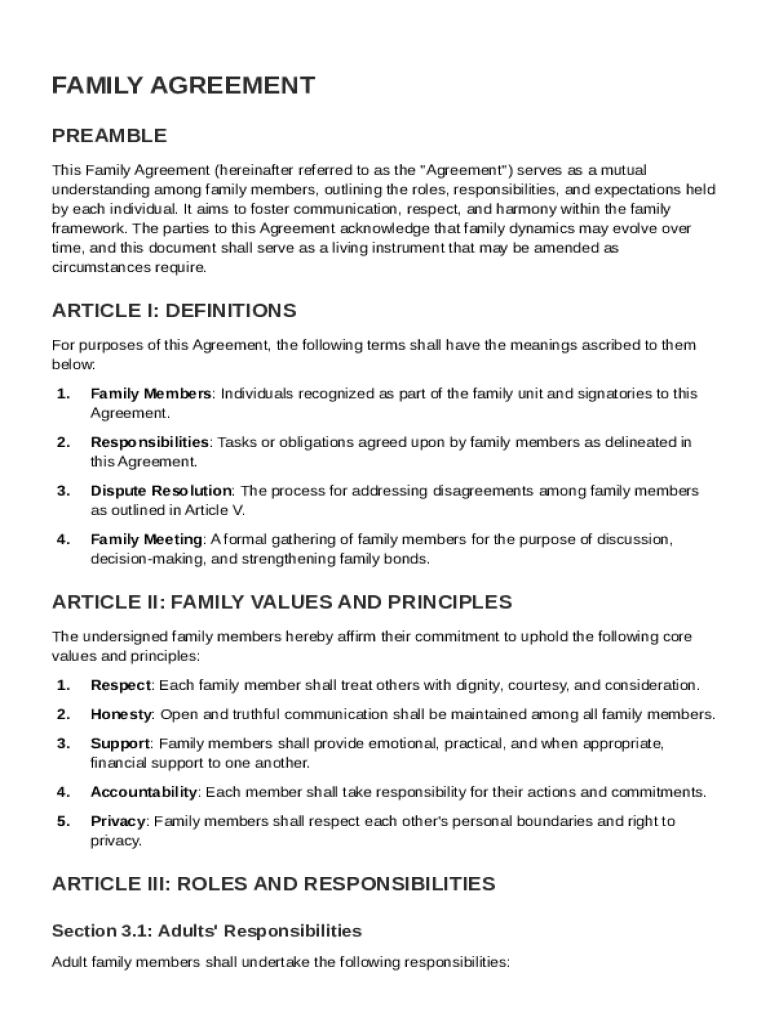
A Family Agreement Template is a structured document designed to outline and formalize the roles, responsibilities, and expectations of all family members. The primary aim is to foster communication, respect, and harmony within the household. This template typically includes definitions of key terms to ensure clarity, core family values that guide interactions, and guidelines for effective communication practices. Additionally, it serves as a living instrument that can adapt alongside evolving family dynamics, with provisions for conflict resolution, financial arrangements, and commitments to shared activities.
How to Use the Family Agreement Template
To effectively utilize the Family Agreement Template, families should begin by discussing and identifying key areas of focus such as roles, responsibilities, and shared values. This collaborative approach ensures that every family member's perspective is considered. Once there's a collective understanding, the template can be filled out with specifics relevant to the family's unique situation. Here is a step-by-step process:
- Gather Family Members: Engage everyone involved to ensure inclusivity and comprehensive input.
- Identify Core Elements: Discuss core family values and household dynamics that are essential to outline.
- Discuss Roles and Responsibilities: Clearly delineate tasks, obligations, and expectations for each member.
- Draft Initial Agreement: Utilize the template to document agreed-upon roles and values.
- Review and Adjust: Allow time for review and amendments to the draft, ensuring mutual consent.
This process facilitates a structured pathway to setting familial protocols, thus promoting household harmony.
Steps to Complete the Family Agreement Template
Completing a Family Agreement Template can be streamlined by following these thorough steps:
- Introduction: Begin with a brief introduction specifying the purpose of the agreement.
- Definitions Section: Clearly define key terms to avoid misunderstandings.
- Core Family Values: Itemize values that all members agree upon to uphold.
- Roles and Responsibilities: Detail each member's specific roles and expectations.
- Communication Guidelines: Establish how family members will communicate respectfully and effectively.
- Conflict Resolution Procedures: Outline steps for addressing disputes amicably.
- Review and Update Clause: Define the process and frequency for reviewing the agreement to ensure it evolves with the family’s needs.
A well-completed template ensures that all family members comprehend and commit to the agreed-upon terms.
Key Elements of the Family Agreement Template
The Family Agreement Template consists of multiple key elements essential for a cohesive household structure:
- Introduction: Sets the stage for the document and its intended purpose.
- Definitions: Clarifies terminology used within the agreement.
- Core Values: Serves as a guiding framework for familial interactions.
- Roles and Responsibilities: Provides detailed expectations for each member.
- Communication Guidelines: Establishes rules for maintaining respectful discourse.
- Conflict Resolution: Offers procedures to resolve disagreements constructively.
- Financial Agreements: Specifies how finances are managed collaboratively.
- Review Process: Defines the method for updating the agreement regularly.
Each of these elements plays a vital role in promoting understanding and reducing conflict within the family.
Legal Use of the Family Agreement Template
The Family Agreement Template can serve as a legally recognized document, especially when financial and custodial responsibilities are outlined. While not legally binding like a contract, it provides documented intentions and resolutions that may be referenced in legal proceedings. For heightened legal recognition, families may choose to involve a legal professional during the drafting process or acquire notarization. However, its primary utility lies in serving as an agreed-upon guide that promotes a harmonious family environment rather than as a strict legal tool.
Examples of Using the Family Agreement Template
Consider the following practical examples to better understand its application:
- Shared Custody: Divorced parents may use the template to outline custody schedules and shared financial responsibilities for children.
- Elderly Care: Families caring for aging parents can document roles in caregiving and decision-making responsibilities.
- Blended Families: Stepfamilies may use it to delineate new roles and establish equitable routines that respect all members.
Such scenarios highlight the template’s versatility in addressing a variety of familial arrangements and needs.
State-Specific Rules for the Family Agreement Template
Though typically not governed by state law, it's important for families to be mindful of state-specific regulations that may affect the elements within the Family Agreement Template. For instance:
- Family Law Variations: Custodial and financial provisions should comply with state family laws.
- Mediation Requirements: Some states might have mandatory mediation processes that align with conflict resolution sections.
- Notarization Laws: Certain states require notarization for the document to be considered in legal contexts.
Being aware of local stipulations ensures that agreements made within the template are respected and applicable within the family's jurisdiction.
Versions or Alternatives to the Family Agreement Template
While the Family Agreement Template offers a comprehensive foundation, there are alternative versions and templates catering to specific needs:
- Co-parenting Agreement: Focuses exclusively on child-rearing responsibilities and custody arrangements.
- Prenuptial and Postnuptial Agreements: Centers on financial responsibilities and asset division.
- Living Together Agreements: Tailored for non-married partners sharing a household.
Assessing the family's specific needs and dynamics will determine the most suitable version or alternative to utilize.