







Definition & Meaning
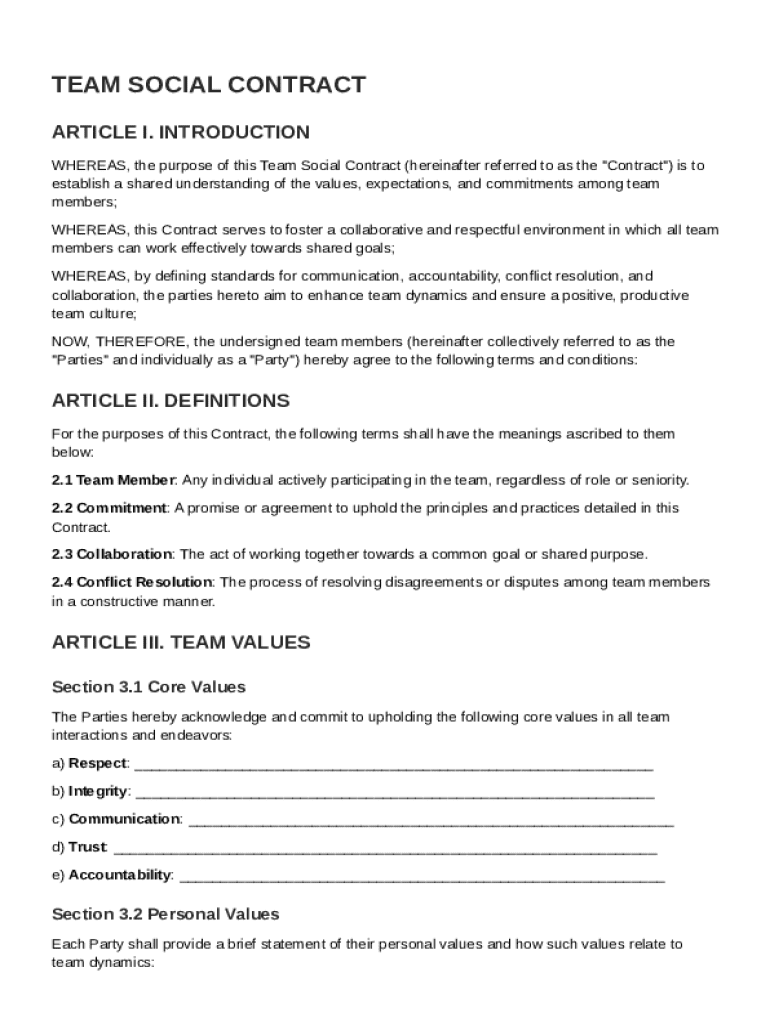
A Team Social Contract Template serves as a formal document outlining the shared values, expectations, and commitments agreed upon by team members to foster a collaborative and respectful working environment. This template defines key terms integral to a team's functioning, such as “team member,” “commitment,” “collaboration,” and “conflict resolution.” By establishing core values like respect, integrity, communication, trust, and accountability, the document sets a foundation for how team interactions are guided. This contract aims to enhance team dynamics, unify the team around common goals, and ensure a positive culture.
Key Elements of the Team Social Contract Template
The Team Social Contract Template is composed of several crucial elements that ensure its effectiveness. These elements include:
- Core Values: Clearly delineates values like respect and trust that should guide team interactions.
- Expectations: Specifies expected behaviors and commitments from all team members to create a harmonious and productive atmosphere.
- Communication Guidelines: Outlines preferred communication methods and frequencies to ensure clarity and efficiency in team interactions.
- Participation and Accountability: Establishes mechanisms to encourage participation and individual accountability, reinforcing that each member contributes to the team's success.
Each of these elements works together to create a team environment where members can collaborate effectively and address any issues swiftly.
How to Use the Team Social Contract Template
To effectively use the Team Social Contract Template, follow these steps:
- Gather Input: Initiate a team meeting to discuss what values and expectations are vital for the group. Ensure everyone has the opportunity to contribute.
- Customize the Template: Using input from the team, tailor the contract to reflect specific commitments and guidelines that align with the group’s agreed-upon values.
- Review and Approve: Circulate the draft contract among team members for feedback. Make necessary revisions before obtaining a consensus and approval from all team members.
- Implementation: Once approved, integrate the contract into the team's regular activities. Refer to it regularly during meetings to remind the team of the agreed-upon guidelines.
- Regular Updates: Schedule periodic reviews to update the contract as team goals or dynamics evolve.
This step-by-step process ensures that the contract remains a living document, helping the team to stay aligned and motivated towards common objectives.
Steps to Complete the Team Social Contract Template
Completing the Team Social Contract Template requires thoughtful engagement and collaboration.
- Identify Core Objectives: Start by determining the primary objectives of the team and the role of the social contract in achieving these goals.
- Draft Values and Expectations: Use a collaborative approach to draft the team's guiding values and specific behavior expectations.
- Detail Communication Methods: Agree on the communication strategies and tools the team will use to maintain clear and effective exchanges.
- Establish Accountability Measures: Define how team members will be held accountable and what processes will be followed when commitments are not met.
- Review and Ratify: Once the draft is complete, review the document as a team, make any necessary adjustments, and finalize it with everyone’s agreement.
This comprehensive approach ensures that all team members have input into the contract and feel responsible for upholding the resulting agreements.
Important Terms Related to the Team Social Contract Template
Understanding key terms related to the Team Social Contract Template is crucial for its effective application:
- Team Member: An individual actively participating in team activities with specific roles and responsibilities.
- Commitment: The dedication of team members to adhere to agreed-upon values and deliver their best efforts for the team's success.
- Collaboration: The act of working jointly and cooperatively among team members to achieve shared goals.
- Conflict Resolution: A defined process by which team disputes are addressed and resolved constructively.
These terms form the basis of the template and guide the behaviors and interactions expected within the team.
Legal Use of the Team Social Contract Template
Using a Team Social Contract Template has legal implications, although it is primarily a behavioral guide rather than a legally binding document. It establishes a moral contract among team members to:
- Foster a Positive Environment: Promotes adherence to ethical standards and shared values, essential for team cohesion.
- Support Conflict Resolution: Provides a framework to manage disagreements constructively and equitably.
- Enhance Accountability: Although not enforceable by law, the agreement upholds a standard of personal accountability among team members.
While it holds no legal binding power, the adherence to a well-crafted contract can prevent misunderstandings and promote harmony within the team.
Who Typically Uses the Team Social Contract Template
The Team Social Contract Template is particularly useful for:
- Corporate Teams: Empowers work groups in corporate environments to align on goals and streamline workflows.
- Project Teams: Assists project managers in fostering collaboration and commitment within project-specific groups.
- Start-ups: Helps new businesses establish a strong cultural foundation built on mutual respect and shared objectives.
- Volunteer Organizations: Utilized to maintain order and productivity amongst volunteers working towards a common cause.
These groups leverage the template to improve team effectiveness and satisfaction, leading to enhanced productivity and morale.

Examples of Using the Team Social Contract Template
Real-world scenarios can illuminate the template's practical applications:
- Corporate Departments: A marketing department drafts a contract to harmonize efforts and streamline campaign execution processes.
- Product Development Teams: Teams use the contract to guide iterative development cycles and ensure everyone is aligned on deliverable timelines and quality standards.
- Non-Profit Organizations: A non-profit leverages the template to align their committee members toward fundraising goals, ensuring clarity in roles.
- Educational Settings: University project groups use the contract to balance workloads and encourage respectful collaboration among students.
These examples highlight the contract’s versatility and its ability to adapt to diverse team structures and objectives.




