




01. Edit your form online
Type text, add images, blackout confidential details, add comments, highlights and more.

Type text, add images, blackout confidential details, add comments, highlights and more.

Draw your signature, type it, upload its image, or use your mobile device as a signature pad.

Send it via email, link, or fax. You can also download it, export it or print it out.
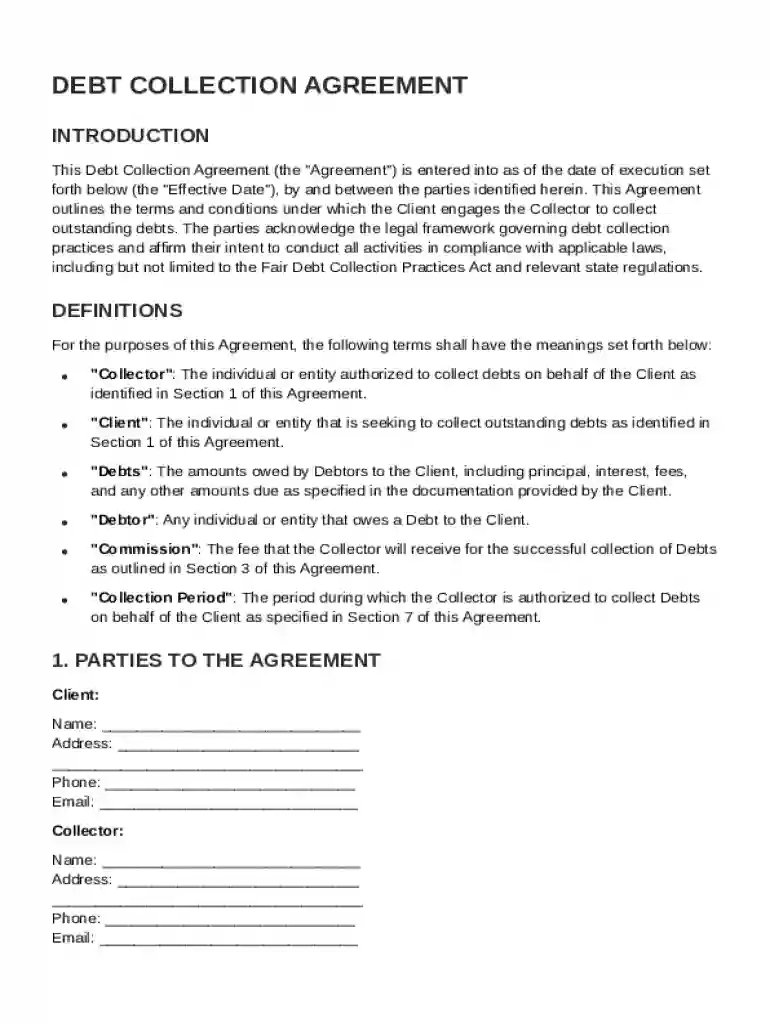
A Debt Collection Contract Template is a legal document used to formalize the agreement between a client and a collector for the recovery of outstanding debts. This contract sets forth the rights and obligations of both parties, covering essential aspects such as the method of collection, compensation, and adherence to relevant laws like the Fair Debt Collection Practices Act (FDCPA). An important element of this template is its role in mitigating disputes, as it provides a clear framework for communication and responsibilities. For practical use, this document should be tailored to reflect each party's specific terms and conditions.
The template includes several crucial components that ensure a comprehensive agreement:
Including these elements helps both parties understand their commitments and protects their interests.
The legal structure of this contract is designed to align with U.S. legal standards, making it essential for collectors operating within the United States. Compliance with the FDCPA is a critical aspect, as this law governs the practices used by debt collectors. Provisions in the template ensure that collectors do not engage in harassment or unfair practices, which are prohibited under this act. Both parties must sign the agreement to affirm their adherence to these legal parameters, thereby making the contract enforceable in court.
When deploying this template, follow these general instructions:
Using the document correctly ensures that the contractual relationship is clear and legally sound.
Completion of this contract involves several specific steps to ensure accuracy and legality:
This template is predominantly used by:
These entities use the template to standardize their process and ensure they operate within legal boundaries.


Key terms within the contract include:
Understanding these terms is pivotal for both parties involved as they delineate specific roles and rights.
Consider these scenarios to illustrate the template's application:
These examples demonstrate how the template fosters structured and fair debt recovery practices.
At DocHub, your data security is our priority. We follow HIPAA, SOC2, GDPR, and other standards, so you can work on your documents with confidence.


COLLECTOR must exercise special care to ensure the entire principal with interest and penalties assessed and collection fees, as authorized by the debtors
The following is a sample contract clause for submitting all permissible controversies that may arise between the parties to an agreement to voluntary trial


