




Definition and Meaning
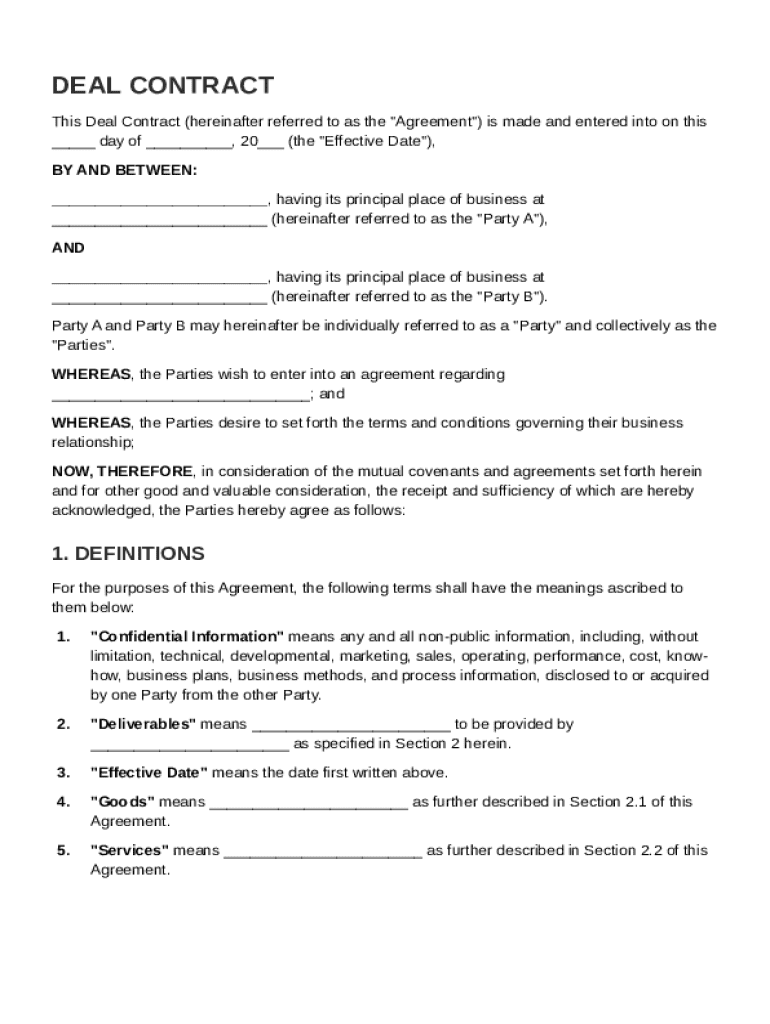
A Deal Contract Template serves as a structured document that establishes the terms and conditions agreed upon between two parties entering into a business relationship. It functions as a blueprint for detailing key components such as transaction details, pricing, payment terms, confidentiality obligations, and resolution procedures. By providing a standard framework, businesses can streamline the negotiation process and ensure that all legal protections and mutual agreements are clearly outlined. This template is particularly useful for ensuring consistency across multiple deals and offering a comprehensive record that can be referred to in the event of a dispute.
Key Elements of the Deal Contract Template
The Deal Contract Template combines several critical sections designed to comprehensively cover all aspects of a business arrangement. These key elements include:
- Transaction Details: Clearly specifies the nature of the transaction, including what is being exchanged, the parties involved, and the timeline for completion.
- Payment Terms: Outlines how and when payments will be made, including due dates and any interest or penalties for late payments.
- Scope of Work: Describes the responsibilities and expectations for each party, detailing the work to be performed.
- Confidentiality Obligations: Sets guidelines on how sensitive information shared between parties will be protected.
- Dispute Resolution: Provides methods for resolving disagreements, whether through arbitration, mediation, or litigation.
The clarity provided by these sections ensures that both parties have a mutual understanding of their obligations and rights under the agreement.
How to Use the Deal Contract Template
Utilizing the Deal Contract Template involves several steps to ensure completeness and accuracy. These steps include:
- Identify Parties: Begin by clearly identifying the parties involved, typically referred to as Party A and Party B, and include their contact information.
- Define Terms: Ensure all terms and definitions are explicitly stated to avoid ambiguous interpretations.
- Outline Specifics: Fill in the specifics regarding transaction details, scope of work, and payment terms relevant to the business relationship.
- Review and Agree: Both parties should review the agreement thoroughly and negotiate any changes before finalizing.
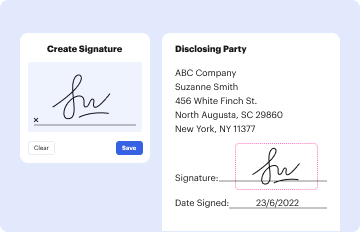
- Sign and Secure: Once both parties are satisfied, signatures are collected to validate the contract legally. Consider electronic signatures for ease and efficiency.
These steps provide a roadmap for a structured and effective use of the template, ensuring all key aspects are covered and agreed upon.
Steps to Complete the Deal Contract Template
Completing the Deal Contract Template requires a methodical approach to ensure nothing is overlooked. The following steps guide you through the process:
- Initialization: Initiate the document and insert basic information about the party names and the deal date.
- Customize for Specifics: Add specifics tailored to the particular transaction, including any unique conditions or obligations.
- Filling Sections: Carefully complete each section, particularly the financial aspects, to ensure clarity on compensation and costs.
- Review Legal Aspects: Ensuring legal compliance is crucial. Cross-check the template with any regulatory requirements that may apply.
- Finalization and Distribution: Once reviewed, distribute the document to all relevant parties for their input and final approval.
Each step is devised to provide assurance that the template meets all the necessary criteria specific to the deal.
Important Terms Related to the Deal Contract Template
Familiarizing yourself with the terminology used in the Deal Contract Template can aid in effective comprehension and execution. Key terms include:
- Binding Agreement: Indicates that once signed, the document holds both parties legally accountable.
- Consideration: The benefit that each party gets or expects to get from the contractual arrangement.
- Force Majeure: Clauses that absolve parties from liability if unforeseen events prevent fulfillment of the contract.
- Representations and Warranties: Statements that are asserted to be true at the time of the contract, which can have legal ramifications if false.
- Indemnity: Protection against future losses or damages that may arise after the contract is executed.
Have these terms clearly understood to ensure accurate usage and interpretation within the contract.
State-Specific Rules for the Deal Contract Template
While a Deal Contract Template provides general guidance, state-specific regulations may affect its content and enforceability. For instance:
- Governing Law: Contracts often include a clause specifying which state's laws will govern the agreement.
- Notarization Requirements: Certain jurisdictions may require contracts to be notarized to be considered valid.
- Interest Rates: Usury laws vary from state to state and can affect permissible interest charges on late payments.
- Disclosure Obligations: Some states mandate that specific disclosures must be included, particularly in consumer-related transactions.
Accounting for these variations ensures that the contract adheres to the applicable jurisdictional laws and regulations.
Legal Use of the Deal Contract Template
The legal foundation of the Deal Contract Template underscores its utilization across a multitude of scenarios while ensuring compliance with prevailing laws. This encompasses:
- Enforceability: Ensuring the contract is drafted in a format that makes it enforceable under the laws of the jurisdiction in question.
- Contractual Capacity: Verifying that all parties involved have the legal capacity to enter into an agreement, a crucial aspect for legitimacy.
- Void and Voidable Clauses: Identifying clauses that may render the contract void or voidable under certain conditions, such as duress or misrepresentation.
Understanding these aspects is essential for using the template in a legally compliant manner.
Examples of Using the Deal Contract Template
The Deal Contract Template proves invaluable across varied industries and scenarios. Practical examples of its application include:
- Service Agreements: Contracts between a service provider and client outlining deliverables, deadlines, and payment scheduling.
- Sales Contracts: Used in the sale of goods, these contracts specify the terms of sale, including quantity, price, and delivery conditions.
- Partnership Agreements: Allows potential business partners to delineate their roles, contributions, and profit-sharing arrangements explicitly.
These examples illustrate how versatile the Deal Contract Template can be in facilitating business transactions across different contexts.