






Definition and Meaning
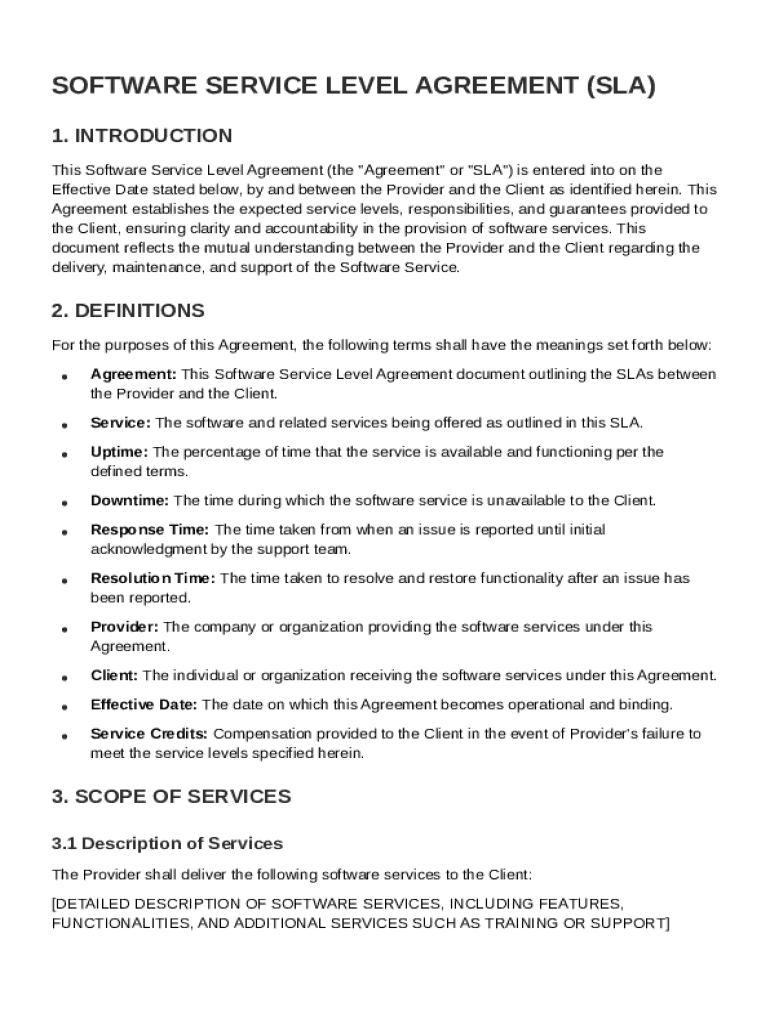
The Software SLA Agreement Template is a formal document that delineates the terms and conditions between a provider and a client concerning the provisioning of software services. This template is pivotal for outlining service expectations, ensuring both parties understand their responsibilities from the onset. It includes details about service levels, uptime commitments, penalties for service breaches, and other crucial agreement components. By using this template, both parties can achieve clarity and accountability in their professional relationship, reducing potential disputes.
Key Elements of the Software SLA Agreement Template
A well-structured Software SLA Agreement Template encompasses several critical elements designed to ensure comprehensive coverage of service terms. These main components include:
- Service Level Objectives: Defines the expected performance metrics and service quality that the provider commits to deliver.
- Uptime and Availability: Specifies the percentage of time the software service is expected to be operational, often a crucial aspect for businesses relying on uninterrupted service.
- Response and Resolution Times: Outlines the timeframes for acknowledging issues and resolving them, ensuring responsiveness in addressing client concerns.
- Penalties and Remedies: Describes the consequences of failing to meet the agreed-upon service levels, often involving financial penalties or service credits.
- Confidentiality and Data Security: Establishes measures to protect sensitive data, ensuring both legal compliance and customer trust.
- Dispute Resolution: Provides mechanisms for resolving disagreements, usually involving mediation, arbitration, or legal proceedings.
- Termination Conditions: Clarifies the circumstances under which the agreement can be ended, providing a clear exit strategy for both parties.
How to Use the Software SLA Agreement Template
Utilizing the Software SLA Agreement Template involves several strategic steps to customize and implement the document effectively:
- Identify Specific Needs: Determine the unique requirements of both the provider and the client, which will guide the customization of the template.
- Customize Key Sections: Modify sections such as service level objectives, response times, and penalties to match the agreed expectations.
- Review Legal Considerations: Consult with legal experts to ensure compliance with relevant laws and regulations, adapting the template accordingly.
- Agree on Terms: Discuss and finalize the terms with the client to gain mutual agreement before proceeding.
- Implement and Monitor: After signing, actively monitor service levels against the agreed metrics to ensure compliance and identify areas for improvement.
Legal Use of the Software SLA Agreement Template
Legal considerations are essential when using the Software SLA Agreement Template, as they ensure that the document complies with applicable laws and protects both parties' interests:
- Compliance with Federal and State Laws: Ensure that the agreement aligns with relevant US federal and state regulations related to software services and data protection.
- Incorporation of Industry Standards: Adapt the template to meet specific industry standards, enhancing its credibility and enforceability.
- Intellectual Property Rights: Clearly define the usage rights for software products, protecting the provider's intellectual property and the client's usage rights.
- ESIGN Act Compliance: For electronic signatures, ensure that the agreement adheres to the ESIGN Act, making the digital signing process legally binding.
Steps to Complete the Software SLA Agreement Template
Completing the Software SLA Agreement Template involves a series of detailed steps, each aimed at ensuring thorough and accurate documentation:
- Enter Basic Information: Add the names and contact details of both parties involved in the agreement.
- Define Services and Objectives: Clearly describe the software services provided, including the scope and limitations.
- Set Measurable Metrics: Establish quantifiable service level metrics, such as response times and uptime percentages.
- Outline Responsibilities: Detail the responsibilities of both the service provider and the client to avoid misunderstandings.
- Discuss Penalties for Non-Compliance: Agree on financial or service credits should the provider fail to meet the required standards.
- Finalize Legal Clauses: Ensure all legal language is vetted, clear, and unambiguous for enforceability.
- Sign and Store Safely: Obtain signatures from authorized representatives and securely store the document for future reference.
Important Terms Related to Software SLA Agreement Template
Understanding key terms within the Software SLA Agreement Template is crucial for both parties:
- Service Provider: The company or individual offering the software services.
- Client: The party receiving the services under agreed terms.
- Service Credits: Compensation mechanisms for failure to meet service targets.
- Uptime Commitment: The agreed percentage of time services will be operational.
- Resolution Time: The duration within which an issue will be addressed.
- Confidentiality: Measures to protect sensitive information shared under the agreement.
Who Typically Uses the Software SLA Agreement Template
The Software SLA Agreement Template caters to a range of professionals and organizations, each requiring clear service expectations and accountability:
- Software Vendors: Use it to formalize relationships with clients, ensuring clear service metrics.
- Businesses Using Software Services: For setting expectations with service providers and ensuring consistent service delivery.
- IT Service Management Professionals: Employ the template to structure, manage, and enforce service level agreements effectively.
- Legal Advisors: Assist clients in custom-tailoring SLAs to ensure they meet specific business needs and legal requirements.


Versions or Alternatives to the Software SLA Agreement Template
Several versions or alternatives to the Software SLA Agreement Template exist, offering flexibility for diverse needs and contexts:
- Basic SLA Template: A simplified version suitable for straightforward service agreements where the scope is limited and easily defined.
- Custom SLA: Tailored documents developed to address specific industry requirements and unique client needs.
- Third-Party SLA Services: Professional services that offer custom SLA drafting, often including negotiation and management support.
- Open-source Templates: Community-developed templates that provide a comprehensive starting point for software service agreements.