




01. Edit your form online
Type text, add images, blackout confidential details, add comments, highlights and more.

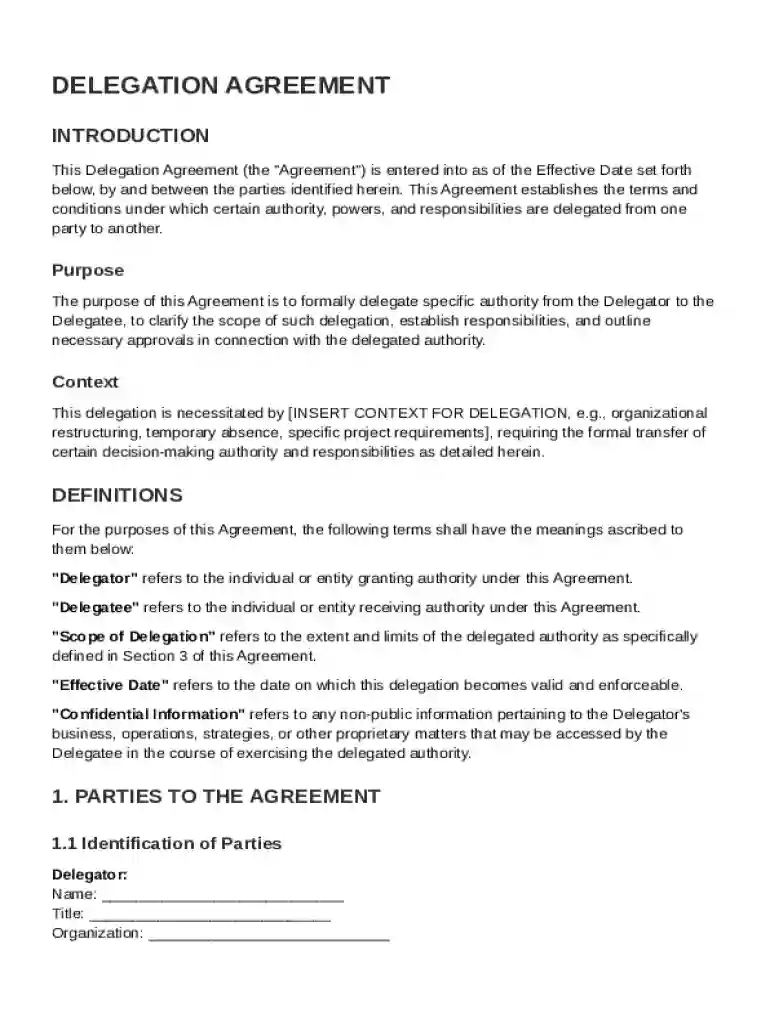
Type text, add images, blackout confidential details, add comments, highlights and more.

Draw your signature, type it, upload its image, or use your mobile device as a signature pad.

Send it via email, link, or fax. You can also download it, export it or print it out.
A Delegation Agreement Template is a formal document used to outline the transfer of specific decision-making authority from one party, known as the Delegator, to another, referred to as the Delegatee. This agreement explicitly details the purpose and scope of delegation, establishing clear parameters for the powers being assigned. Such a template is crucial as it delineates the limitations and responsibilities, ensuring there is no ambiguity about what the Delegatee is authorized to do. It typically includes provisions for confidentiality, indemnification, liability clauses, and the governing legal framework to ensure that the agreement is enforceable under U.S. law.
To effectively utilize a Delegation Agreement Template, the Delegator should first clearly identify the scope of authority to be delegated. This involves defining the tasks, projects, or decisions for which the Delegatee will be responsible. Once these elements are outlined, the template can be customized with specific details such as names, dates, and roles, ensuring clarity on both parties' duties and expectations. It is essential to review each section carefully and adjust them to fit the unique circumstances of the delegation. Including any required signatures ensures that both parties acknowledge and agree to the terms, making the agreement legally binding.
Completing the Delegation Agreement Template involves several structured steps to ensure it is thorough and effective:
Each step ensures that the delegation process is transparent, organized, and legally sound.
The Delegation Agreement Template is particularly useful for businesses and organizations where clear delineation of authority is necessary. This includes corporate executives delegating powers to managers, project leaders assigning specific tasks to team members, and government officials transferring duties within departments. It is also common in legal and consulting firms where specialists may need to act on behalf of others under defined parameters. Using a well-structured template safeguards interests and supports efficient operations by preventing scope creep and unauthorized decision-making.


For a Delegation Agreement Template to be effective, it must encompass several key elements:
These elements ensure the agreement is clear, enforceable, and comprehensive.
The legal use of a Delegation Agreement Template is multifaceted. First, it serves as a legally binding document once signed by all parties, provided it is compliant with legal standards. Its enforceability hinges on precise language around the delegation scope and the inclusion of clauses such as indemnification and liability, which protect the interests of both the Delegator and Delegatee. Courts often refer to such agreements to resolve disputes about delegated authorities, underlining their importance as a legal tool.
Using the Delegation Agreement Template can vary widely across different contexts:
Each example underscores how the template can facilitate streamlined operations and clarify roles, contributing to organizational effectiveness.
While the Delegation Agreement Template is versatile, there are variants and alternatives that may better fit certain scenarios. For instance:
Choosing the right version can significantly impact how the delegation process is managed and executed.
At DocHub, your data security is our priority. We follow HIPAA, SOC2, GDPR, and other standards, so you can work on your documents with confidence.
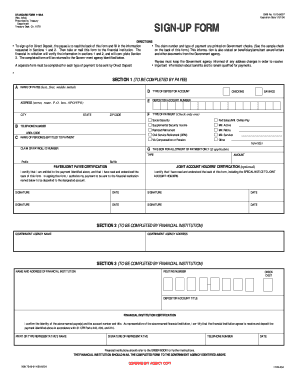


[NAME and TITLE] (Delegator) hereby delegates signature authority to [NAME and TITLE] (Delegatee), under the following terms and conditions: 1. [NAME and
A work package is a formal set of instructions used by the project manager to assign responsibility for the creation of one or more products to a team manager


