




Definition & Meaning
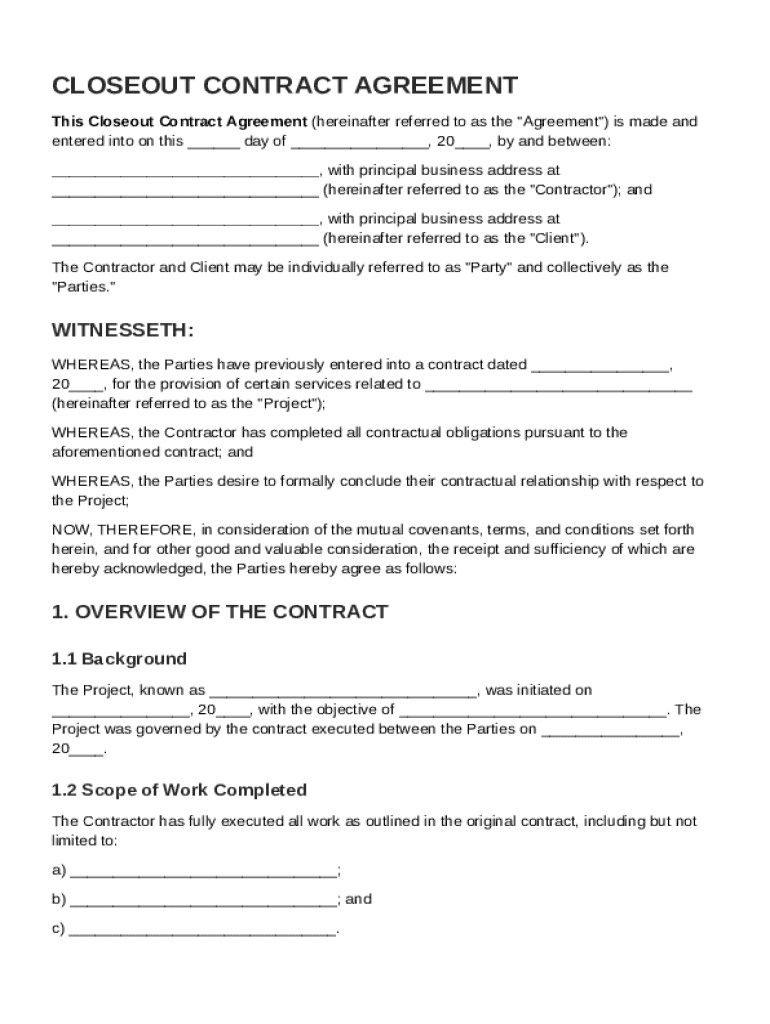
A Closeout Contract Template serves as a formal agreement between a contractor and a client, signifying the conclusion of a project. This document primarily outlines the scope of work that has been completed, the deliverables provided, terms for final payment, and additional compliance matters like confidentiality obligations. It acts as a record that confirms all contractual commitments have been met and provides a framework for any final payments and legal considerations. Given its formal nature, this template is crucial in maintaining clarity and preventing disputes as projects come to completion.
Key Elements of the Closeout Contract Template
The Closeout Contract Template includes several critical elements to ensure transactional clarity and legal integrity:
-
Scope of Work: Details the tasks and services rendered by the contractor, ensuring all parties agree on the work completed.
-
Deliverables: Specifies what tangible or intangible assets were delivered to the client, such as reports, materials, or services.
-
Final Payment Terms: Outlines the remaining financial obligations, including the final payment amount, due date, and mode of payment.
-
Warranties and Guarantees: Details any warranties associated with the completed work, providing the client with assurance of quality.
-
Confidentiality Obligations: Establishes guidelines for handling any confidential information, safeguarding proprietary knowledge.
-
Dispute Resolution Procedures: Specifies methods for resolving conflicts, typically advocating for mediation or arbitration before litigation.
Steps to Complete the Closeout Contract Template
Completing a Closeout Contract Template involves several meticulously structured steps:
-
Preparation: Gather all project-related documents, including initial contracts, communications, and transaction records.
-
Review and Verification: Verify that all contractual commitments have been met, and ensure all deliverables align with the initially agreed scope.
-
Drafting the Contract: Input comprehensive details into the template, emphasizing accuracy and completeness for all sections.
-
Consultation: If necessary, seek legal counsel to verify that the template meets all relevant legal standards and custom requirements.
-
Mutual Review: Parties involved must review the document collaboratively, ensuring mutual understanding and agreement.
-
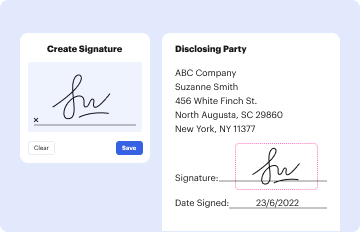
Signing: Both parties formally sign the contract to acknowledge agreement and closure of the project.
-
Archiving: Store the signed contract securely, both digitally and in physical format, for future reference or compliance checks.
Who Typically Uses the Closeout Contract Template
The Closeout Contract Template is typically utilized by:
-
Contractors: Individuals or firms providing specialized services or goods who need to formalize the conclusion of their engagements with clients.
-
Clients: Organizations or individuals who have engaged contractors for specific projects and require formal documentation to conclude the relationship.
-
Project Managers: Professionals overseeing project completion, ensuring all tasks and deliverables are documented and finalized appropriately.
-
Legal Advisors and Consultants: Legal professionals who aid in drafting and reviewing the template to ensure compliance with applicable laws and regulations.

Legal Use of the Closeout Contract Template
From a legal standpoint, employing a Closeout Contract Template enhances the contractual certainty and enforceability of project termination terms:
-
Compliance with the ESIGN Act: Electronic signatures, when used, conform to U.S. legal standards for digital agreements, providing legitimacy and enforceability.
-
Contractual Finality: Ensures the discharge of obligations, protecting involved parties from future claims or disputes.
-
Evidence of Completion: Acts as documentary evidence that can support legal proceedings, if necessary, by detailing the completion status and confirming compliance with contract terms.
State-Specific Rules for the Closeout Contract Template
While the Closeout Contract Template maintains a generic scope, several U.S. states have specific rules impacting contractual elements:
-
New York: Requires explicit acknowledgment of both parties for any variations in project scope that impact contractual terms.
-
California: Imposes strict confidentiality obligations and may require additional disclosures depending on the project type.
-
Texas: Places particular emphasis on mediation for dispute resolution and may demand acknowledgment of state-specific warranties and representations.
In each case, amendments or supplementary inclusions might be necessary to ensure compliance with local laws. Consulting local legal experts is advisable for state-specific adaptations.
Business Types That Benefit Most from the Closeout Contract Template
Several business entities derive significant benefits from utilizing the Closeout Contract Template:
-
Construction Firms: Require meticulous documentation to track project completion and handle final settlements with stakeholders.
-
Consultancy Agencies: Need to formalize the end of their advisory roles upon project delivery to safeguard intellectual property.
-
Freelancers: Work independently on diverse contracts and require standardized templates to conclude numerous projects efficiently.
-
Event Management Companies: Conclude events formally by addressing all client interactions and deliverables achieved.
Each business type benefits from the clarity and protection offered by the template, safeguarding their end-of-project transactions and relationships.
Examples of Using the Closeout Contract Template
Consider the practical scenarios where a Closeout Contract Template proves indispensable:
-
Construction Industry: A building contractor uses the template to confirm construction completion, resolve final payments, and address remaining contractual duties.
-
IT Services: An IT consultancy finalizes a software deployment project by documenting delivery, addressing lingering support issues, and closing out financial terms.
-
Marketing Agencies: Upon finishing a marketing campaign, an agency employs the template to conclude engagements, solidify results documentation, and finalize compensation arrangements.
These instances demonstrate the template's flexibility, providing structured closure across varied project types.