




01. Edit your form online
Type text, add images, blackout confidential details, add comments, highlights and more.

Type text, add images, blackout confidential details, add comments, highlights and more.

Draw your signature, type it, upload its image, or use your mobile device as a signature pad.

Send it via email, link, or fax. You can also download it, export it or print it out.
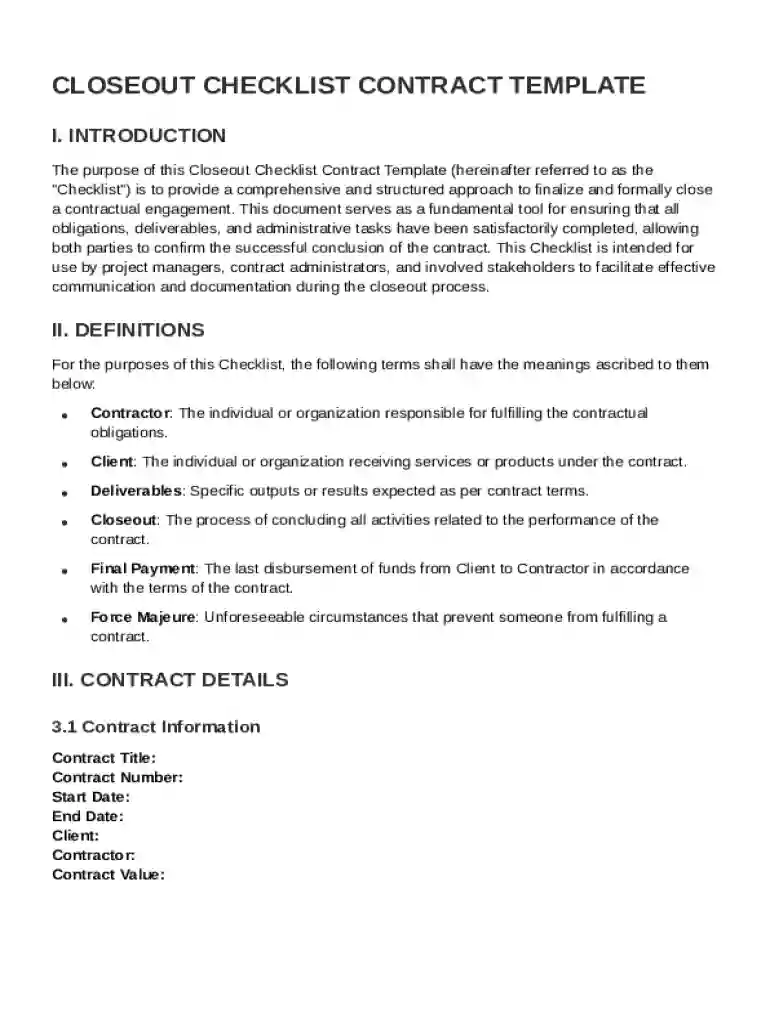
The Closeout Checklist Contract Template is an essential tool designed to facilitate the formal closure of contractual agreements. It provides a structured framework to ensure that all aspects of a contract are completed satisfactorily before the engagement officially ends. This document covers important areas such as verifying deliverables, fulfilling administrative duties, managing asset disposition, and obtaining final signoff from all parties involved. The template’s comprehensive checklist format encourages thoroughness and accountability, making it particularly valuable in project management and contract administration.
To effectively utilize the Closeout Checklist Contract Template, users should follow a step-by-step approach beginning with familiarizing themselves with the document's layout and relevant sections. This might include areas like contract details and deliverables verification. Users should systematically address each item on the checklist accurately and completely. Collaborative features available on platforms like DocHub can facilitate this process by allowing multiple team members to contribute input, comments, or approvals in real-time, thus streamlining the closure procedure and supporting seamless finalization of the contract.
Review Contract Details: Begin by meticulously reviewing the contract details section to ensure that all necessary information is accurately captured.
Verify Deliverables: Cross-check that all deliverables specified in the contract have been completed and meet the agreed-upon standards.
Administrative Tasks: Fulfill all pending administrative tasks, such as final invoicing and submission of necessary documentation.
Conduct Asset Disposition: If applicable, manage the disposition of any assets involved in the contract, ensuring they are appropriately allocated or returned.
Compile Lessons Learned: Document any lessons learned during the project to inform future contract engagements.
Obtain Signoff Approvals: Secure final approvals from both clients and contractors to officially close the contract.
The Closeout Checklist Contract Template is frequently utilized by project managers, contract administrators, and stakeholders who play pivotal roles in overseeing significant contractual agreements. It is particularly beneficial for those in industries where clear and precise closure of projects is critical, such as construction, information technology, and professional services. Companies can leverage the template to coordinate and finalize efforts involving multiple contributors or departments, ensuring that no detail is overlooked during the transition from contract completion to official closure.


The template serves as a legally recognized document in the contract closure process, helping ensure compliance with the terms outlined in the original agreement. By providing a detailed account of activities and approvals, the closeout checklist aids in protecting legal rights and obligations. It serves as evidence of agreement on the completion status and specific deliverables, reducing potential disputes or misunderstandings between parties.
Consider a technology firm completing a software development contract. Throughout the closeout process, the firm uses the checklist to confirm that all deliverables, such as bug-free code and user manuals, are completed and accepted by the client. By documenting lessons learned, they ascertain more efficient practices for subsequent projects. Similarly, a construction company might use the checklist to validate that all construction phases are finished and that subcontractors have been adequately remunerated and released from their contractual duties.
While the Closeout Checklist Contract Template offers a robust framework applicable in various contexts, users must be aware of any state-specific regulations that might affect the contract closeout process. These may include jurisdiction-specific requirements for documentation, asset transfer processes, or differing legal standards for obtaining signoff approvals. Understanding these variations is crucial for businesses operating across multiple states to ensure compliance and enforceability of their contracts.
At DocHub, your data security is our priority. We follow HIPAA, SOC2, GDPR, and other standards, so you can work on your documents with confidence.
May 30, 2012 includes financial closeout, contract disputes, and final payment activities, these should be completed before the finish milestone. Case
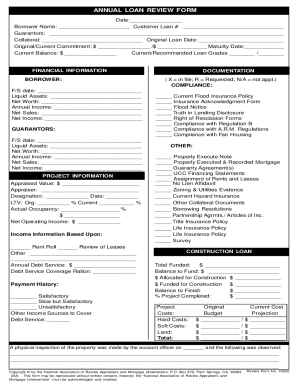
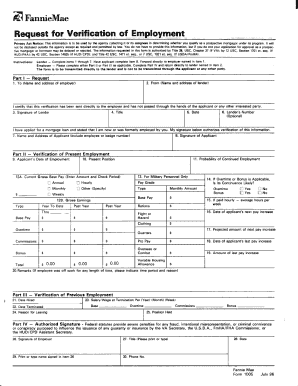
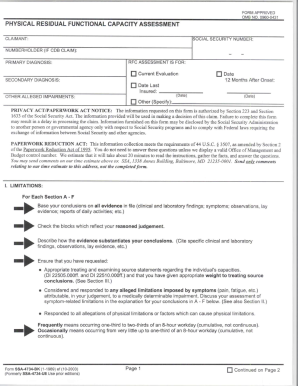
CONTRACT CLOSEOUT CHECK-LIST. (Continue on reverse for any comments). 1. CONTRACT NUMBER. 2. CONTRACT MODIFICATION NUMBERS (If applicable). 3. NAME OF
INSTRUCTIONS. Use this checklist to close out the contract with the contractor. The list is not exhaustive, the questions are just the beginning.


