Definition and Meaning
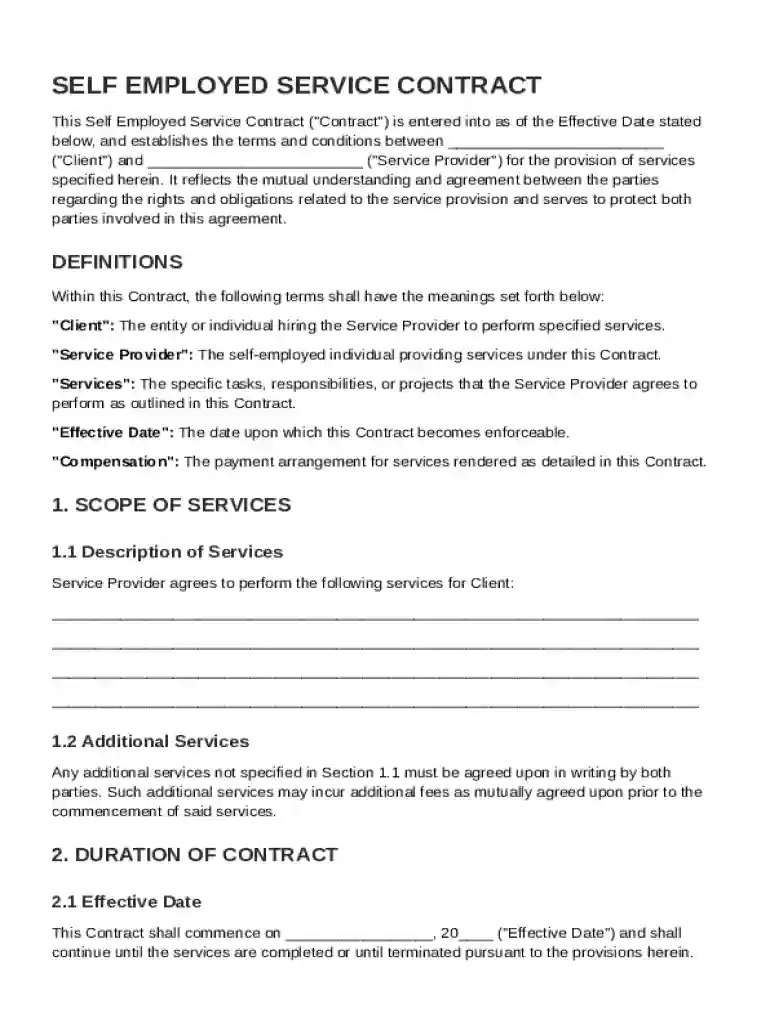
The Self Employed Service Contract governs the contractual relationship between a client and an independent contractor, detailing the terms under which services will be delivered. This contract is essential for clarifying the expectations and responsibilities of each party. It generally includes sections on the scope of work, compensation, confidentiality, and liability, providing a structured framework for work engagements. This ensures both parties understand their obligations, protecting against misunderstandings and legal disputes.
Key Elements of the Self Employed Service Contract Template
This template includes crucial components that ensure a comprehensive understanding of the service agreement:
- Scope of Services: Clearly outlines the services to be provided by the contractor. This section ensures there is a mutual understanding of the tasks and deliverables expected.
- Compensation Details: Specifies the payment terms, including the rate, payment schedule, and any additional expenses.
- Responsibilities: Clarifies each party's obligations to maintain accountability throughout the contract term.
- Confidentiality Agreement: Outlines the boundaries regarding the sharing of sensitive information, protecting the intellectual property of both parties.
- Liability Clauses: Defines the extent of liability for each party, mitigating potential risks related to service provision.
How to Use the Self Employed For Service Contract Template
To effectively utilize the contract template, follow these steps:
- Review All Sections: Thoroughly examine each part of the contract to ensure it aligns with the specific nature of the services and the terms agreed upon.
- Customize the Template: Modify any sections that need personalization, such as inserting specific service details, payment terms, and deadlines.
- Discuss with Legal Counsel: For added assurance, consult with a legal expert to adapt the template for your particular jurisdiction and industry standards.
- Negotiate Terms: Engage in a discussion with the other party to negotiate any terms that may require adjustment based on specific needs or concerns.
Steps to Complete the Self Employed For Service Contract Template
Completing the contract involves several methodical steps:
- Gather Information: Compile all necessary details about the services, including scope, deadlines, and compensation structure.
- Input Information into the Template: Insert the relevant data into the designated sections of the template.
- Verify Completeness: Double-check the accuracy and completeness of the information provided.
- Obtain Approvals: Both parties should review and approve the content before signing.
- Sign and Secure: Ensure all parties sign the document. Keep a secure copy for records.
Legal Use of the Self Employed For Service Contract Template
This contract must adhere to various legal standards to be enforceable:
- Compliance with Applicable Laws: Verify that the contract meets all legal requirements of your state or locality.
- Independent Contractor Status: Clearly define the relationship and status as an independent contractor to avoid misclassification issues.
- Adhere to the ESIGN Act: When electronically signing, ensure compliance with the Electronic Signatures in Global and National Commerce Act.
Who Typically Uses the Self Employed For Service Contract Template
This template is advantageous for various users:

- Freelancers: Individuals offering specialized services on a contractual basis.
- Small Business Owners: Businesses that engage independent contractors for projects requiring specific expertise.
- Consultants: Professionals providing expert advice in their field.
Important Terms Related to the Self Employed For Service Contract Template
Understanding key terms enhances clarity and compliance:
- Independent Contractor: An individual who provides services under terms specified in a contract, operating autonomously.
- Force Majeure: A clause that frees parties from liability or obligation when a major, unforeseen event occurs.
- Governing Law: Specifies which legal jurisdiction's laws apply to the contract.
Business Types That Benefit Most from the Self Employed For Service Contract Template
Certain business types gain particular advantages by using this contract:
- Technology Firms: Often use contractors for project-based tasks requiring specialized technical skills.
- Marketing Agencies: Engage freelancers to handle various client campaigns without full-time commitments.
- Construction Companies: Use contractors for distinct phases of building projects, such as plumbing or electrical work.
Software Compatibility
DocHub provides digital convenience, easily integrating with systems like:
- QuickBooks and TurboTax: These applications can help manage and track the financial aspects of contracts.
- Google Workspace: Smooth integration allows easy sharing and modification of documents within Google Drive.
Each section aims to offer in-depth insights into utilizing the Self Employed For Service Contract Template effectively, ensuring thorough understanding and application for all parties involved.