





Definition & Meaning
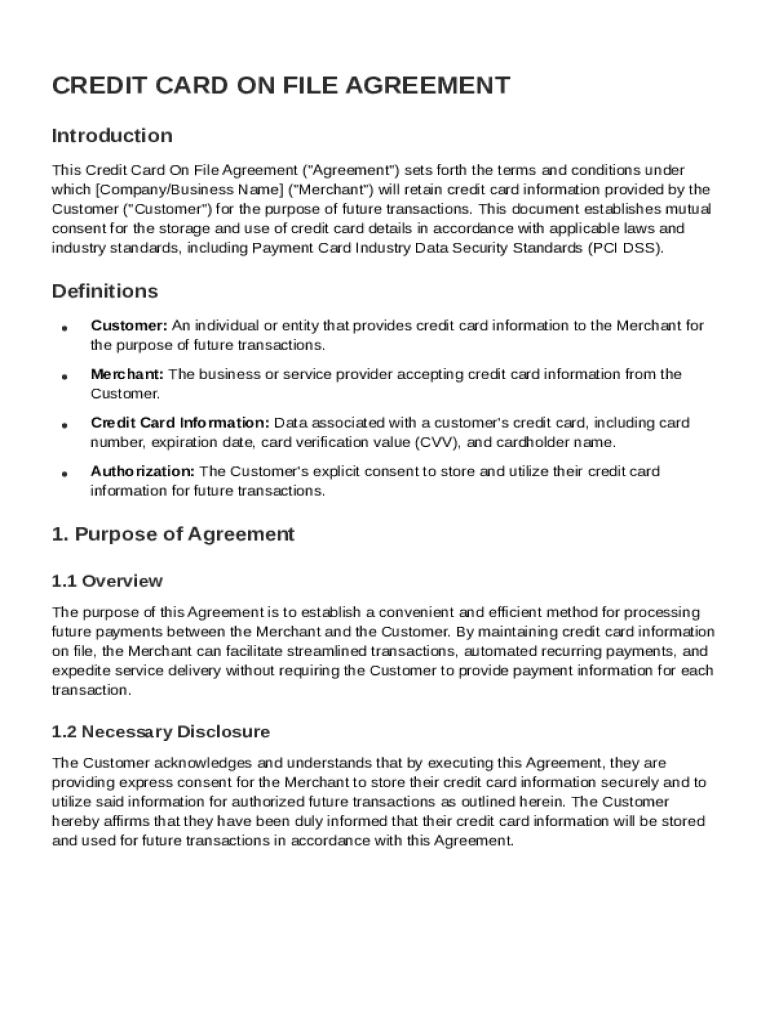
A Credit Card On File Agreement Template is a formal document used by merchants to securely store a customer's credit card information for future transactions. This template structures the consent between the merchant and customer, ensuring compliance with payment processing standards like the PCI DSS (Payment Card Industry Data Security Standard). It outlines the obligations related to data security, customer responsibilities for providing precise information, and the procedures for authorizing or terminating the agreement.
The primary purpose is to establish trust and transparency in how card information is stored and used, minimizing the potential for disputes and increasing the efficiency of future transactions.
How to Use the Credit Card On File Agreement Template
This template is designed for straightforward use by businesses looking to safely store and utilize customer credit card information. Here are steps to effectively use the template:
-
Download and Review: Obtain a copy of the template, reviewing all sections to ensure it meets your business requirements and complies with legal standards.
-
Customization: Amend the document to reflect specific terms agreed upon with the customer, such as transaction limits, data retention periods, and any fees involved.
-
Secure Customer Consent: Present the agreement to the customer for their review. Ensure they fully understand and consent to all terms before proceeding.
-
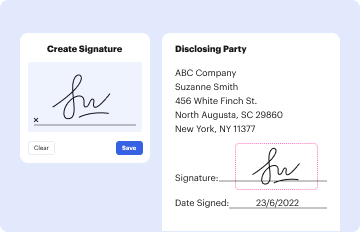
Signatures: Both parties should sign the document, indicating their agreement to the terms laid out.
-
Secure Storage: Keep a copy of the signed agreement in a secure location, compliant with data protection regulations.
This structured approach ensures legal compliance and maintains the integrity of your business processes.
Key Elements of the Credit Card On File Agreement Template
Recognizing the key components of this agreement is vital for its effectiveness and compliance. Essential elements include:
- Personal and Credit Card Information: Clear details of the cardholder's information that will be retained.
- Purpose and Duration: Reason for storing the data and the length of time the information will be kept.
- Data Security Measures: Description of how the stored data will be protected against unauthorized access.
- Revocation and Termination Clauses: Terms under which the cardholder can withdraw consent or terminate the agreement.
- Liability and Indemnification: Outlines the limitations of liability for both the merchant and the customer in case of data breaches or unauthorized transactions.
- Dispute Resolution: Procedures for handling disagreements or issues related to transactions.
These elements collectively ensure a comprehensive agreement that protects both parties involved.
Steps to Complete the Credit Card On File Agreement Template
Completing this template involves several deliberate actions to ensure accuracy and compliance:
- Client Information Entry: Begin by accurately entering the customer's information and the credit card details.
- Agreement Details: Specify the terms including transaction types and any fees or charges applicable.
- Security Clauses: Clearly state the security measures in place for data protection, referencing compliance with standards like PCI DSS.
- Review and Edit: Go through the agreement to make sure all clauses are clear and legally sound.
- Obtain Signatures: Both the customer and the merchant need to sign the agreement. Consider using an electronic signature solution like DocHub for efficiency.
- Dissemination and Storage: Provide a copy to the customer and store the document securely.
These steps ensure all stakeholders understand their responsibilities and rights under the agreement.
Important Terms Related to Credit Card On File Agreement Template
Understanding the terminology within this agreement is crucial for proper implementation and management:
- PCI DSS: Payment Card Industry Data Security Standard; set of security standards for handling cardholder data.
- Authorization: Consent provided by the cardholder to store and use their card information for predefined transactions.
- Revocation: The process by which a customer can withdraw their consent to have their credit card information stored and used.
- Indemnification: A contractual agreement where one party agrees to compensate for any harm or loss incurred by another.
- Encryption: The method used to secure data, making it unreadable to unauthorized users.
Familiarity with these terms ensures clear communication and compliance across all interactions related to the agreement.
Legal Use of the Credit Card On File Agreement Template
Using this template involves adhering to legal frameworks governing consumer data protection:
- Compliance with PCI DSS: Ensures that the storage and processing of card information meet industry security standards.
- Informed Consent: Customers must be fully informed about how their data will be used and stored, ensuring their consent is genuine and voluntary.
- Privacy Laws: Adherence to relevant state and federal privacy laws, ensuring data is used ethically and legally.
Such compliance requires that businesses regularly review legal requirements and update their practices accordingly.
Who Typically Uses the Credit Card On File Agreement Template
This template suits a variety of business types and situations:
- E-commerce Platforms: Businesses that handle repeat transactions benefit from having an agreement in place to streamline purchases.
- Service Providers: Companies that offer subscription services or scheduled billing often rely on stored credit card agreements.
- Medical and Dental Practices: These entities frequently use agreements to handle billing for recurring appointments or payments.
Overall, any business that benefits from recurring billing or stored payment details can effectively use this template to manage financial interactions efficiently.


State-Specific Rules for the Credit Card On File Agreement Template
While the template provides a general structure, variations can occur depending on regional laws:
- California Privacy Standards: Businesses must ensure compliance with stricter privacy laws, such as the California Consumer Privacy Act (CCPA).
- New York Data Retention Requirements: Some states may have specific requirements for how long businesses can retain cardholder data.
- Texas Encryption Standards: Certain areas mandate robust encryption methodologies beyond standard PCI DSS requirements.
Considering these state-specific rules ensures the agreement is legally robust across all operational regions.