
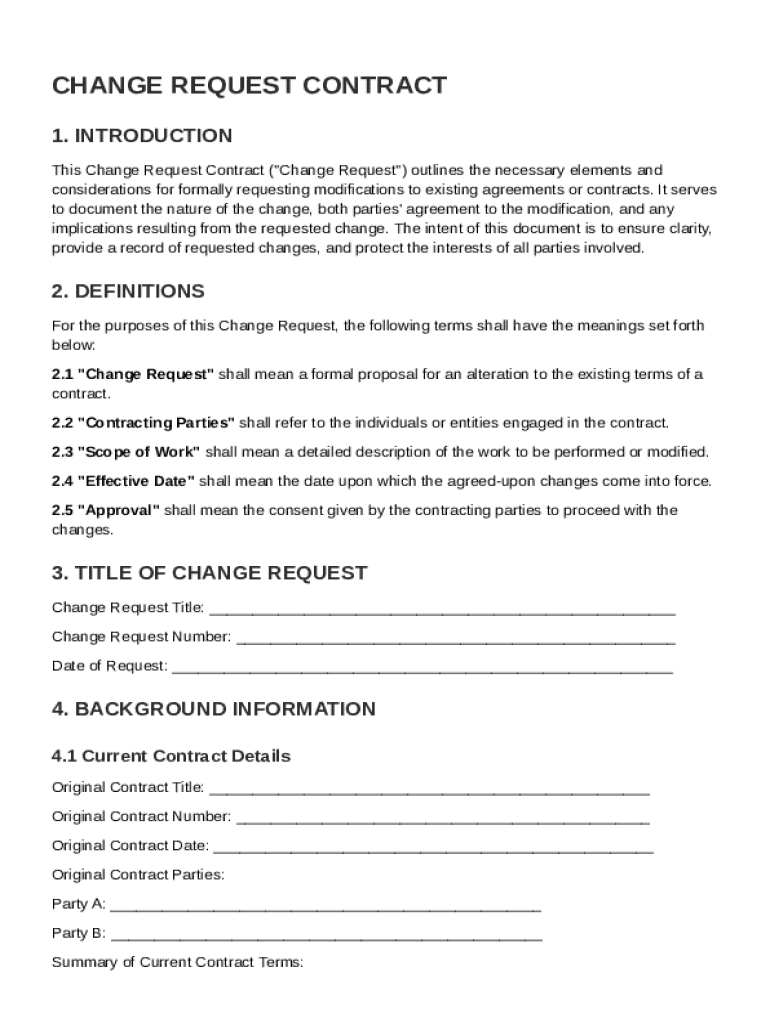




Definition & Purpose of the Change Request Contract Template
The Change Request Contract Template serves as a formal document to propose and authorize modifications to an existing contract. It encompasses various elements crucial for ensuring clarity among all parties involved, such as definitions of key terms and a comprehensive explanation of the current agreement. By providing a structured approach, this template helps prevent misunderstandings and protects the interests of all signatories. It details the nature of proposed changes, reasons for modification, potential impacts, and the necessary approval processes.
Underpinning its purpose is the need for an organized method to manage amendments, which can occur due to evolving project scopes or unforeseen circumstances. This ensures that all modifications are well-documented, maintaining alignment with the original contract's objectives while allowing for necessary flexibility.
Real-world Applications and Scenarios
The Change Request Contract Template is frequently utilized in various sectors such as construction, technology, and consultancy. For instance, in a tech project involving software development, a change request might arise when the client requires additional features not included in the initial contract. Using this template, project managers can formally process these requests, assess impacts on the project timeline, and address budget considerations.
For construction projects, changes in site conditions might necessitate contract amendments. The template ensures that such changes are documented, with appropriate justifications and agreement among stakeholders. Each scenario highlights the need for structured communication and formal documentation to avoid disputes.
How to Use the Change Request Contract Template
Using the Change Request Contract Template involves several key steps to ensure it is accurately and efficiently completed. First, identify and list the specific sections of the existing contract that require modification. This requires a thorough understanding of the current agreement and the specifics that need alteration.
Next, detail the reasons for the proposed changes. It is crucial to articulate these in a manner that is comprehensible to all parties involved. This may include situations like shifts in project scope, resource availability, or regulatory changes that necessitate the amendments.
Steps for Completion
- Identify the Contractual Element to be Modified: Clearly specify which part of the original contract requires change.
- Draft the Proposed Modifications: Outline the exact changes needed, using precise and unambiguous language.
- Assess Impacts: Evaluate how the proposed changes will affect the project's timeline, costs, and deliverables. Include these assessments in the document.
- Gather Supporting Evidence: Compile any documents or data that substantiate the need for change, such as reports or previous amendments.
- Seek Approval: Submit the draft change request for approval from relevant stakeholders. Ensure every party acknowledges and agrees to the proposed modifications.
Common Mistakes to Avoid
- Ambiguity in Language: Ensure that the language used is clear and precise to avoid misinterpretation.
- Incomplete Impact Assessments: Provide thorough analyses of how changes will affect project outcomes.
- Lack of Stakeholder Engagement: Engage all relevant parties early in the process to ensure buy-in and prevent delays.
Key Elements of the Change Request Contract Template
A comprehensive Change Request Contract Template should include specific elements to serve its purpose effectively. One of the primary components is the definition of key terms, which helps avoid ambiguity and ensures that all parties have a common understanding of crucial concepts.
The template should also lay out the rationale behind proposed modifications. This section should detail the circumstances that prompted the change, thereby providing transparency and building trust among stakeholders.
Components Overview
- Summary of Current Agreement: Provide a brief overview of the original contract, focusing on areas affected by the proposed changes.
- Details of Proposed Changes: Succinctly articulate the changes, clarifying how they differ from existing terms.
- Impact Assessment: Analyze the repercussions of proposed amendments on cost, timeline, and resource allocation.
- Approval Process: Describe the procedure for gaining necessary approvals, including any decision-makers involved.
Practical Examples
In a consulting project, if a client requests additional analysis beyond the defined scope, the template would document the additional work required, any extra costs incurred, and how it affects the delivery schedule. This structured approach facilitates negotiation and mutual agreement.
For an ongoing construction project, the discovery of unforeseen site conditions might lead to a request for additional funding to cover increased material costs. This template section ensures that all financial implications are disclosed and agreed upon.
Important Terms Related to the Change Request Contract Template
Understanding the specific terms related to the Change Request Contract Template is crucial for its effective use. Key terms include:
- Scope of Work (SOW): Refers to the detailed description of work and deliverables initially agreed upon.
- Amendment Protocols: The procedures for formally integrating changes into an existing contract.
- Stakeholder Approval: Consent required from parties directly impacted by the proposed changes, vital for legitimizing the amendment process.
Contextual Explanation of Terms
Scope of Work often forms the basis for why a change may be necessary, particularly if client requirements evolve. It ensures that all parties have a shared understanding of project deliverables, against which changes can be measured.
Amendment Protocols provide a structured process for implementing changes, reducing the risk of disputes. This involves outlining steps for proposal, review, and acceptance of contract modifications.
Stakeholder Approval underscores the importance of communication among all parties to maintain contract integrity. By ensuring all stakeholders are informed and consent to changes, this term highlights the collaborative aspect of contract management.
Legal Use & Compliance Considerations
Adhering to legal standards when using the Change Request Contract Template is essential to uphold the enforceability of amendments. It involves ensuring that any changes made to a contract comply with relevant laws and regulations, which can vary depending on the industry or jurisdiction.
One critical aspect is obtaining all necessary consents and ensuring that the template reflects any statutory requirements pertinent to the contract's nature. This involves aligning the contract's amendments with legal precedents and statutory needs.
Legal Guidelines
- Ensure Legality of Amendments: Verify that all changes adhere to applicable laws and do not invalidate existing contractual obligations.
- Maintain Record Integrity: Document all changes meticulously to create a clear audit trail.
- Seek Legal Advice if Necessary: In complex cases, consulting a legal professional can help ensure compliance and prevent legal disputes.
Compliance Examples
In the United States, specific sectors like healthcare or finance have stringent compliance requirements. For example, a healthcare provider amending contracts involving patient data must ensure that all changes comply with HIPAA regulations. Similarly, financial contracts may need to meet SEC standards.
Documenting approval from relevant regulatory bodies is another example of ensuring compliance, particularly if the changes affect regulated activities.
State-Specific Rules for Change Request Contract Templates
Different states in the U.S. may have varying rules regarding contract amendments. Factors such as state-specific legislation, industry standards, and legal requirements can influence how a Change Request Contract Template is formulated and implemented.
Understanding local laws is crucial when drafting modifications to ensure all statutory requirements are met and that the changes are legally binding in the specific jurisdiction.
Regional Considerations
- California: Given its strict consumer protection laws, any change in contract affecting consumer rights must be transparent and submitted with adequate notice.
- New York: Business contracts may have specific forms of notarization or witness requirements to make amendments binding.
- Texas: Some agreements, especially in oil and gas industries, might require adherence to regulatory approvals before changes are institutionalized.
Practical Implications
Companies operating in multiple states need to tailor their contract templates to meet state-specific requirements. This might involve creating state-centric versions of the Change Request Contract Template, ensuring compliance across jurisdictions.
For national projects, collaborating with regional legal experts can safeguard against non-compliance, ensuring that contracts are enforceable across all affected areas.
Who Typically Uses the Change Request Contract Template
The Change Request Contract Template is utilized by a diverse range of professionals whose work involves managing contractual agreements. These primarily include project managers, legal advisors, business analysts, and procurement specialists.
In different sectors, these users employ the template to streamline the process of introducing changes to existing agreements, ensuring all stakeholders are aligned, and maintaining project momentum without legal repercussions.

Role-Specific Utilization
- Project Managers: Use the template to systematically document changes in project scope, timelines, and budgets, ensuring all such changes are communicated to and approved by stakeholders.
- Legal Advisors: Assist in drafting legally compliant amendment documents, minimizing the risk of disputes.
- Business Analysts: Evaluate the impacts of proposed changes on project deliverables and share insights that inform decision-making.
Sector-Specific Examples
In the IT sector, project managers might use the template to handle software development projects where client requirements frequently change due to technological advancements.
In construction, procurement specialists might need to adjust supplier contracts in response to material price fluctuations, securing stakeholder approvals efficiently with the help of the template.
Steps to Complete the Change Request Contract Template
Successfully completing a Change Request Contract Template involves a structured approach to ensure clarity and alignment among all stakeholders. This process mitigates potential disputes and facilitates smooth integration of changes.
Completion Process
- Initiate the Change Request: Begin by identifying the need for change and gathering all relevant information, such as the specifics of the current contract and the proposed modifications.
- Draft the Change Request Document: Use the template to outline the changes clearly. Ensure that all modifications are well-defined and documented.
- Perform Impact Analysis: Assess how the proposed changes will affect the scope, budget, and timeline of the project. Document all potential impacts in the template.
- Seek Stakeholder Approval: Present the draft to relevant stakeholders, acquiring necessary consents and making modifications based on feedback.
- Finalize and Implement: Once approved, circulate the finalized document to all parties, ensuring everyone has the updated version before implementation begins.
Additional Considerations
Conduct a final review to ensure compliance with any legal or industry-specific standards. This includes verifying that all necessary signatures and consents are present. Additionally, ensure that all stakeholders have a clear understanding of the changes and their implications to prevent future misunderstandings.