





Definition & Meaning
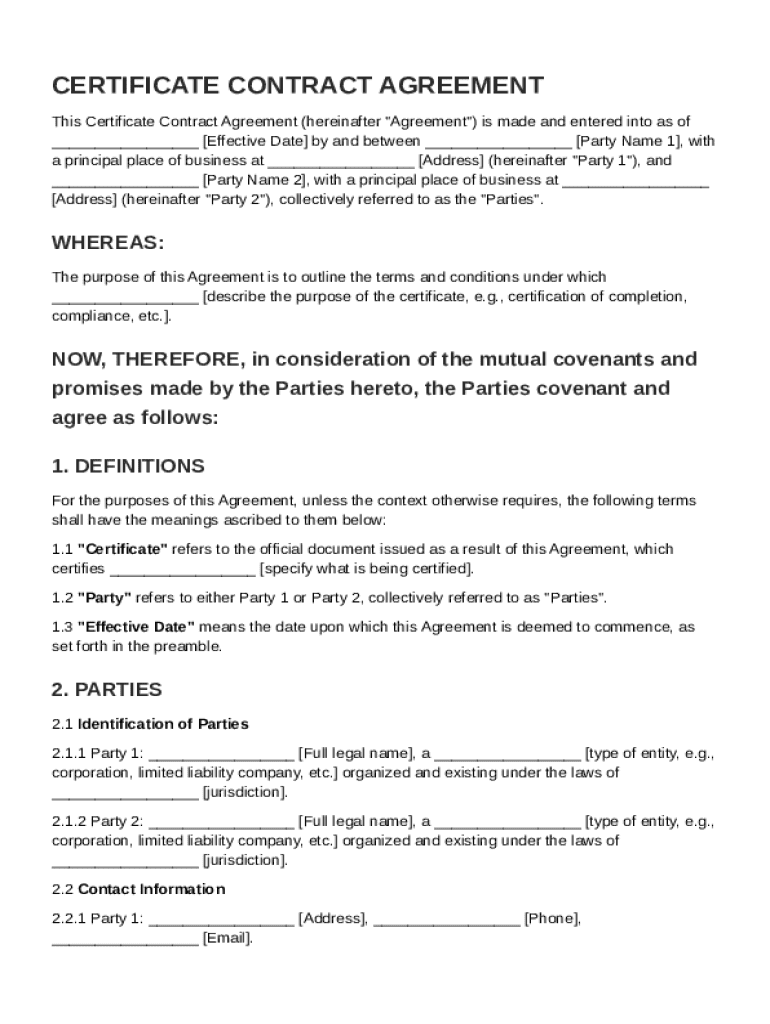
The Certificate Contract Template is a structured document designed to formalize the terms and conditions between parties involved in the issuance and acceptance of a certificate. It serves as a comprehensive agreement outlining each party's responsibilities, payment terms, and legal obligations. This template includes various sections such as definitions, obligations, and termination clauses, aiding in clear communication and understanding among all involved parties.
Key Elements of the Certificate Contract Template
The Certificate Contract Template is composed of several critical sections that ensure the document serves its intended purpose effectively:
-
Definitions: Clarifies terms used within the contract, ensuring all parties have a mutual understanding of the language employed.
-
Obligations of Each Party: Outlines the duties and responsibilities each party must fulfill within the duration of the agreement.
-
Payment Terms: Details the financial aspects, including payment schedules, amounts, and methods, to prevent any financial misunderstandings.
-
Termination Clauses: Specifies conditions under which the contract may be terminated, protecting all parties from potential legal disputes if the agreement needs to end prematurely.
-
Governing Law: Indicates which jurisdiction's laws will govern the agreement, providing legal clarity and guidance.
-
Miscellaneous Provisions: Includes additional terms and conditions pertinent to the overall contract, such as confidentiality, liability, and amendments.
By encompassing these elements, the template not only facilitates smooth transactions but also reduces the likelihood of disputes.
How to Use the Certificate Contract Template
Utilizing the Certificate Contract Template efficiently requires a step-by-step approach:
-
Identify Relevant Parties: Clearly list all parties involved in the agreement and their respective roles.
-
Fill in Core Information: Complete the template with specifics such as certificate type, involved parties' obligations, and payment details.
-
Review Legal Clauses: Ensure all legal provisions are understood and agreed upon by all parties. Consulting with legal professionals may be helpful for complex agreements.
-
Customize as Needed: Adjust sections to cater to unique requirements or circumstances specific to the parties involved and the certificate context.
-
Obtain Signatures: Once all parties agree to the terms, obtain signatures to formalize the contract and make it legally binding.
-
Store Securely: Keep signed copies in a secure location for future reference and potential auditing needs.
This approach ensures the Certificate Contract Template is used effectively, protecting the interests of all parties.
Legal Use of the Certificate Contract Template
The Certificate Contract Template is structured to comply with legal standards, ensuring it holds up in legal settings:
-
Compliance with ESIGN Act: For electronic agreements, the template adheres to the standards set out by the Electronic Signatures in Global and National Commerce Act, ensuring electronic signatures are as valid as handwritten ones.
-
Incorporation of Local Laws: The template can be adapted to comply with specific state regulations, making it versatile for use across various jurisdictions within the United States.
-
Audit Trails: When managed digitally, templates can be accompanied by complete audit trails, documenting every transaction step, including amendments and signatures.
A legally compliant Certificate Contract Template ensures enforceability and the protection of all parties' interests.
Steps to Complete the Certificate Contract Template
Completing the Certificate Contract Template involves several deliberate steps:
-
Initial Preparation: Gather necessary information about the involved parties and the specifics of the certificate.
-
Template Customization: Adjust the default template to fit precise specifications, ensuring all roles and expectations are outlined.
-
Information Insertion: Input all relevant data into the template fields, including legal names, certification details, and financial arrangements.
-
Review and Confirmation: Conduct a thorough review of the completed template, ensuring accuracy and completeness.
-
Approval and Signature Collection: Have all parties review and provide their consent via signatures, which can be collected digitally or on paper.
-
Finalization and Archiving: Once completed and signed, archive the final document in a secure, easily accessible format for future reference.
Following these steps guarantees that the Certificate Contract Template is filled accurately and efficiently, minimizing potential errors or omissions.
Examples of Using the Certificate Contract Template
The Certificate Contract Template finds its utility across various scenarios:
-
Educational Institutions: Used for agreements between certifying bodies and institutes providing academic or vocational certificates to ensure educational programs meet set standards.
-
Professional Bodies: Deployed for issuing certificates to individuals verifying their professional qualifications and competence in specific fields, such as accounting or engineering.
-
Business Credentials: Employed between companies and certification authorities to formalize credentials that enhance organizational credibility, like ISO certifications.
Each application highlights the template’s flexibility and the importance of a well-structured agreement for success in diverse professional environments.
Important Terms Related to Certificate Contract Template
Understanding key terms related to the Certificate Contract Template is essential:
-
Certification: Indicates formal recognition of competence or completion, either in educational or professional contexts.
-
Signatory: Any party that signs the certificate contract, thereby agreeing to its terms and obligations.
-
Amendment: Modifications made to the certificate contract, which must be agreed upon by all parties prior to implementation.
-
Validity Period: Duration for which the certification remains valid, defining the timeframe in which the certificate must be used or renewed.
Fluency with these terms enables more effective communication and mutual understanding during contract negotiations.
State-Specific Rules for the Certificate Contract Template
There is variance in how certificate contracts may be regulated across different states:
-
Jurisdictional Compliance: Certain states require specific language or disclosures within contracts for them to be legally binding.
-
Notarization Requirements: States like California may necessitate notarized signatures on certain contracts to verify authenticity.
-
Remote Signing Protocols: Some jurisdictions have special rules for electronic contracts, which may influence how certifications are processed digitally.
Familiarity with state-specific legislative requirements ensures that the Certificate Contract Template remains legally valid wherever utilized.
Software Compatibility for Certificate Contract Template
Ensuring software compatibility is crucial when working with the Certificate Contract Template:
-
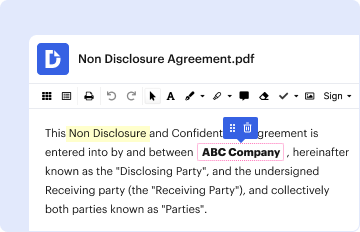
Document Compatibility: DocHub allows editing and signing within a variety of file formats, including PDF, DOC, PPT, and XLS, important for broad applicability.
-
Cloud Integration: The template can seamlessly interact with cloud storage services like Google Drive and Dropbox for effortless cross-platform operations.
-
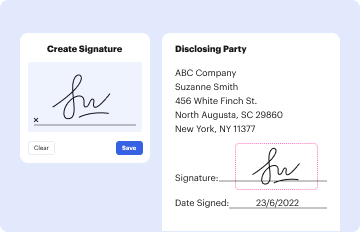
Digital Signature Functionality: Compatibility with digital signature solutions like DocHub’s ensures straightforward, compliant electronic signing processes.
Perfecting the technological integration of the Certificate Contract Template enhances overall workflow efficiency and minimizes technical barriers.