






Definition & Meaning
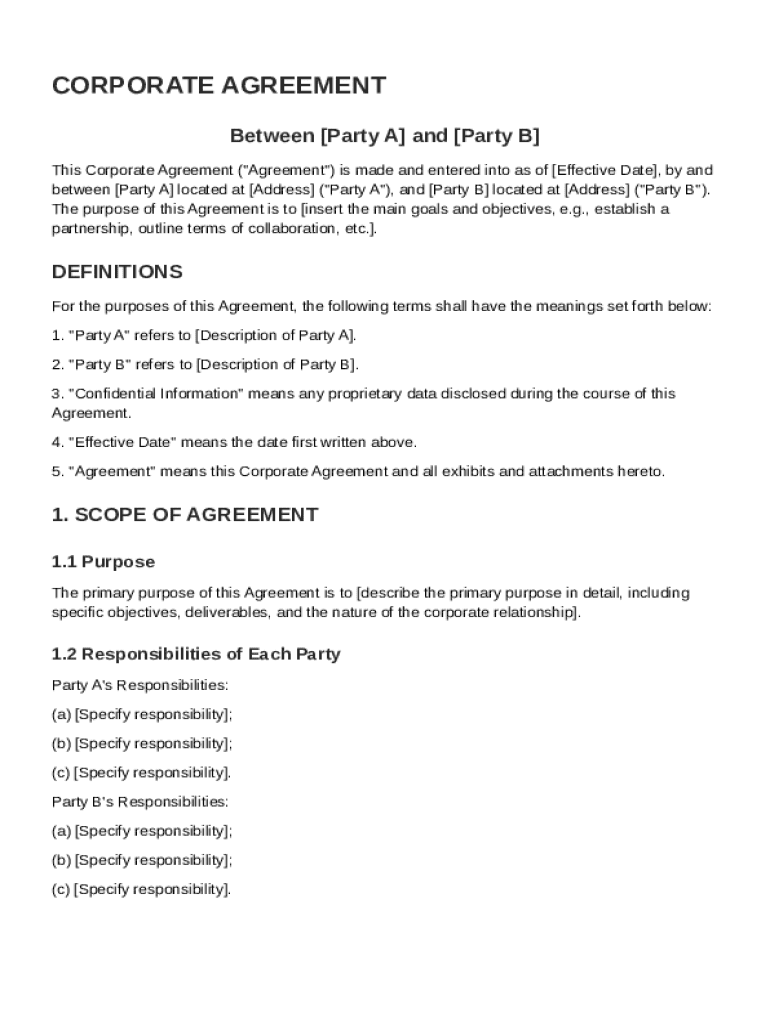
A corporate agreement template is a standardized document primarily used to outline the terms and conditions of a partnership between two or more parties, usually in the business sector. It includes definitions, responsibilities, financial terms, confidentiality obligations, intellectual property rights, indemnification clauses, dispute resolution processes, and miscellaneous provisions. This document serves as a foundational framework for establishing a collaborative relationship with specific objectives and deliverables. By providing a clear set of guidelines, the template ensures all parties are aligned in their expectations and responsibilities, minimizing potential disputes and enhancing cooperative success.
Key Elements of the Corporate Agreement Template
A comprehensive corporate agreement template contains several crucial components that require careful consideration and detail:
-
Definitions: Clear definitions ensure that all parties have a mutual understanding of specific terms and phrases used throughout the document.
-
Responsibilities: This section delineates the duties and obligations of each party, specifying who is responsible for what tasks and deliverables.
-
Financial Terms: Outlines the financial arrangements such as payment schedules, profit sharing, or expense responsibilities, which are essential for maintaining transparency and trust.
-
Confidentiality Obligations: Protects sensitive information shared between parties, ensuring that proprietary or confidential data is not disclosed to unauthorized individuals.
-
Intellectual Property Rights: Details the ownership and rights associated with any intellectual property created or used during the collaboration.
-
Indemnification Clauses: Provides assurance that parties will hold each other harmless from certain damages, liabilities, or legal actions.
-
Dispute Resolution: Outlines the process for resolving conflicts, which may include mediation, arbitration, or litigation.
How to Use the Corporate Agreement Template
Utilizing a corporate agreement template effectively involves several steps to ensure it meets the specific needs of the involved parties:
- Review and Customize: Begin by carefully reviewing the standard template and customizing it to reflect the specific needs and terms agreed upon by all parties.
- Detailed Inputs: Add detailed information related to each party's responsibilities, financial terms, and any unique clauses or conditions.
- Legal Verification: Have a legal professional review the document to confirm its compliance with applicable laws and regulations, ensuring enforceability.
- Mutual Agreement: Ensure all parties review the document, understand its contents, and agree to the terms before signing.
Examples of Using the Corporate Agreement Template
The corporate agreement template can be adapted for various business scenarios:
- Partnership Agreements: Used between two businesses looking to collaborate on a joint venture or project.
- Supplier Agreements: Tailored to define the terms of supply between a manufacturer and a retailer.
- Client Contracts: Customized for service providers working with multiple clients on specific projects.
Different industries may require certain modifications to the template to address industry-specific regulations or practices.
Who Typically Uses the Corporate Agreement Template
A variety of business entities and professionals utilize corporate agreement templates to streamline their collaborative efforts:
- Large Corporations: For formalizing partnerships and joint ventures with other companies.
- Small and Medium Enterprises (SMEs): To define terms with clients, suppliers, or other partners.
- Legal Professionals: Use these templates to draft agreements quickly and efficiently for their clients.
- Entrepreneurs and Startups: To establish clear business relationships with investors, partners, or clients from the onset.


State-Specific Rules for the Corporate Agreement Template
Legal requirements for corporate agreements may vary by state, making it crucial to adapt the template to comply with state-specific regulations. Some states might have unique requirements regarding:
- Disclosure: Certain types of information may be required to be disclosed explicitly within the agreement.
- Enforceability: The enforceability of certain clauses, such as non-compete agreements or indemnification clauses, may differ.
- Filing Requirements: Some agreements may need to be filed with a state regulatory body depending on the nature of the business or partnership.
Engaging a local attorney is advisable to ensure the agreement's compliance with relevant state laws.
Legal Use of the Corporate Agreement Template
Ensuring the legality of the corporate agreement template involves several considerations to prevent future disputes:
- Clarity and Precision: Use clear and precise language to avoid ambiguity, ensuring all parties comprehend their obligations.
- Compliance: The agreement must comply with federal and state laws pertinent to the business type and geographic location.
- Proper Execution: Each party should sign the completed agreement in the presence of a witness or notary public if required by law.
Software Compatibility
Modern digital tools enhance the usability of corporate agreement templates:
- Document Editing Software: Compatibility with platforms like DocHub supports seamless editing and collaboration.
- Cloud Storage Solutions: Integrations with Google Drive, Dropbox, and OneDrive facilitate easy access and sharing among parties.
- Legal Software: Programs like QuickBooks may assist in managing the financial aspects outlined in the agreement.
Utilizing compatible software can streamline the process, offering efficiencies in drafting, revising, and implementing corporate agreements.