Definition and Meaning
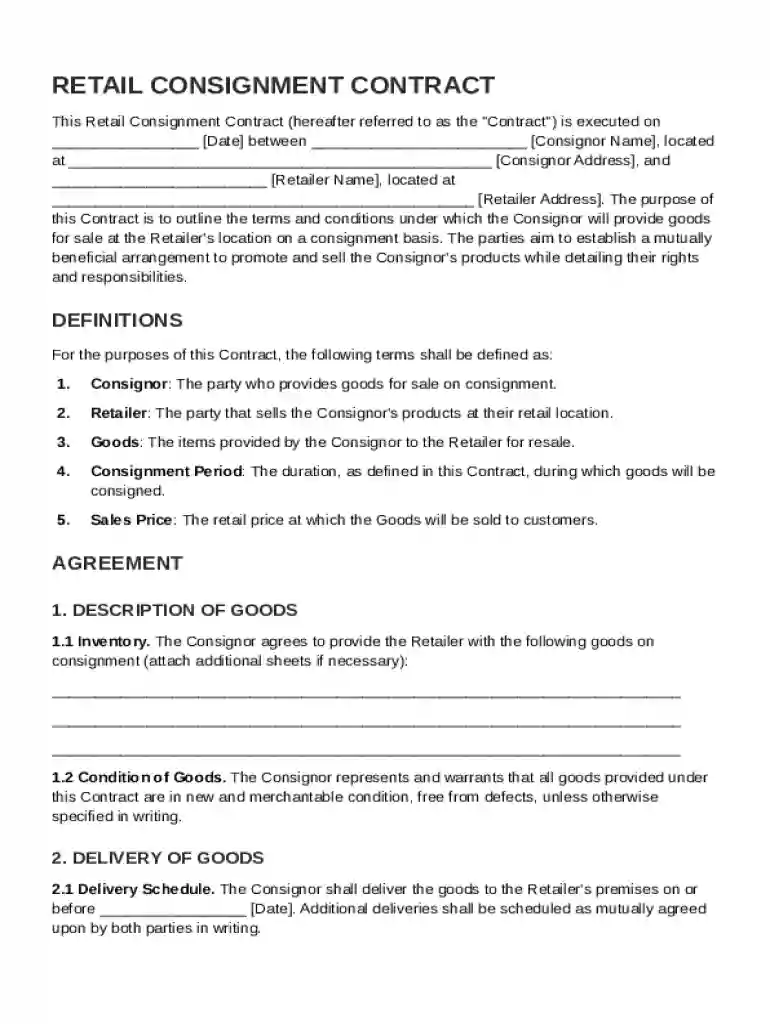
The Retail Consignment Contract Template is a legal document that establishes a formal agreement between a consignor (the owner of goods) and a retailer who sells these goods on a consignment basis. This template details the terms and conditions under which the retailer will sell the goods, the responsibilities of each party, and how profits from sales are divided. It provides a structured framework that ensures both parties understand and agree to their roles, aiding in the prevention of conflicts.
Key Elements of the Retail Consignment Contract Template
Understanding the elements within a Retail Consignment Contract Template is critical. The template includes several essential sections such as:
- Parties Involved: The document specifically outlines the consignor and retailer, including their legal names and contact information.
- Goods Description: A detailed description of the goods to be consigned, including quantities, quality, and other necessary details for identification.
- Pricing and Payment Terms: This section elaborates on the retail sale price of the goods, how the sales proceeds will be divided between the parties, and the timeline for payment transfer.
- Inventory Management: Guidelines on how unsold inventory will be managed, returned, or discounted if applicable.
- Duration of the Agreement: Specifies the start and end dates of the consignment arrangement.
- Termination Clauses: Details circumstances under which the agreement may be terminated by either party.
How to Use the Retail Consignment Contract Template
To effectively use the Retail Consignment Contract Template, follow these steps:
- Review the Template: Familiarize yourself with each section of the document to understand the information required.
- Fill in Party Details: Enter the legal names and contact information for both the consignor and the retailer.
- Product Details: Provide a comprehensive description of the consigned goods.
- Set Pricing and Terms: Define the selling price and agreed upon division of sales proceeds.
- Review Legal Conditions: Ensure that all terms around rights and responsibilities, including dispute resolution procedures, are clearly stated.
- Sign the Agreement: Both parties should thoroughly review the completed contract, agree to the terms, and add their signatures to make the contract legally binding.
Steps to Complete the Retail Consignment Contract Template
Completing the Retail Consignment Contract Template involves a systematic approach:
- Read Through the Template: Before populating the template, read fine print sections to fully understand expectations.
- Input Required Information: Add specific details pertaining to goods, pricing, and responsibilities.
- Consult with Legal Counsel: If necessary, seek legal advice to ensure compliance with local laws.
- Propose Revisions: Discuss any concerns or required changes with the other party.
- Finalize Details: Agree upon and document any amendments made during the review process.
- Execute the Contract: Both parties should sign the contract to formalize the agreement.
Important Terms Related to Retail Consignment Contract Template
Understanding the terminology used within a Retail Consignment Contract is essential:
- Consignor: The original owner of the goods who supplies them to the retailer.
- Retailer: The party who agrees to sell the goods on behalf of the consignor.
- Consignment Stock: Goods that are given to the retailer but remain the property of the consignor until sold.
- Net Proceeds: The total money received from selling the consigned goods after all agreed deductions.
- Consignment Period: The predetermined length of time for which the retailer will display the goods for sale.
Legal Use of the Retail Consignment Contract Template
The Retail Consignment Contract Template serves as a legally binding document. It provides legal protection by recognizing the ownership of the goods until they are sold and outlining the obligations of the selling party. In legal disputes, the contract can be used to demonstrate agreed-upon terms, helping to resolve issues regarding breaches of contract, payment disputes, or improper handling of goods. It is essential to ensure that the contract complies with state-specific laws to avoid complications.
Who Typically Uses the Retail Consignment Contract Template
The Retail Consignment Contract Template is utilized by a range of parties:

- Local Artisans and Craftsmen: Individuals who create handmade goods and wish to have them sold in retail settings.
- Boutique Retailers: Small retail businesses that sell various products, such as clothing, jewelry, or homewares, on a consignment basis.
- Specialty Stores: Retail outlets that focus on niche products and frequently operate with consignment arrangements to manage inventory diversify.
- Libraries and Museums: Institutions that sell items in their gift shops different from the products they typically produce or procure directly.
Examples of Using the Retail Consignment Contract Template
Various scenarios illustrate the use of a Retail Consignment Contract Template:
- Art Gallery Exhibition: An art gallery engages in a consignment agreement with a local artist to display their work. The artist is consigned a portion of the sales from each artwork while retaining ownership until sold.
- Fashion Boutiques: A fashion designer provides a boutique with a new clothing line on consignment. The boutique agrees to sell the garments under defined terms, and unsold items are returned after the consignment period.
- Local Food Producers: A small farmer consents with a gourmet food store to stock handmade jars of preserves. The farmer retains ownership until sales occur, ensuring a profitable partnership for both.
State-Specific Rules for the Retail Consignment Contract Template
Laws impacting consignment agreements vary by state. Consignors and retailers should be aware of:
- Sales Tax Regulations: States may differ on whether consignors or retailers are responsible for collecting and remitting sales tax.
- Consumer Protections: Some states have consumer protection laws that impact consignment transactions, especially around claims and disputes.
- Contract Requirements: States may have requirements related to documentation, storage conditions, and sales accountability.
Understanding such variances ensures compliance and avoids potential legal complications when using the template.