






Definition & Meaning
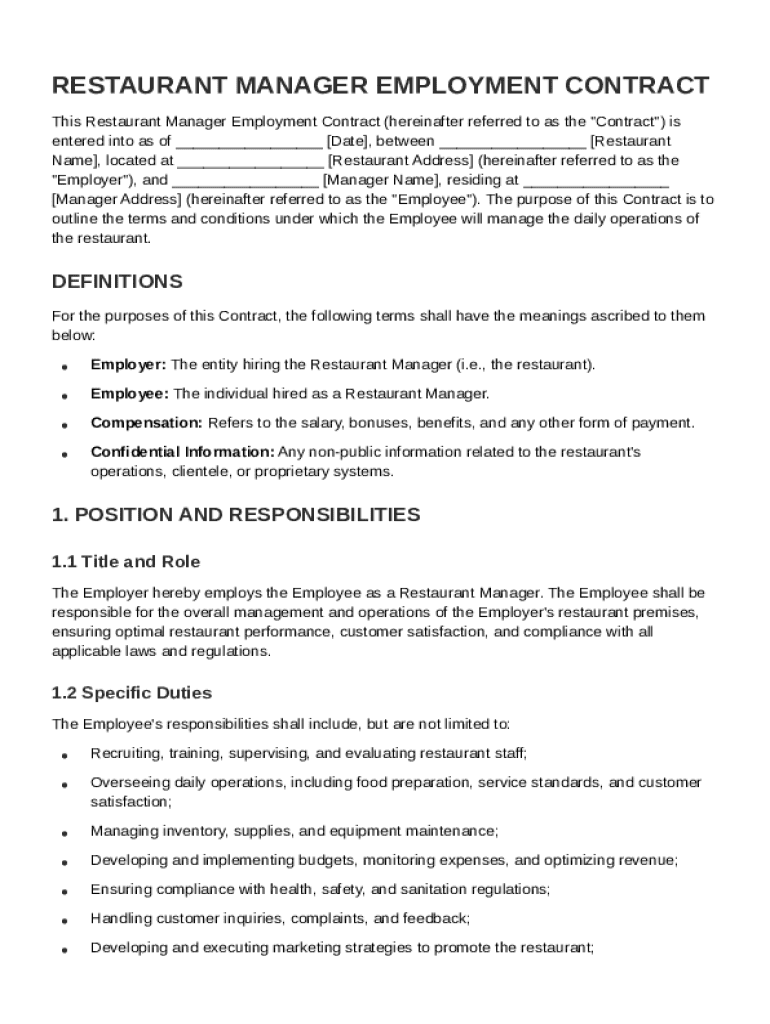
A Restaurant Manager Contract Template is a structured document outlining the terms and conditions under which a restaurant manager operates. It serves as a binding agreement between the restaurant proprietor and the manager, detailing job expectations, responsibilities, and legal obligations. This template is essential as it helps establish clear communication and mutual understanding between the parties involved. It covers various aspects such as duties, compensation, working hours, and conditions under which the agreement may be amended or terminated. By employing this template, both the restaurant and the manager can ensure that expectations are aligned and disputes can be minimized.
Key Elements of the Restaurant Manager Contract Template
The Restaurant Manager Contract Template encompasses several critical components to ensure comprehensive coverage of the employment agreement. Key elements include:
- Managerial Responsibilities: Detailed description of the day-to-day duties and managerial roles expected from the manager. This includes overseeing staff, ensuring customer satisfaction, and maintaining compliance with health and safety regulations.
- Compensation and Benefits: Breakdown of the salary structure, bonuses, and any additional benefits such as health insurance, paid time off, and retirement plans.
- Work Schedule: Specific information regarding working hours, days off, and any requirements for overtime work.
- Termination Conditions: Details the scenarios under which the contract can be terminated, whether by the employer or the manager, including notice periods and grounds for immediate termination.
- Confidentiality Obligations: Clauses that prevent the manager from disclosing critical business information to unauthorized parties.
- Dispute Resolution Procedures: Outlines the processes for resolving any disagreements or conflicts that arise during the employment period.
Steps to Complete the Restaurant Manager Contract Template
Filling out the Restaurant Manager Contract Template requires careful attention to detail to ensure all necessary information is accurately captured. Here is a step-by-step guide:
- Enter Basic Information: Begin by inserting the names and contact information of both the employer and the manager.
- Outline Responsibilities: Clearly list the specific duties and managerial tasks the manager is expected to perform.
- Define Compensation Terms: Provide details concerning salary, frequency of payment, and any bonuses or commissions.
- Specify Working Conditions: State the agreed-upon work schedule, including any requirements for evenings or weekends.
- Detail Termination Terms: Include the conditions under which the contract can be ended by either party.
- Insert Confidentiality Clauses: Ensure there are sections that speak to the manager's responsibilities regarding confidential information.
- Finalize and Review: Once completed, both parties should review the contract thoroughly for accuracy and mutual understanding before signing.
Why Use the Restaurant Manager Contract Template
The use of a Restaurant Manager Contract Template provides numerous advantages. It ensures that there is a written record of what both parties have agreed upon, which can prevent misunderstandings and disputes. The template serves as a comprehensive guide covering essential elements of the employment relationship, promoting transparency and clarity. Additionally, it provides legal protection by detailing the obligations and rights of both the employer and the employee. Employing this template can also aid in standardizing the hiring process, which is advantageous for businesses that employ multiple managers across different locations.
Legal Use of the Restaurant Manager Contract Template
Utilizing the Restaurant Manager Contract Template comes with significant legal implications. It must adhere to all applicable federal and state laws concerning employment. For instance, the terms within the agreement should comply with wage and hour laws, nondiscrimination practices, and health and safety regulations. Both parties should have a clear understanding of their legal rights and obligations as outlined in the contract. Consulting with a legal professional to tailor the template to specific legal requirements can be beneficial and will help ensure enforceability in a court of law if disputes arise.
Important Terms Related to Restaurant Manager Contract Template
Understanding specific terminology used within the Restaurant Manager Contract Template is critical to comprehending its full scope. Some of the essential terms to be familiar with include:
- At-will Employment: This term describes a contractual relationship that can be terminated by either party without cause (where legally permitted).
- Non-compete Clause: A provision that restricts the manager from operating or accepting a position in a competing business for a set period.
- Severance Pay: Compensation that may be offered if the manager's employment is terminated under specific conditions.
- Probationary Period: An initial period of employment during which the manager's performance is evaluated to determine suitability for the role.
State-Specific Rules for the Restaurant Manager Contract Template
The Restaurant Manager Contract Template may need customization to align with state-specific employment laws. Different states in the U.S. have varied regulations that could affect contract terms. For instance, states like California have stringent laws regarding non-compete clauses and at-will employment cannot always be enforceable as simply outlined. Additionally, wage and hour laws, like minimum wage and overtime regulations, can vary significantly by state, impacting how compensation is addressed in the contract. As such, it is essential for the template to be reviewed by a local legal expert to ensure compliance with state-specific employment laws.
Examples of Using the Restaurant Manager Contract Template
Real-world examples of how the Restaurant Manager Contract Template might be used can provide further context and understanding. For example, a small family-owned restaurant may use the template to clarify managerial roles as they expand operations and bring in new managerial talent. Alternatively, a franchise chain might utilize a standardized version of the template across multiple locations to maintain consistency in their managerial employment agreements. By employing this template, businesses can efficiently manage the complexities that come with hiring, performance expectations, and regulatory compliance.