
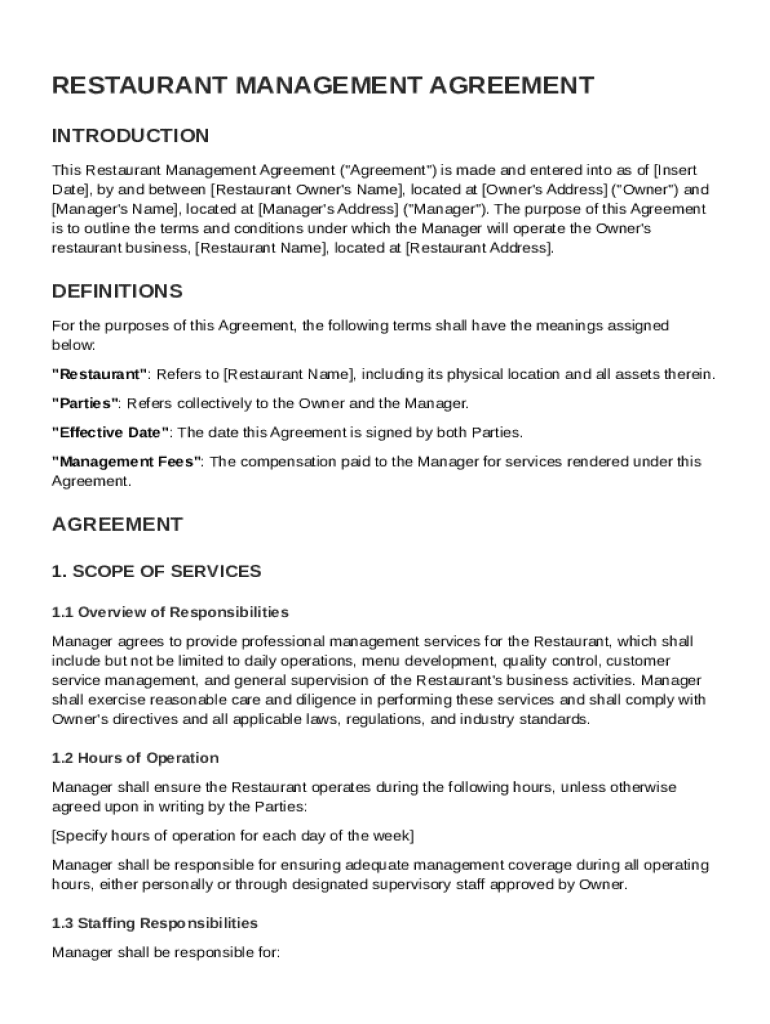







Definition & Meaning
A Restaurant Contract Template is a standardized document that establishes an agreement between a restaurant owner and other parties involved in the restaurant industry. It outlines essential details such as responsibilities, terms of partnership, financial arrangements, and operational guidelines. This template provides a clear and concise framework to facilitate smooth business operations and ensures that both parties understand their roles and obligations within the business relationship. Through the template, restaurant managers and owners can handle various legal and operational aspects without the need to draft contracts from scratch, thus saving time and minimizing the risk of omissions or inconsistencies.
Key Elements of the Restaurant Contract Template
The Restaurant Contract Template typically includes several key elements that are critical for ensuring comprehensive and clear documentation of the business relationship:
- Parties Involved: Identification of all parties entering into the agreement, including the owner and manager or any other stakeholders involved.
- Responsibilities: Detailed description of each party's roles and duties, such as daily operations management, staffing, and adherence to relevant regulations.
- Compensation and Financial Terms: Clear articulation of management fees, payment schedules, and any profit-sharing mechanisms.
- Duration and Termination Conditions: Specification of the contract duration, renewal terms, and conditions under which the agreement can be terminated.
- Dispute Resolution and Legal Governance: Provisions for resolving disputes, including mediation or arbitration paths, and jurisdictional legal governance.
- Confidentiality Obligations: Requirements for maintaining confidentiality concerning sensitive business information and intellectual property.
Steps to Complete the Restaurant Contract Template
Completing the Restaurant Contract Template involves several methodical steps to ensure all important details are accurately captured:
- Identify Parties: Begin by listing the full legal names and contact information of all parties involved.
- Define Scope and Duties: Clearly outline each party's role and responsibilities, ensuring there is no ambiguity.
- Financial Arrangements: Specify payment terms, including the frequency of payments and any conditions tied to financial incentives.
- Set Timeframe: State the contract's start and end dates, along with any renewal options if applicable.
- Include Legal Provisions: Incorporate clauses related to dispute resolution and jurisdiction, ensuring compliance with local laws.
- Review and Revise: Conduct a thorough review and, if necessary, seek a legal professional's advice to ensure the contract’s legality.
- Signature and Execution: Once all parties agree on the terms, sign the document to formalize the contract.
Why Use the Restaurant Contract Template
Using a Restaurant Contract Template is advantageous as it simplifies the drafting process, ensuring both efficiency and legal compliance. It creates a structured approach that prevents potential disputes by clearly defining all obligations and expectations. Templates often incorporate best practices and legal standards, reducing the risk of omitting crucial details. Additionally, they provide a flexible foundation that can be modified to suit specific business needs or legal requirements, thus catering to a wide range of scenarios and ensuring robustness in diverse restaurant operations.
Important Terms Related to Restaurant Contract Template
Understanding the terminology used within a Restaurant Contract Template is critical to grasping the full scope of the agreement:
- Agreement: The mutual understanding and consent of both parties concerning their rights and obligations.
- Indemnity: A clause providing protection against financial loss or liability incurred due to particular actions or situations.
- Force Majeure: Provisions relieving parties from liability due to unforeseen events beyond their control, such as natural disasters or pandemics.
- Non-Compete: A stipulation that restricts one party from engaging in competing business activities within a certain geographical area or time period.
Who Typically Uses the Restaurant Contract Template
Various stakeholders within the restaurant industry make use of the Restaurant Contract Template to manage their contractual relationships:
- Restaurant Owners: To formalize arrangements with managers or restaurateurs responsible for day-to-day operations.
- Restaurant Managers: To clarify terms of employment and operational autonomy.
- Investors: To outline financial commitments and expectations of return on investment with restaurant operators.
- Franchisees: To establish terms with franchisors and ensure compliance with brand standards and operational procedures.


State-Specific Rules for the Restaurant Contract Template
Restaurant contracts may be subject to varying state-specific regulations pertaining to employment, health and safety standards, and business operations:
- Employment Laws: Minimum wage requirements, overtime compensation, and employee benefits, which can differ significantly from state to state.
- Health Codes: Regulations regarding food safety, sanitation, and health inspections that may have additional stipulations depending on local health department rules.
- Licensing Requirements: State-specific mandates on licensure for serving food, beverages, and operating within retail or commercial spaces.
- Tax Obligations: Various state and local taxes, including sales taxes and potential differences in tax rates impacting operational costs.
Legal Use of the Restaurant Contract Template
Ensuring the legal use of a Restaurant Contract Template involves adherence to applicable laws and recognizing its limitations:
- Compliant Use: All terms should comply with local, state, and federal laws to avoid potential legal challenges.
- Customization: While templates offer a strong baseline, they should be tailored to fit specific business arrangements and local regulatory requirements.
- Legal Advice: Consulting with legal experts ensures the document's terms are enforceable and protects all parties' interests.
- Document Integrity: Secure handling and storage of executed contracts to prevent unauthorized alterations and maintain a clear record for legal purposes.
Digital vs. Paper Version
The choice between digital and paper versions of the Restaurant Contract Template involves various considerations:
- Digital Versions: Offer flexibility in terms of easy amendments, electronic signing capabilities, and secure online storage that facilitates instant access and distribution.
- Paper Versions: Provide a traditional approach, ensuring physical documentation which some parties might prefer for archiving or compliance with specific legal standards.
- Comparative Ease: Digital versions often facilitate integration with document workflow platforms such as DocHub, offering enhanced collaboration features and streamlining review or approval processes.




