






Definition & Meaning
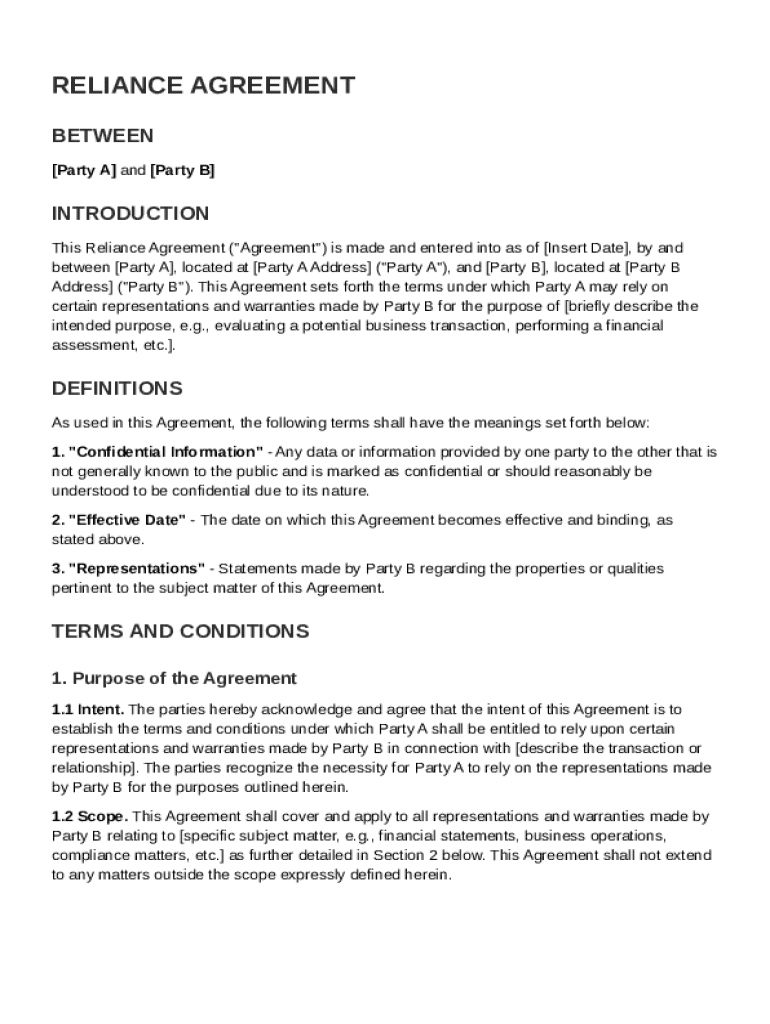
A Reliance Agreement Template serves as a legal framework between two parties, where one party, Party A, is allowed to rely on the representations and warranties made by the other party, Party B. This template outlines the crucial components typically found in such agreements, including definitions of key terms, the nature of the relationship, and the intended purpose of the contract. It is often used to ensure clarity and establish trust between parties during transactions or business arrangements, where representations are critical to decision-making processes.
- Key Terms: Ensures all parties understand specific terms used within the agreement, which fosters transparency.
- Purpose: Clarifies the reason for which the agreement is being established, aligning both parties' expectations.
Importance of Key Terms
Understanding and agreeing upon key terms is essential for avoiding misunderstandings. These terms generally provide clarity on roles, duties, and expectations from both parties. Real-world application scenarios include mergers, acquisitions, or any situation where representations are foundational to a business agreement.
Key Elements of the Reliance Agreement Template
The Reliance Agreement Template comprises several critical elements to ensure legal validity and enforceability. These elements are structured to protect both parties and encompass various legal constructs:
- Representations and Warranties: Statements made by Party B about facts or conditions, which Party A relies upon.
- Limitations of Liability: Specifies the extent to which Party B is liable if the representations prove inaccurate.
- Confidentiality Obligations: Obliges both parties to maintain the confidentiality of shared information.
Detailed Breakdown of Elements
Representations and warranties are the backbone of a Reliance Agreement, providing assurances about existing facts or future conduct. Limitations of liability clauses are equally crucial, as they define the financial and legal repercussions for breached warranties. Both these elements ensure parties understand the enforceable nature of their commitments.
How to Use the Reliance Agreement Template
Utilizing a Reliance Agreement Template involves a structured process, beginning from the selection of parties to the final signing. Each step is designed to facilitate understanding and agreement on terms.
- Define Relationship: Clearly establish the nature of the association between Party A and Party B.
- Draft Provisions: Include critical aspects like representations, liabilities, and confidentiality.
- Review and Approval: Both parties review the agreement, propose necessary alterations, and mutually approve the final version.
Practical Example
A software company entering a partnership with a hardware distributor may use this template to establish trust in shared proprietary information, employing specific clauses to protect against misinformation and secure project confidentiality.
Legal Use of the Reliance Agreement Template
The Reliance Agreement Template is designed to meet specific legal standards, enabling the document to stand scrutinized under the law.
- Jurisdiction: Specifies the governing law and jurisdiction, usually chosen based on the location of either party.
- Independent Legal Advice: Recommends parties seek legal advice to understand obligations fully and avoid future legal disputes.
Jurisdictional Considerations
Selecting a jurisdiction can significantly impact the legal obligations and dispute resolution procedures associated with the agreement. It's vital to choose a jurisdiction that aligns with both parties' operational bases and offers a fair legal framework.
Steps to Complete the Reliance Agreement Template
Completing the Reliance Agreement Template requires meticulous attention to detail to ensure comprehensiveness and accuracy.
- Identify Parties Involved: List Party A and Party B with corresponding contact information.
- Define the Scope of Reliance: Clearly articulate what representations Party A relies upon.
- Insert Key Provisions: Include representations, warranties, liabilities, and confidentiality clauses.
- Mutual Agreement: Both parties should endorse the agreement, often with electronic signatures for efficiency.
Detailed Walkthrough
Each step should be undertaken methodically. When specifying the scope, ensure thorough discussions have transpired to align expectations and avoid misunderstandings. Digital signature platforms can facilitate the signing process, ensuring compliance with legal requirements.
Who Typically Uses the Reliance Agreement Template
The Reliance Agreement Template is versatile, catering to a wide range of users across different sectors:
- Businesses: Companies engaging in mergers or partnerships where trust is foundational.
- Individuals: Professionals who need assurance when relying on others' expertise.
- Legal Entities: Attorneys facilitating agreements to protect clients from reliance-related risks.


User Cases
Consider a construction firm that engages a consultant for quality assurance. The firm might use a Reliance Agreement Template to secure its interests based on the consultant's professional evaluations and assurances regarding project safety.
Examples of Using the Reliance Agreement Template
Practical applications of the Reliance Agreement Template showcase its adaptability across various scenarios:
- Mergers & Acquisitions: Ensuring Party A can rely on disclosed financial statements.
- Service Agreements: Party A relies on Party B's representation of service quality.
- Partnerships: One partner may rely on another's representation of business value.
Real-World Scenarios
In an acquisition, a Reliance Agreement might include representations about liabilities, enabling the purchaser to secure an indemnity clause if undisclosed debts surface. Such strategic structuring can mitigate legal risks and maintain trust.
Important Terms Related to Reliance Agreement Template
Understanding the specific terms involved in a Reliance Agreement helps in navigating its complexities efficiently:
- Indemnification: Protects one party against losses arising from the other's representations.
- Termination Conditions: Describes circumstances under which the agreement may be voided.
Terms Defined
Indemnification not only extends immediate protection but also offers a long-term safeguard against potential financial repercussions. Termination conditions provide an exit strategy, helping to prevent prolonged disputes in cases of irreconcilable disagreements.
State-Specific Rules for the Reliance Agreement Template
While the core structure of a Reliance Agreement is consistent, there may be variations based on state law:
- Regulatory Compliance: Certain states may have unique requirements impacting disclosure rules and agreement enforceability.
Navigating State Variations
Legal advice is essential when working across state lines, as regulations and interpretations can vary. For instance, some states might impose additional disclosures or recognition conditions for electronic signatures. Understanding these nuances can help customize agreements to meet specific legal standards.