





Key Elements of the Renovation Contract Template
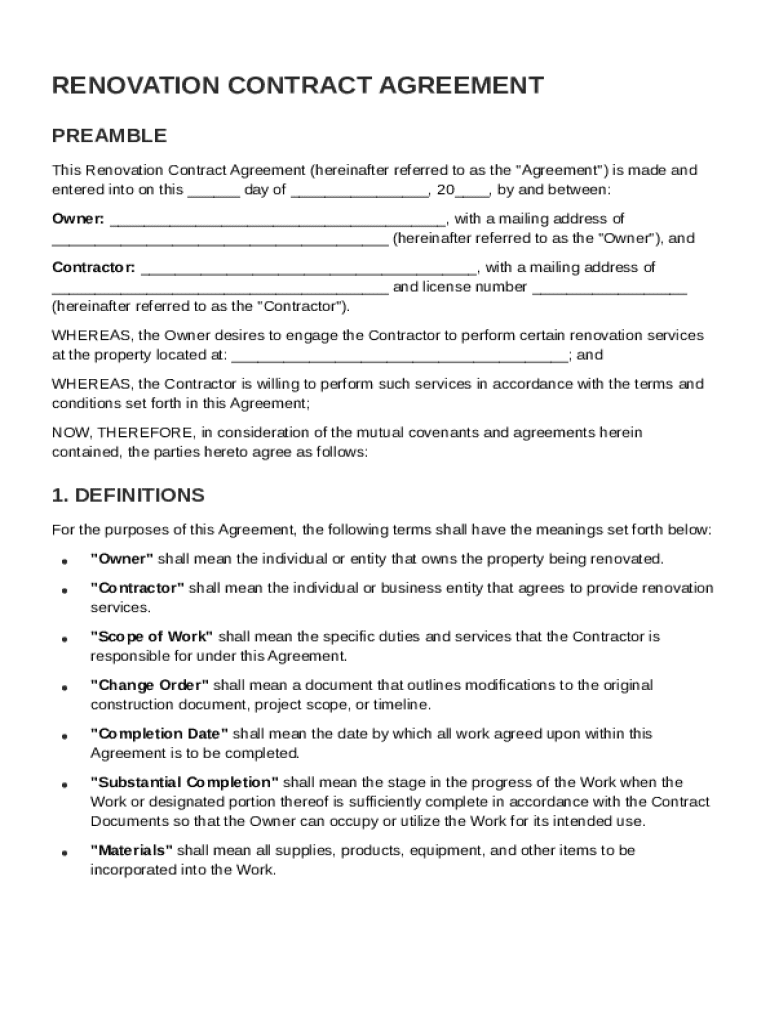
A Renovation Contract Template serves as a detailed agreement between a property owner and a contractor, outlining the terms and conditions for renovation work. This section will cover essential components typically included in a renovation contract. These elements provide clarity and set expectations for both parties involved in the project.
-
Project Overview: This section entails a comprehensive description of the renovation project. It includes the scope of work, objectives, and specific tasks to be accomplished during the renovation process. A clear project overview ensures that both parties are aligned on what needs to be completed.
-
Payment Terms: Payment details, including total contract value, deposit requirements, and installment schedules, are specified. Payment terms may also outline penalties for late payments and conditions under which payments may be withheld.
-
Responsibilities of Both Parties: This element defines the duties and obligations of both the owner and the contractor. It includes provisions for providing access to the property, handling permits, and ensuring adherence to agreed timelines.
-
Change Order Procedures: The contract should clearly outline the process for handling changes to the scope of work or project specifications. This includes documentation requirements and how these changes might affect the project timeline and costs.
-
Warranties: Warranties provided by the contractor for materials and workmanship should be specified. This section guarantees the quality of work and materials for a specified period, allowing the owner to request repairs if defects arise within the warranty period.
-
Termination Clauses: Conditions under which the contract can be terminated by either party are detailed here. This includes scenarios such as breach of contract, failure to adhere to timelines, or unsatisfactory work performance.
-
Miscellaneous Provisions: Any additional terms that do not fit into the above categories, such as dispute resolution methods or procedures for handling unforeseen circumstances, are included in this section.
Important Terms Related to Renovation Contract Template
Renovation contracts typically contain technical terms that are integral to understanding the document. These terms provide clarity and support precise implementation. This section explains common terminology featured within these agreements.
-
Scope of Work: A detailed outline of work to be performed under the contract. It sets boundaries on what is and isn't included in the project, helping to manage expectations and prevent scope creep.
-
Timeline: Refers to deadlines for project completion. Setting a clear timeline helps ensure accountability and provides a structured framework for the project's progress.
-
Punch List: A list of tasks or corrections that must be completed before the final project approval can be granted. The punch list serves to document any outstanding work required for project fulfillment.
-
Force Majeure: Refers to unforeseeable circumstances that might prevent either party from fulfilling the contract. It generally includes natural disasters, acts of war, or other events outside of control.
-
Retainage: A portion of the payment withheld to ensure contract completion. Retainage is typically released once the project meets all terms and requirements.
Steps to Complete the Renovation Contract Template
Completing a Renovation Contract Template requires thorough attention to detail to ensure all necessary sections are accurate and complete. Here's a step-by-step guide to help you complete this essential document.
-
Fill in Project Details: Start by entering the names and contact information of both parties involved. Include details about the property location and specific project objectives.
-
Specify Scope of Work: Accurately detail all tasks that will be part of the renovation. Use clear and concise language to avoid misunderstandings.
-
Set Payment Terms: Clearly outline how and when payments will be made. Include initial deposits, milestones for payment, and any retainage terms.
-
Outline Change Procedures: Describe how any amendments to the project scope will be managed. Include documentation requirements and the impact of changes on costs and timelines.
-
Include Warranties and Disclaimers: Add any warranties related to materials or work quality and include disclaimers about potential project risks.
-
Address Dispute Resolution: Include preferred methods for resolving potential disagreements, such as mediation or arbitration.
-
Review and Sign: Ensure both parties review the final draft and agree to all terms. Collect signatures to formalize the agreement.
Who Typically Uses the Renovation Contract Template
The Renovation Contract Template caters to a specific group of users who require clarity and structure when engaging in renovation projects. Understanding who commonly uses this template can shed light on its practical applications.
-
Homeowners: Individuals planning upgrades or structural changes to their residential properties often use renovation contracts to establish clear terms with contractors.
-
Contractors: Professionals offering renovation services use these templates to define expectations and protect their interests by clearly outlining services, timelines, and payment terms.
-
Real Estate Developers: When involved in upgrading properties for sale or rental, developers use renovation contracts to ensure projects are completed to specifications and legal standards.
-
Property Managers: Management companies responsible for maintaining and upgrading rental properties use renovation contracts to manage projects efficiently.
-
Interior Designers: Although their focus is often on aesthetics, designers who include structural changes in their services may use renovation contracts to formalize arrangements with clients and subcontractors.


Legal Use of the Renovation Contract Template
Adhering to legal standards is crucial when using a Renovation Contract Template. This ensures that the agreement is enforceable and protects the interests of both parties.
-
Compliance with State Laws: Renovation contracts should adhere to the legal requirements of the state in which the work is performed. This might include obtaining necessary permits and ensuring that the contract includes mandatory disclosures.
-
Enforceable Terms: The contract must include clear, enforceable terms that outline each party's obligations and rights. This includes specifying legal remedies available in case of breach.
-
Signatory Validations: Ensure all parties are authorized to sign the contract and that their identities are verifiable. This includes confirming corporate authority if a business entity is involved.
-
Statutory Disclosures: Some states require specific disclosures for construction or renovation agreements. Ensure these are included in the contract to maintain legal compliance.
State-Specific Rules for the Renovation Contract Template
The use and legality of renovation contracts can vary across states due to differing regulations and requirements. Understanding these variations is key for compliance and protection.
-
Permit Requirements: Certain states have specific permits required for renovation work. The contract should reflect the responsibility for acquiring the necessary permits and inspections.
-
Contractor Licenses: Ensure that the contractor holds appropriate licenses for the type of work being performed within that state. Some states require explicit proof of licensing in the contract.
-
Mechanics Lien Laws: Many states have laws regarding mechanics liens, which protect contractors and suppliers by enabling them to file a lien against a property for unpaid work. The contract should outline these rights and responsibilities.
-
Consumer Protection: Variations in local consumer protection laws may impose additional requirements on renovation contracts, like cooling-off periods or mandatory arbitration clauses.
Digital vs. Paper Version of the Renovation Contract Template
Choosing between digital and paper forms of a renovation contract can influence efficiency and accessibility. Both versions have unique advantages that fit different needs and circumstances.
-
Digital Version Benefits:
- Convenience: Easily amend and store documents online, reducing physical storage issues.
- E-signature Capability: Platforms like DocHub provide legally binding electronic signatures, which streamline the signing process.
- Track Changes: Track modifications and obtain version control, ensuring everyone is working from the latest contract version.
-
Paper Version Benefits:
- Tangible Proof: Some stakeholders prefer having a physical document for ease of access and reliability.
- No Technical Barriers: Paper doesn't require internet access or technical know-how, which can be beneficial in areas with limited digital infrastructure.
The choice between digital and paper often depends on the stakeholders' preferences, the scale of the project, and access to technology. Each format serves distinct purposes and operational efficiencies.