




01. Edit your form online
Type text, add images, blackout confidential details, add comments, highlights and more.

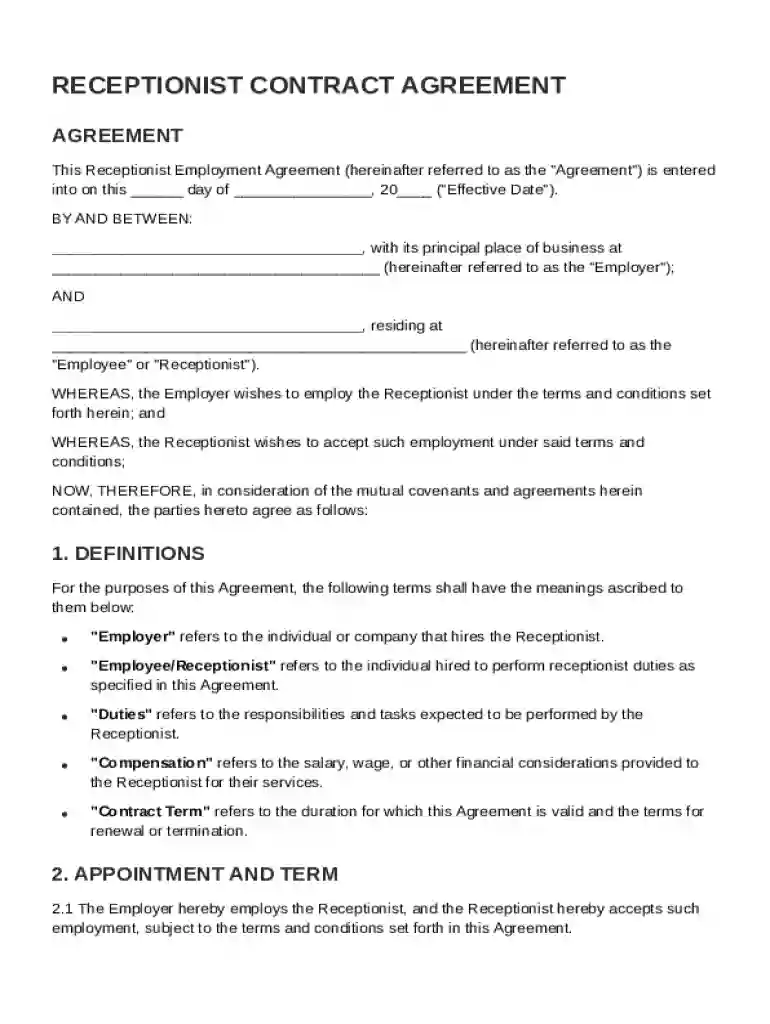
Type text, add images, blackout confidential details, add comments, highlights and more.

Draw your signature, type it, upload its image, or use your mobile device as a signature pad.

Send it via email, link, or fax. You can also download it, export it or print it out.
A Receptionist Contract Template is a predefined format used to outline the terms and conditions of employment for a receptionist position. This template serves as a structured agreement between an employer and a receptionist, detailing the roles, responsibilities, and rights of both parties. The purpose of the template is to ensure clarity and mutual understanding, preventing potential disputes by providing a detailed account of employment expectations. This document typically includes sections on job descriptions, compensation, confidentiality, and termination clauses, ensuring that both parties maintain a professional relationship. By utilizing this contract template, businesses can safeguard their operations and ensure that the receptionist understands their duties and responsibilities.
Using a Receptionist Contract Template involves several key steps tailored to meet the specific needs of a business. First, download the template and review its sections to understand the details outlined in each clause.
Customizing the Template:
Finalizing the Document:
Executing the Contract:
To complete the Receptionist Contract Template effectively, follow these detailed steps:
Initial Review:
Detail Insertion:
Compensation and Benefits:
Confidentiality Clause:
Signatures:
A receptionist contract should encompass several critical components to protect both parties involved. Essential elements include:
Job Description and Responsibilities:
Compensation and Benefits:
Work Schedule:
Confidentiality and Non-Disclosure:
Termination Conditions:
Miscellaneous Provisions:
Understanding the key terms in a Receptionist Contract Template is essential for clarity. Some critical terms include:
Probationary Period:
At-Will Employment:
Non-Compete Clause:
Severance Pay:
The legal application of a Receptionist Contract Template ensures the contract is enforceable and recognized by law. Certain considerations need to be adhered to:
Compliance with State and Federal Laws:
Legal Consistency:
Periodic Reviews:
The template is widely used by:
Small to Medium Enterprises (SMEs):
Corporate Offices:
Human Resources Departments:


Receptionist contracts may need to be adjusted to comply with state-specific regulations. Variations can include:
Minimum Wage Laws:
Employee Rights:
Non-Compete Clauses:
Understanding and adjusting to these state-specific rules is vital to ensure comprehensive legal compliance and to protect the business and employee rights within their jurisdiction.
At DocHub, your data security is our priority. We follow HIPAA, SOC2, GDPR, and other standards, so you can work on your documents with confidence.

See Epicenter Task for template. CSO. June 27. Board adopted Letter of ○ Oversee receptionist responsibilities of the school and support an office environment
Unified Employment Contract Template affairs, administrative, secretarial/ receptionist for technical jobs,. Ramps, toilets with handles, with a


