






Definition and Meaning of the Ratified Sale Contract Template
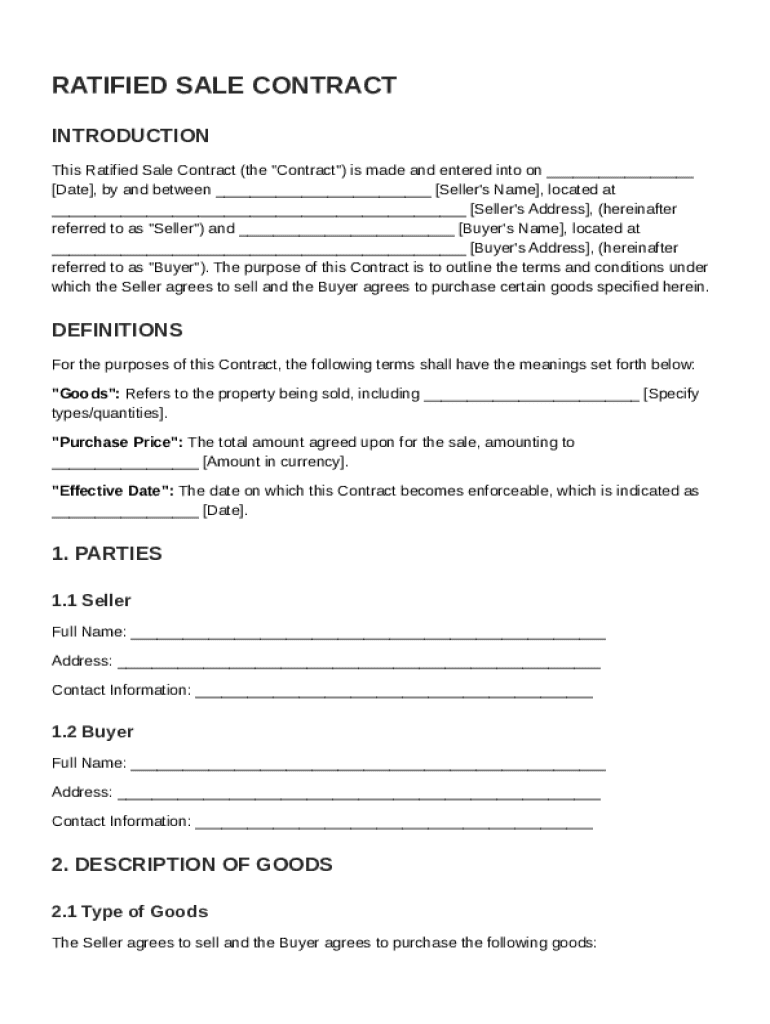
A Ratified Sale Contract Template is a legally binding document that formalizes the agreement between a buyer and a seller regarding the sale of goods or property. This template serves as a comprehensive outline that details all pertinent terms and conditions necessary for both parties to understand their rights and obligations. Key components of this document include definitions of involved parties, a description of the goods or property, payment terms, delivery methods, warranties, and governing laws. By utilizing this template, both parties can ensure clarity and legal protection throughout the transaction process.
Key Elements of the Ratified Sale Contract Template
Effective sale contract templates encompass several critical elements to provide comprehensive coverage of the agreement. These include:
- Parties Involved: Clear identification of the buyer and seller, including full legal names and contact information.
- Description of Goods or Property: Detailed specifications to avoid ambiguity about what is being sold.
- Purchase Price and Payment Terms: Full breakdown of costs and a schedule outlining when payments are due.
- Delivery Methods: Precise instructions on how the goods will be delivered, including shipping details or pick-up arrangements.
- Warranties: Any assurances or guarantees provided by the seller concerning the quality or condition of the goods.
- Governing Law: Specification of the jurisdiction whose laws will apply in the event of disputes.
Steps to Complete the Ratified Sale Contract Template
Completing a Ratified Sale Contract Template effectively requires adherence to the following steps:
- Gather Information: Collect all necessary details about the transaction, including personal information for both parties and a thorough description of the goods or property.
- Customize Template: Modify the template to include specifics of the transaction, adjusting clauses to reflect agreed terms.
- Review Legal Terms: Carefully read through all legal terms to ensure understanding and agreement from both parties.
- Add Amendments: If any additional terms or modifications are necessary, include these amendments as appendices or within the main content.
- Finalize and Sign: Both parties must review the document one final time, sign, and date it to validate the agreement legally.
Importance of Using a Ratified Sale Contract Template
Utilizing a Ratified Sale Contract Template is crucial for several reasons:
- Legal Protection: Provides a legally binding record of the agreement, offering protection in the event of a dispute.
- Clarity and Certainty: Ensures that all parties have a clear understanding of their duties, reducing potential misunderstandings.
- Standardization: Offers a standardized format that can be reused for future transactions, saving time and maintaining consistency.
- Efficiency: Streamlines the documentation process, allowing for quicker finalization of sales agreements.
Who Typically Uses the Ratified Sale Contract Template
Several parties commonly utilize the Ratified Sale Contract Template to ensure legal compliance and clarity in their transactions, including:
- Real Estate Agents: For documenting property sales agreements between buyers and sellers.
- Business Owners: Who frequently sell goods or services and require a consistent contractual agreement.
- Lawyers: Providing legal advice to clients involved in selling or purchasing significant assets.
- Individuals: Entering private sales agreements for high-value goods, such as vehicles or equipment.


Legal Use of the Ratified Sale Contract Template
Legally utilizing a Ratified Sale Contract Template involves adhering to jurisdictional laws that govern sales contracts. It's essential to ensure that:
- Compliance with State Laws: The contract abides by specific state regulations that may impact its terms.
- Proper Execution: Both parties thoroughly understand and voluntarily sign the document.
- Amendments and Updates: The contract reflects any agreed changes in writing, and all updates maintain legal compliance.
Examples of Using the Ratified Sale Contract Template
The Ratified Sale Contract Template is versatile, applicable across different scenarios:
- Real Estate Transactions: To formalize the sale of residential or commercial property.
- Sale of Goods: Such as machinery, vehicles, or electronics, where significant investment is involved.
- Business Mergers or Acquisitions: Documenting the sale of a company's assets or shares.
Software Compatibility and Digital Use
In today’s digital age, leveraging technological tools for drafting contracts can improve efficiency and accuracy:
- Editing and Signing Tools: Platforms like DocHub provide comprehensive solutions to edit, sign, and share sale contracts electronically.
- Cloud Storage Integration: Use platforms that integrate with cloud services for easy access and collaboration.
- Version Tracking: Ensure all parties work off the most current version utilizing version control features available in digital platforms.
These sections collectively ensure that users are well-informed on crucial aspects of the Ratified Sale Contract Template, facilitating accurate, legal, and seamless transactions.