Definition and Meaning of a Purchasing Agreement Template
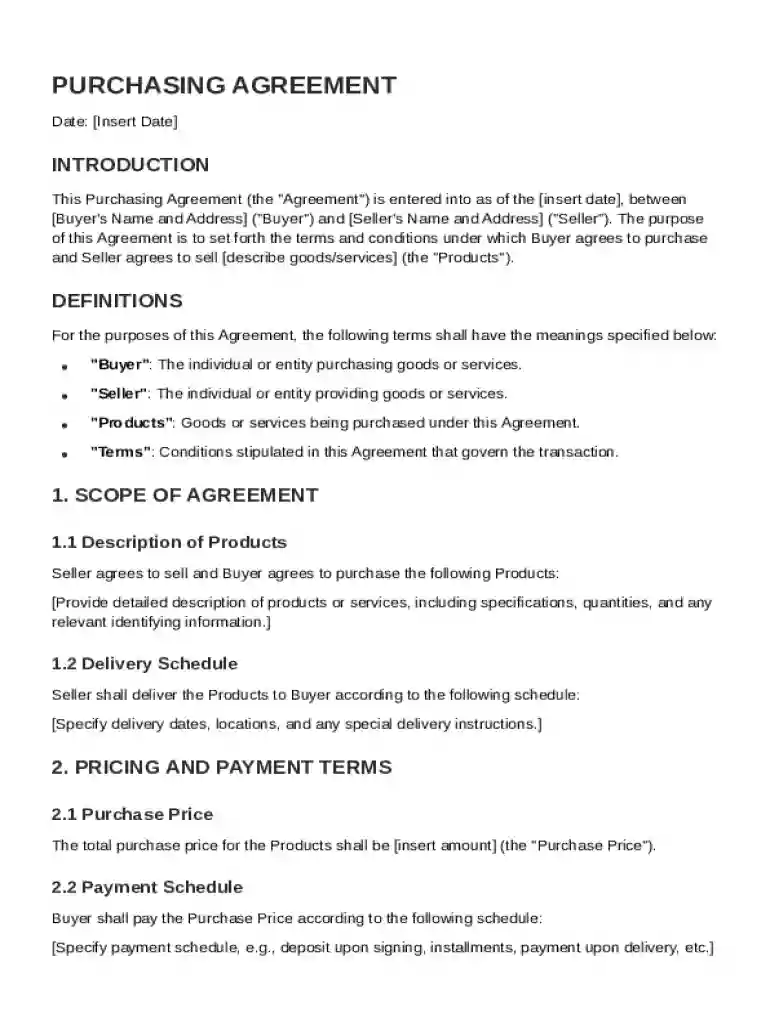
A Purchasing Agreement Template serves as a structured document outlining the terms and conditions agreed upon by a buyer and a seller regarding the purchase of goods or services. It standardizes the language and format used across different transactions, ensuring that all parties involved clearly understand their rights, responsibilities, and obligations. The template includes crucial sections such as the description of goods, payment terms, delivery schedules, and other legal and logistical considerations.
Key Features and Components
- Product Description: A detailed section specifying the goods or services being transacted, including quality, quantity, and specifications.
- Price and Payment Terms: Clearly defined payment methods, schedules, and any applicable discounts or penalties for late payments.
- Delivery Details: Information about the timeline, method, and responsibilities for the delivery of goods.
- Warranties and Guarantees: Any promises related to the quality and condition of goods provided by the seller.
- Termination Clauses: Conditions under which the agreement may be terminated by either party.
- Confidentiality Provisions: Terms concerning the protection of sensitive information exchanged during the transaction.
- Governing Law: The legal jurisdiction applicable to any disputes that may arise under the agreement.
How to Use the Purchasing Agreement Template
Using a Purchasing Agreement Template is designed to simplify the agreement creation process. By filling out predefined sections, both parties ensure that all critical aspects of the transaction are addressed.
Step-by-Step Guide
- Review the Template: Look through the existing sections to understand the areas that need to be customized based on your transaction specifics.
- Insert Specific Details: Provide information on the goods or services, pricing, delivery, and payment details as they relate to your agreement.
- Customize Terms: Adjust any template sections to reflect your particular requirements, such as confidentiality terms or warranty periods.
- Consult Legal Counsel: Although templates provide a strong baseline, having a legal professional review your customized agreement can ensure all legal requirements are correctly addressed.
- Finalize the Document: Ensure both parties review and agree to the terms before signing. Using electronic signatures can expedite this process through platforms like DocHub.
Key Elements of the Purchasing Agreement Template
Certain elements are essential to ensure that the Purchasing Agreement is comprehensive and legally binding.
Essential Sections
- Identification: Names and contact information of both the buyer and seller.
- Negotiated Terms: Final terms agreed upon through negotiation, including pricing adjustments or special discounts.
- Force Majeure: Clauses detailing what happens if unforeseen events prevent one party from fulfilling their obligations.
- Amendment Procedures: How changes to the agreement will be documented and agreed upon by both parties.
Practical Implications
- The buyer and seller must ensure the description of goods or services is precise to avoid potential disputes.
- Payment terms should include more than just the monetary amount; specify due dates, acceptable payment methods, and late payment penalties.
- It's crucial to include a clause stating that any verbal agreements not documented within the contract are not enforceable.
Important Terms Related to Purchasing Agreement Template
Understanding the jargon and phrases commonly used in these contracts can help all involved parties communicate effectively.
Terminology Breakdown
- Consideration: The compensation, usually monetary, provided in exchange for goods or services.
- Breach of Contract: Occurs when one party fails to fulfill its obligations as outlined in the agreement.
- Indemnity: Security against loss or damage, often included to protect one or both parties from potential claims or liabilities.
- Escrow: Funds or assets held by a third party to ensure that the terms of the contract are fulfilled.
Clarification of Complex Terms
Some terms might be legally dense. Legal counsel should explain them during the contract creation to clarify their implications. Understanding terms like "liquidated damages" or "specific performance" can protect parties from future disputes.
State-Specific Rules for the Purchasing Agreement Template
While a Purchasing Agreement Template attempts to be universally applicable, certain state-specific rules and regulations might affect its usage.
Recognizing Local Legislation
- Jurisdiction Clauses: Ensure the contract specifies the applicable jurisdiction, which determines where disputes would be resolved.
- Sales Tax Considerations: Understand state-specific tax implications, which might require you to adjust pricing or include additional clauses in agreements.
- Delivery Requirements: Variations in state laws might affect shipping protocols, necessitating specifics in delivery clauses within the contract.
Ensuring Compliance
Customizing templates with local legal knowledge helps ensure compliance with regional regulatory requirements. It’s beneficial to consult with a legal expert familiar with state laws when working with templates in different jurisdictions.
Who Typically Uses the Purchasing Agreement Template
Purchasing Agreement Templates can be employed by a diverse array of users and entities, each with their own unique needs and circumstances.

Common Users
- Businesses: Companies across industries use these templates to streamline purchasing processes, ensuring consistency and legal protection.
- Independent Contractors: Freelancers and contractors might use this template when offering specialized services to clients.
- Government Agencies: Often required to use structured agreements in transactions to ensure transparency and accountability.
Diverse Applications
- In B2B transactions, templates standardize terms and reduce negotiation times, promoting more efficient deal closing.
- Real estate transactions might utilize these agreements when transferring goods related to property improvements or management.
Legal Use of the Purchasing Agreement Template
This section outlines how to leverage the Purchasing Agreement Template within legal frameworks to ensure enforceability and compliance.
Legal Considerations
- Contract Validity: Both parties must have the legal capacity to enter into agreements, ensuring that signatories are authorized representatives.
- Enforceability: A signed template represents a legally binding agreement recognized by courts.
- Compliance with e-Sign Laws: When using digital templates, ensure compliance with electronic signature regulations, such as the ESIGN Act in the United States.
Importance of Legal Review
To avoid misinterpretations that could lead to disputes, it's advisable to have a legal expert review templates before their application. They can affirm that the agreement upholds transactional intentions while maintaining legal integrity.
Steps to Complete the Purchasing Agreement Template
Completing a Purchasing Agreement Template requires careful attention to detail to ensure accuracy and completeness.
Completion Process
- Fill Out Party Information: Start by entering all relevant details about the buyer and seller, including legal names and contact information.
- Define the Scope: Clearly describe the goods or services being provided, ensuring specificity to avoid potential misunderstandings.
- Set Financial Terms: Detail the price, payment method, and schedule agreed upon by both parties, including any late fees or payment discounts.
- Establish Delivery Details: Provide precise delivery timelines and the responsibilities of both parties regarding shipping and handling.
- Include Warranty Information: Document any guarantees regarding product quality or service level expectations.
- Review and Sign: Double-check completed sections for accuracy, review the terms with all parties involved, and finalize with signatures, whether digitally or physically.