






Definition and Meaning
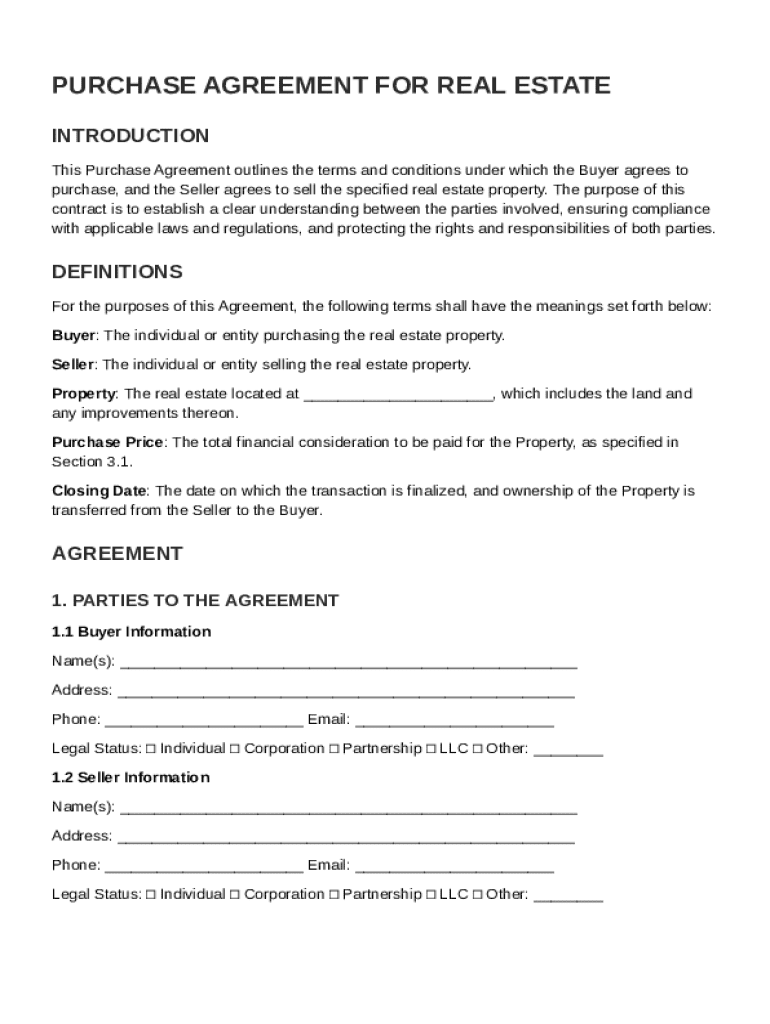
A Purchase of Real Estate Contract Template is a pre-formatted document used to outline the terms under which a buyer agrees to purchase, and a seller agrees to sell, a specific property. This contract ensures both parties are aligned on key details such as property specifics, purchase price, and necessary contingencies. Real estate purchase agreements are legally binding, which provides a framework for all parties to follow through the transaction process. In addition to specifying buyer and seller information, this template includes crucial elements like financing options, inspection rights, and any conditions that must be met before closing.
Key Components
- Property Description: Clearly identifies the property through legal description, address, and other identifying characteristics.
- Price and Payment Terms: Details the agreed purchase price and how it will be financed or paid.
- Contingencies: Lists potential conditions that must be fulfilled such as mortgage approval, property inspection, or appraisal.
- Closing Details: Specifies the closing date, location, and responsibilities for closing costs.
- Signatures: Includes signature blocks for both the buyer and the seller, making the contract enforceable.
Important Terms Related to the Purchase of Real Estate Contract Template
The real estate contract template includes specific terminology that defines and governs the rights and responsibilities of the involved parties. Understanding these terms is critical for the proper usage of the document:
- Earnest Money: This is a deposit made to a seller showing the buyer's good faith in a transaction. It is typically held in escrow until the closing process.
- Title Insurance: A policy obtained to protect against any property title disputes or claims that could arise.
- Closing Costs: Expenses over and above the price of the property, which typically include loan origination fees, appraisal fees, and title insurance.
- Amendments: Allow for modifications to the existing contract without having to draft an entirely new document.
Key Elements of the Purchase of Real Estate Contract Template
The template is designed to provide a comprehensive framework that ensures all necessary aspects of the transaction are covered. This includes, but is not limited to:
- Identification of Parties: Names and contact information for both the buyer and the seller.
- Purchase Price: Agreed upon amount that the buyer will pay the seller.
- Property Taxes: Clarification on how property taxes will be prorated or managed at closing.
- Dispute Resolution: Methods for handling disagreements, such as arbitration or mediation, in the event of a contractual dispute.
Steps to Complete the Purchase of Real Estate Contract Template
Proper completion of the real estate contract template is vital to ensure legal compliance and mutual agreement:
- Fill in Buyer and Seller Information: Clearly enter full names, addresses, and contact details.
- Describe the Property: Provide a complete legal description of the property, including physical address.
- State the Purchase Price: Clearly state the total purchase price and financing terms.
- Detail Contingencies: List any conditions that need to be met prior to closing the transaction.
- Include Signature Lines: Ensure space for buyer, seller, and any witnesses to sign and date the document.
Legal Use of the Purchase of Real Estate Contract Template
This template is legally binding, which means that any deviation from the terms, once agreed upon and signed, could result in legal consequences. It is essential to:
- Ensure Accurate Information: Double-check that all entered information is accurate and complete.
- Include Necessary Attachments: Any disclosures, inspections, or appraisals should be attached to the agreement.
- Review by Legal Counsel: It is highly recommended to have the contract reviewed by a real estate attorney to prevent potential legal issues.
State-specific Rules for the Purchase of Real Estate Contract Template
While the template provides a general guideline applicable in many jurisdictions, each state in the U.S. can have specific rules or practices:
- State Laws: Local real estate laws may affect contract terms such as earnest money requirements or seller disclosures.
- Inspection Periods: These may vary by state, requiring adjustments in the contract terms.
- Title Transfer Procedures: States have diverse rules for transferring property titles that need to be considered.
Examples of Using the Purchase of Real Estate Contract Template
The template is versatile and applicable in various real-world scenarios:
- First-Time Home Buyers: Ensures understanding of terms and secures buyer interest with defined contingencies and timelines.
- Commercial Property Transactions: Helps both parties outline complex terms related to commercial use and zoning.
- Investment Properties: Vital for investors purchasing properties for rental or resale, as it defines due diligence periods and potential liabilities.
Versions or Alternatives to the Purchase of Real Estate Contract Template
While this template is widely used, there are variations or alternatives based on specific needs:
- Custom Contracts: Tailored agreements drafted by attorneys for unique transactions or large-scale deals.
- State-specific Templates: Several states provide standardized templates to meet local legal requirements.
- Online Platforms: Offer digital versions which facilitate electronic completion and signing, increasing accessibility and efficiency.