






Definition & Meaning
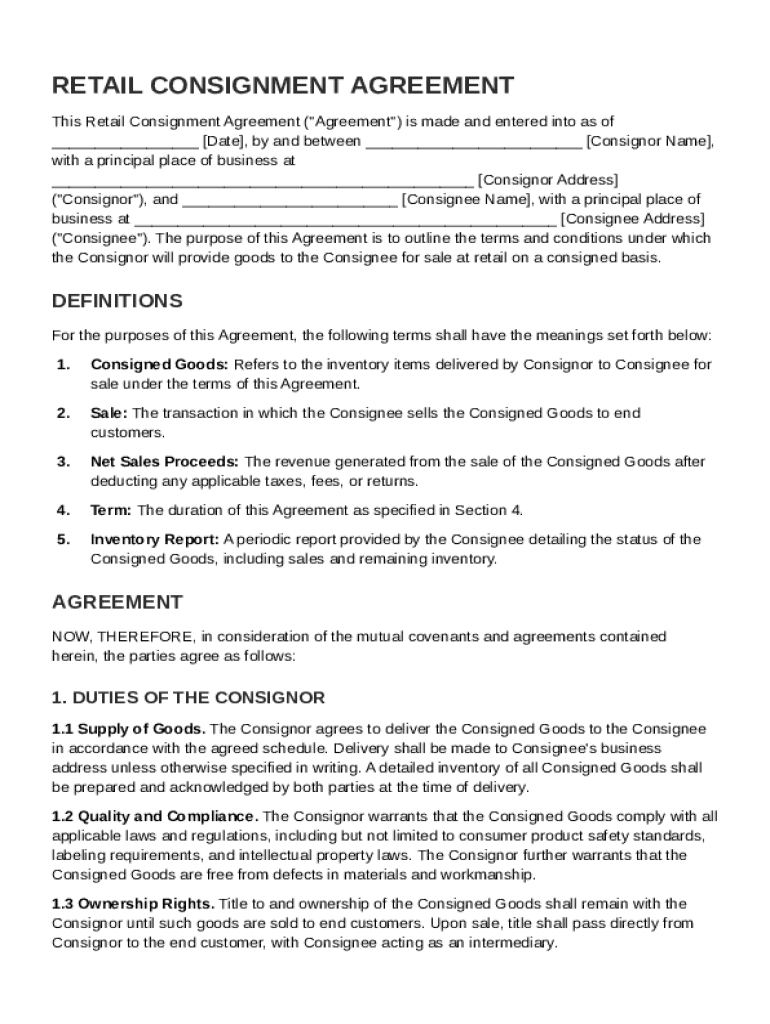
A retail consignment agreement template is a legal document that outlines the terms and conditions between a consignor and a consignee for the sale of goods on a consignment basis. In this context, the consignor is the entity that provides the goods, while the consignee is the individual or business responsible for selling them. This template ensures both parties clearly understand their roles and responsibilities, which include how sales are reported, how expenses are managed, and how revenue is split. The document also establishes the time frame for the agreement and specifies conditions for the return of unsold goods.
Key Elements of the Retail Consignment Agreement Template
The retail consignment agreement template typically includes several crucial components:
- Parties Involved: Clearly identifies the consignor and consignee and their respective roles.
- Description of Goods: Details the items to be consigned, including their condition and retail value.
- Pricing and Payment Terms: Outlines how the pricing is determined, how profits are shared, and timelines for payments.
- Duration and Termination: Specifies the duration of the agreement and conditions under which the agreement can be terminated.
- Liability and Indemnification: Covers the liability of each party for the goods while in possession and includes provisions to indemnify against claims.
- Reporting and Sales Tracking: Details how sales reports are submitted and tracked, ensuring transparency over sales activity.
How to Use the Retail Consignment Agreement Template
Using the retail consignment agreement template effectively involves several steps. Begin by identifying your role as either the consignor or consignee. Review the document thoroughly to ensure that all elements are relevant to your specific business arrangement and adjust any terms that do not align with your business needs. Both parties should collaborate to fill in necessary details, such as product descriptions, pricing, and contact information. Once the document is accurately completed, both parties should review the final draft and agree to the conditions before signing.
Steps to Complete the Retail Consignment Agreement Template
- Gather Details: Collect all relevant information, including details about the goods, pricing, and payment arrangements.
- Customize Terms: Adjust the template to fit the specifics of your consignment arrangement, making any necessary changes to clauses concerning liability, reporting, and other key areas.
- Review with Legal Counsel: Consult with a legal professional to ensure that the agreement complies with applicable laws and effectively protects the interests of both parties.
- Sign and Distribute: After thorough review, both parties should sign the agreement. Each should retain a signed copy for their records.
- Commence Sales Activity: With the agreement in place, begin the consignment process following the terms stipulated.
Who Typically Uses the Retail Consignment Agreement Template
The retail consignment agreement template is commonly used by business entities that deal in the sale of goods, such as boutiques, galleries, or retail stores that want to sell products without purchasing them upfront. Typical users include:
- Art Galleries: Art items are sold on behalf of artists.
- Boutiques: Clothing and fashion accessories on consignment from designers.
- Antique Shops: Collectibles and vintage items offered by collectors.
- Online Retailers: Platforms that facilitate the sale of third-party goods.


Legal Use of the Retail Consignment Agreement Template
The retail consignment agreement template serves as a legally binding document, ensuring clarity and compliance between the consignor and consignee. This template reflects essential legal aspects such as ownership, liability, and the distribution of profits. While the ownership of goods remains with the consignor until sold, this agreement clarifies each party's obligations to avoid potential disputes. To ensure its enforceability, both parties should ensure the agreement is signed, dated, and, when prudent, notarized.
Important Terms Related to Retail Consignment Agreement Template
Understanding the terminology within a retail consignment agreement is essential:
- Consignor: The owner of the goods who supplies them for sale.
- Consignee: The entity or individual that sells the goods on behalf of the consignor.
- Consigned Goods: Items provided by the consignor for sale.
- Proceeds of Sale: Revenue generated from the sale of consigned goods.
- Indemnification: A clause protecting one or both parties against specific risks or financial losses.
State-Specific Rules for the Retail Consignment Agreement Template
Although the retail consignment agreement serves a general purpose, state-specific laws may affect its application.
- Regulatory Compliance: Certain states may have specific regulations on consignment sales taxation or business registration requirements.
- Consumer Protection Laws: These may dictate how sales and returns are handled.
- Liability Clauses: Varying interpretations or legal stipulations regarding liability should be closely reviewed.
Business Types That Benefit Most from Retail Consignment Agreement Template
Several business entities can find value in using a retail consignment agreement template, including:
- Retail Stores: Mitigate inventory risk by selling products on consignment.
- Pop-Up Shops: Use consignment agreements to sell a variety of products without long-term commitment.
- Artisans and Craftsmen: Display work in galleries or stores through consignment without direct selling.
- E-commerce Platforms: Facilitate a wider range of products by utilizing consignment strategies.