
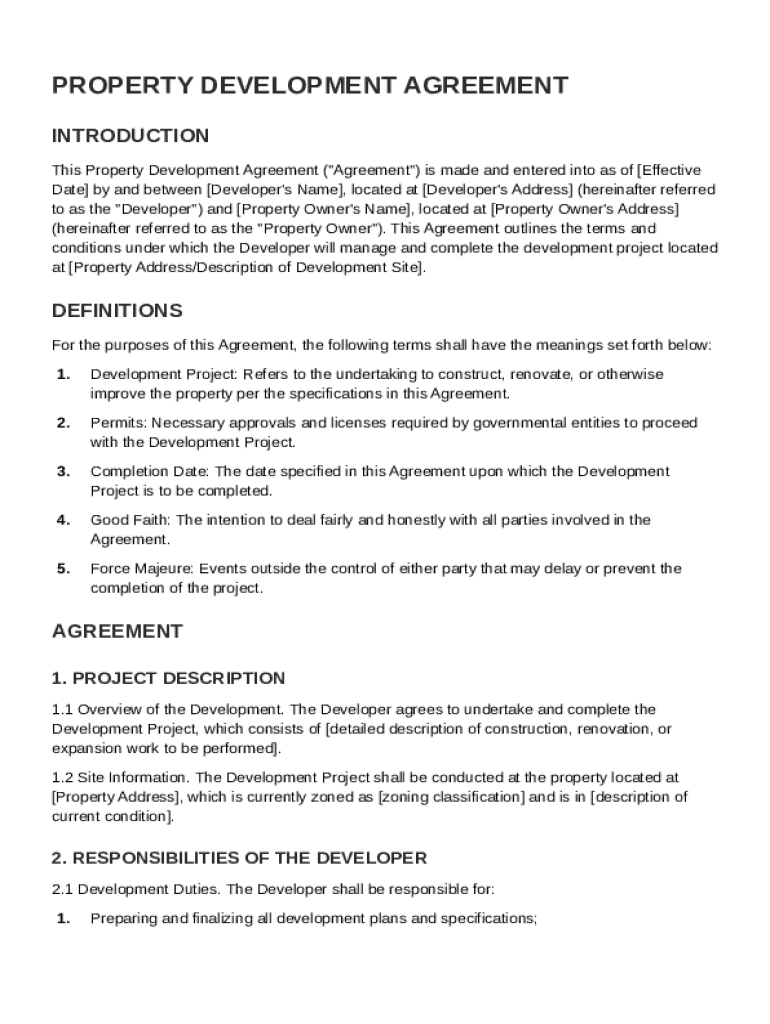







Definition and Purpose
A Property Development Agreement Template is a structured legal form that outlines the terms, responsibilities, and expectations between a Developer and a Property Owner during a real estate development project. This agreement establishes clear guidelines and frameworks for managing timelines, finances, and tasks necessary for successfully completing a development. By delineating roles and obligations, it mitigates potential misunderstandings and conflicts. Typically, the Developer is responsible for project oversight, while the Property Owner provides funding and access. This legal document is crucial for ensuring all parties comply with statutory requirements and provide a framework for resolving disputes.
Key Components
- Parties Involved: Identifies both the Developer and Property Owner.
- Project Scope: Defines the nature and extent of the development work to be conducted.
- Financial Arrangements: Details funding sources, payment schedules, and cost responsibilities.
- Timeline and Milestones: Provides a timetable for significant stages in the development process.
- Risk Management: Outlines strategies for addressing potential risks and setbacks.
- Dispute Resolution: Specifies procedures for handling disagreements or breaches of contract.
Importance and Benefits
Understanding the necessity of a Property Development Agreement Template is vital for any involved party. With clear definitions and terms, such an agreement ensures all participants are aligned on their duties, contributions, and expectations. Moreover, these agreements play an integral role in legal and financial protection. Incorporating thorough records of decisions and approved changes throughout the development process can prevent costly litigation. In addition, these templates serve as a comprehensive reference for stakeholders, enhancing communication and cooperative efforts towards a common goal.
Benefits Include:
- Legal Clarity: Minimizes ambiguities regarding obligations and rights.
- Financial Security: Protects the financial interests of both the Developer and Property Owner.
- Project Efficiency: Aligns goals and timelines to facilitate smooth project flow.
- Dispute Mitigation: Establishes a predefined approach to resolving conflicts.
Key Elements of a Property Development Agreement Template
Understanding the core elements of this template is critical for drafting a solid agreement. These essential components ensure comprehensive coverage and serve as the foundation for effective project management.
Essential Elements:
- Project Description: Specifies the objectives and the scope of work.
- Legal Compliance: Ensures that development conforms with relevant local, state, and federal laws.
- Roles and Responsibilities: Clearly allocates tasks between the Developer and Property Owner.
- Termination Clauses: Details conditions under which the contract may be dissolved.
Legal Compliance and Use
All Property Development Agreement Templates must adhere to specific legal standards to be enforceable. Knowing these standards can help protect the interests of all parties and ensure the project's legal integrity. These templates accommodate compliance with the ESIGN Act for digital signatures, making electronically signed agreements legally binding. Compliance with applicable state laws, especially those related to real estate development, is paramount.
Legal Considerations:
- Authorization and Consent: Obtains necessary approvals and permits from relevant authorities.
- Insurance and Indemnity: Addresses liability issues and ensures adequate insurance coverage.
- Data Protection: Safeguards confidential information shared during the project.
Obtaining the Property Development Agreement Template
Finding and acquiring the right Property Development Agreement Template is a crucial step. There are several ways to source a reliable template that suits the specific needs of your project, ensuring clarity and coherence in its application.
Sources for Templates:
- Online Legal Platforms: Provide downloadable templates with varying levels of customization.
- Professional Legal Services: Offer bespoke agreements tailored to specific project requirements.
- Real Estate Agencies: Often supply standardized versions for frequent transactions.
Steps to Complete the Template
Completing a Property Development Agreement Template requires meticulous attention to detail to ensure all pertinent information is accurately captured.
Completion Steps:
- Identification of Parties: Clearly name the Developer and Property Owner and their legal representatives.
- Detailed Project Scope: Insert specific project details, including location, timelines, and deliverables.
- Define Financial Terms: Outline budgetary allocations, payment methods, and schedules.
- Risk Mitigation Strategies: Document procedures for managing unexpected issues.
- Sign and Validate: Ensure both parties review and sign the agreement, utilizing e-signature options where applicable.
Common Uses and Users
A Property Development Agreement Template is utilized by various stakeholders within the real estate sector. Knowing who typically uses these templates can provide insights into their practical application.
Primary Users:
- Real Estate Developers: Manage relationships with property owners and investors.
- Property Owners: Engage developers to enhance or redevelop their properties.
- Legal Professionals: Draft and review agreements to ensure compliance with regulatory requirements.
State-Specific Regulations
Each state may have unique regulations concerning real estate development and agreements. Understanding these differences can foster compliance and avert potential legal challenges.
Examples of State Differences:
- Permit Requirements: Varying documentation for building and zoning approvals.
- Tax Implications: State-specific tax incentives or obligations.
- Environmental Regulations: Local guidelines affecting construction sites.




