
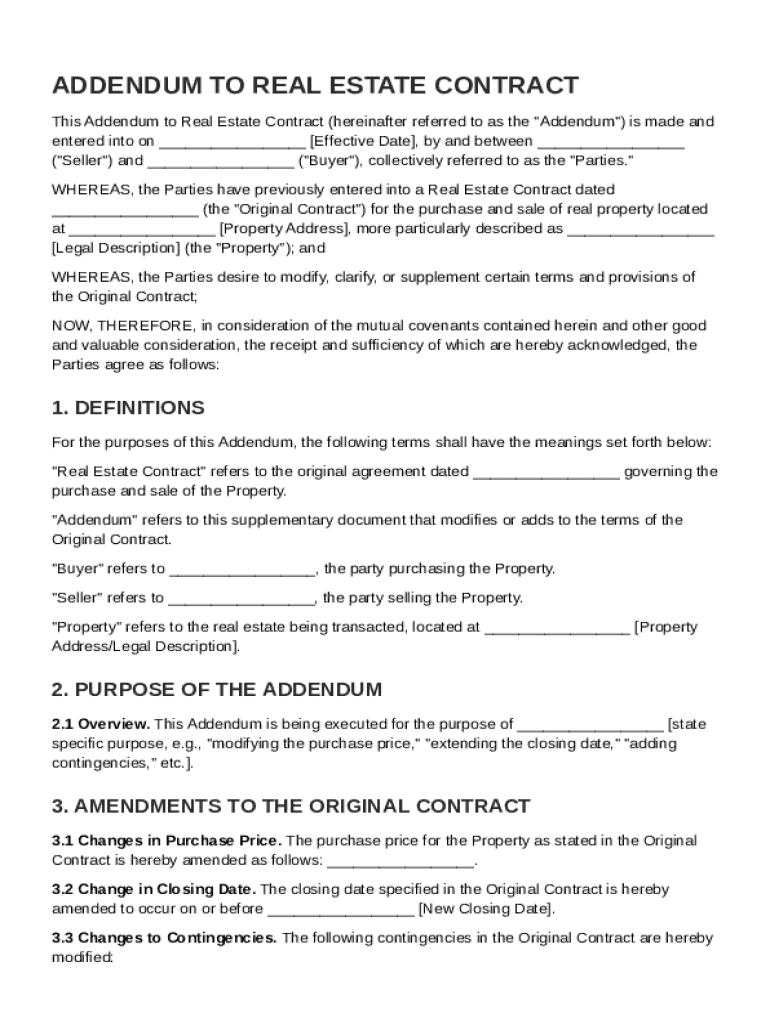







Definition and Purpose of the Addendum to Real Estate Contract Template
An Addendum to a Real Estate Contract is a formal document used to modify or supplement specific terms of an original real estate agreement. This document is typically utilized when both the buyer and seller agree to changes in the original contract terms, such as the purchase price, closing date, or property conditions. The addendum ensures that these changes are legally recognized and binding. It is vital to outline the purpose of the addendum clearly to avoid any potential disputes and ensure that all parties have a mutual understanding of the amended terms.
Key Elements Included in the Addendum
An effective addendum includes several critical elements. These typically involve:
- Parties Involved: Clearly identifying the buyer and seller.
- Original Contract Date: Mentioning the original contract date for reference.
- Revised Terms: Detailed descriptions of the changes, such as adjustments in purchase price, closing dates, or inspection contingencies.
- Legal Clauses: Any additional legal terms, such as governing law or severability clauses, that ensure the addendum is legally enforceable.
- Signatures: Space for the signatures of all parties involved, ensuring mutual agreement and understanding of the amendments.
Steps to Complete the Addendum to Real Estate Contract Template
Completing an addendum correctly is crucial to ensure all parties remain protected. Follow these steps:
-
Review the Original Contract: Understand the clauses and terms that need modification.
-
Draft the Addendum: Clearly specify each change in the document. Use precise language to avoid misinterpretation.
-
Include Identification Details: Add the names of involved parties, property address, and original contract date for reference.
-
Specify Amended Terms: Describe explicitly the modifications being made to terms like purchase price, closing date, or inspection contingencies.
-
Add Legal Clauses: Incorporate necessary legal protections such as dispute resolution methods and governing law.
-
Collect Signatures: Ensure all parties sign the addendum for it to take effect, affirming their consent to the changes.
Legal Use and Considerations
Legal compliance is fundamental when dealing with real estate contracts. The addendum should align with applicable state laws to remain enforceable. Consulting with a licensed real estate attorney or professional can help navigate these legal intricacies, ensuring all stipulations, such as state-specific requirements or disclosure obligations, are met.
State-Specific Rules
Different states might have particular rules regarding real estate addendums. Understanding these variations can prevent legal issues. For example:
- Disclosure Regulations: Some states mandate specific disclosures, such as property defects, be included in addendums.
- Execution Requirements: The legality of electronic signatures might vary, with some states requiring wet signatures for real estate documents.
Who Typically Uses the Addendum to Real Estate Contract Template?
The addendum is commonly used by:
- Real Estate Agents: To offer clients flexibility in negotiating terms after the initial contract is signed.
- Buyers and Sellers: Directly engaging in the real estate transaction, making agreements mutually beneficial.
- Real Estate Attorneys: Facilitating legal approval of any changes and ensuring compliance with state and federal laws.


Examples of Using the Addendum to Real Estate Contract Template
Real-world applications of an addendum illustrate its practicality. Examples include:
- Negotiated Price Changes: In a fluctuating market, a buyer and seller might agree to adjust the property’s price after a market analysis.
- Inspection Contingency Revisions: If damages or issues are found during inspection, the addendum can modify terms to include repair stipulations or seller credits.
- Closing Date Adjustments: Time-sensitive factors like financing delays may necessitate changes to the originally agreed closing timeline.
Software Compatibility and Digital vs. Paper Version
Using digital document management platforms like DocHub offers an efficient means for handling contract addendums. DocHub supports various formats and provides features like digital signing, which ensures the legal enforceability of electronic documents. This compatibility aids in streamlining the process, allowing for real-time collaboration and editing capabilities.
Alternatives and Previous Form Versions
Before using the template, exploring alternatives or previous iterations of the form can be beneficial. Different templates might offer unique provisions or cover additional contingencies that are pertinent to specific transactions.
Versions or Alternatives
- Supplemental Contract Template: Can be used in cases where more extensive modifications are required beyond what an addendum typically covers.
- State-Specific Forms: Some locales provide their versions tailored to state law, which might be more applicable in certain cases.
Including these aspects within your workflow when managing real estate contracts ensures a comprehensive grasp of contract modifications, facilitating smoother transactions for all involved parties. By understanding the nuances and application of the Addendum to Real Estate Contract Template, parties can safeguard their interests and promote a seamless transaction process.




