






Definition & Meaning
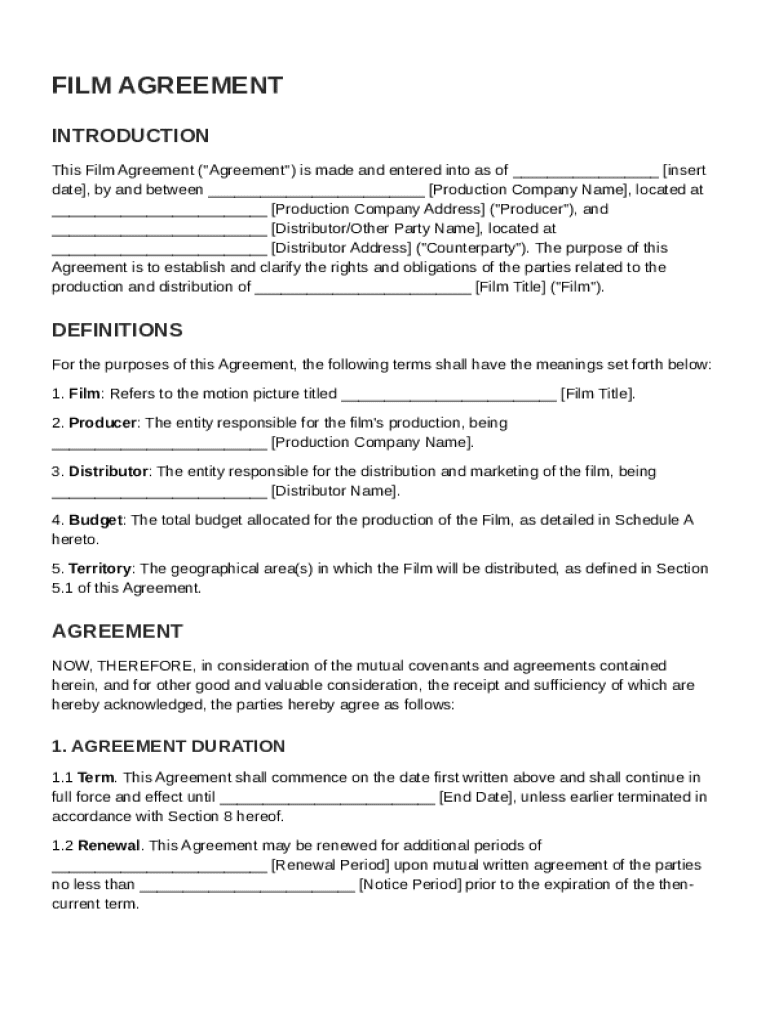
A Film Agreement Template is a standardized document used to outline the terms and conditions between a production company and a distributor for the production and distribution of a specified film. This template serves as a vital tool to establish clear expectations, responsibilities, and rights for both parties involved. It ensures that important components like financial arrangements, intellectual property rights, marketing obligations, and dispute resolution processes are defined from the outset to prevent misunderstandings.
Key Components
- Roles and Responsibilities: Clearly delineates the duties of both the production company and the distributor.
- Financial Arrangements: Details about financing, profit sharing, and budget allocations.
- Intellectual Property Rights: Defines ownership and usage rights of the film content.
- Marketing and Promotion: Specifies the obligations related to advertising and promoting the film.
- Termination and Amendments: Provides terms under which the agreement may be terminated or modified.
Key Elements of the Film Agreement Template
The Film Agreement Template contains several essential sections that collectively ensure a comprehensive coverage of the necessary legal and operational frameworks for a film project.
Essential Sections
- Duration and Premiere Dates: Indicates the timeframe for the film's production and release.
- Distribution Rights: Outlines the territories and media in which the film can be distributed.
- Revenue Streams: Specifies how revenue is shared, including ticket sales, streaming, and merchandising.
- Insurance and Indemnification: Addresses the insurance needs and liability issues.
- Confidentiality Clauses: Ensures that sensitive information is protected.
Practical Examples
A production company and distributor agree on an exclusive distribution arrangement in the U.S. for five years, with the distributor handling all marketing activities and covering associated costs.
How to Use the Film Agreement Template
Using the Film Agreement Template requires careful preparation and collaboration between parties to ensure all pertinent details are included.
Step-by-Step Process
- Gather Necessary Information: Collect all relevant details about the film project, including financial information and participant contacts.
- Consult Legal Experts: Ensure legal professionals review the template to cater it to specific jurisdictional requirements.
- Customizing the Template: Modify sections to reflect any unique terms or conditions applicable to your film project.
- Final Review and Approval: Both parties must thoroughly review the completed document before signing.
Customization Tips
- Tailor the marketing responsibilities section according to existing partnerships with third-party agencies.
- Ensure any government regulatory compliance is addressed in the contract specifics.
Steps to Complete the Film Agreement Template
Completing the Film Agreement Template efficiently is essential for the smooth execution of a film project.
Detailed Breakdown of Steps
- Initial Meeting: Hold a preliminary meeting with all stakeholders to discuss overarching goals and expectations.
- Fill in Template Sections: Based on discussions, fill out required sections such as roles, timelines, and financial terms.
- Seek Input from Legal Counsel and Stakeholders: Engage legal advisors to ensure the agreement complies with applicable laws and address all stakeholder concerns.
- Finalize Terms: After revisions, finalize the document for mutual agreement.
Edge Cases
- Situations where the film is to be distributed internationally may require additional compliance with foreign laws.
- Amendments for unforeseen changes after initial agreement, such as alterations in distribution channels.
Who Typically Uses the Film Agreement Template
Film Agreement Templates are primarily used by production companies and distributors, but also have relevance for a wider audience involved in film production and distribution.


Types of Users
- Production Companies: Entities developing the film seeking distribution partners.
- Distributors: Businesses or individuals responsible for distributing the film to audiences.
- Legal Advisors: Lawyers specializing in entertainment law who ensure compliance with regulations.
- Financial Partners: Investors who need clarity on financial returns and obligations.
Detailed Scenarios
A new filmmaker partnering with a small distributor to bring an independent film to market in regional theaters.
Legal Use of the Film Agreement Template
Film agreements must comply with applicable legal standards to ensure they are enforceable and protect the parties involved.
Compliance and Legal Considerations
- Jurisdictional Laws: Adhering to the specific laws of the state where the agreement is executed.
- Legal Binding Requirements: Ensuring that all signatories understand and agree to terms.
- Confidentiality and Data Protection Laws: Safeguarding proprietary content and private information.
Variations
Contracts adapted for different states may reflect unique state-specific regulations or business practices.
Important Terms Related to Film Agreement Template
Understanding legal terminology within the Film Agreement Template is vital to navigating the agreement effectively.
Key Concepts
- Distributor: The party responsible for delivering the film to the audience through various channels.
- Gross Revenue: The total earnings of the film before expenses are deducted.
- Exclusivity: A clause ensuring that the distributor holds sole rights to distribute the film within agreed territories and timeframes.
Real-World Application
For a big-budget film, exclusivity clauses ensure no other distributor can interfere with the assigned territories, protecting both parties' investments.
State-Specific Rules for the Film Agreement Template
State-specific considerations must be addressed within the Film Agreement Template to avoid legal issues.
Specific Variations
- California: Heightened scrutiny on labor laws affecting production staff contracts.
- New York: Additional considerations for television productions shot within the state due to specific local regulations.
Practical Implementation
Incorporate clauses that comply with California’s labor laws concerning working hours to avoid penalties and disruptions during production.