
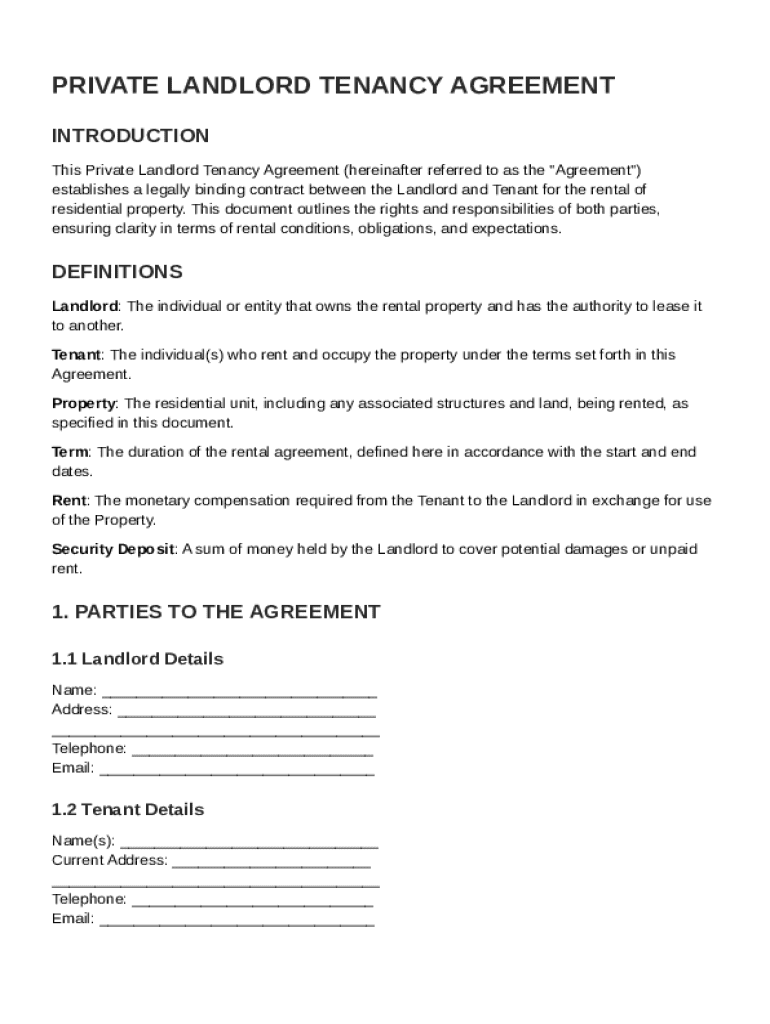







Definition and Meaning of a Private Landlord Tenancy Agreement Template
A Private Landlord Tenancy Agreement Template is a standardized document that outlines the terms and conditions under which a tenant rents a residential property from a private landlord. This agreement serves as a legally binding contract, providing both parties with a clear understanding of their rights and responsibilities.
- Main Purpose: The primary purpose of this template is to offer a structured framework that ensures all necessary details of the rental arrangement are documented.
- Legal Importance: It acts as a safeguard for both landlords and tenants by reducing potential disputes through clearly defined clauses concerning rent, security deposits, maintenance, and other relevant factors.
How to Use the Private Landlord Tenancy Agreement Template
To effectively utilize the Private Landlord Tenancy Agreement Template, follow these steps:
- Download the Template: Obtain the template from a reputable source, ensuring it is compliant with local laws.
- Customize the Template: Modify sections to include specifics such as the rental amount, payment schedule, and property address.
- Include Parties' Details: Accurately fill in the names, contact information, and signatures of the landlord and tenant.
- Review and Finalize: Both parties should review the document to confirm all terms are agreeable. Make any necessary revisions.
- Sign the Agreement: Once finalized, both parties should sign the agreement in the presence of a witness, if required.
Key Elements of the Private Landlord Tenancy Agreement Template
Several critical components should be included in the template to ensure it's comprehensive:
- Property Details: Description of the rental premises, including address and any included amenities.
- Term of Tenancy: Start and end dates for the rental period, and conditions for renewal or termination.
- Rent and Security Deposit: Specifics on rent payment amounts, due dates, and methods, along with the security deposit amount and conditions for its return.
- Maintenance Obligations: Responsibilities of both the landlord and tenant regarding property upkeep.
- Permitted Usage: Guidelines on how the tenant may use the property and restrictions against commercial use or subletting.
- Termination Clause: Conditions under which the agreement may be terminated, such as breach of terms or mutual consent.
- Governing Law: Reference to the legal statutes that govern the agreement, providing context for any legal proceedings if necessary.
Important Terms Related to Private Landlord Tenancy Agreement Template
Understanding certain terms can help both landlords and tenants better navigate the agreement:
- Lease: A contract granting use or occupation of property during a specified period in exchange for a specified rent.
- Eviction: Legal process of removing a tenant from rental property due to violation of agreement terms.
- Sublet: The act by a tenant of renting part or all of their leased property to a third party.
- Premises: The physical space that is rented under the tenancy agreement.
- Default: Failure to fulfill an obligation, such as not paying rent or breaching other terms.
State-Specific Rules for the Private Landlord Tenancy Agreement Template
Rental agreements should comply with state laws, which can vary significantly across the United States:
- Security Deposit Limits: In some states, there are caps on how much a landlord can charge for a security deposit.
- Notice Requirements: The amount of notice a landlord or tenant must give prior to terminating the lease can differ by state.
- Rent Control Policies: Some states have regulations that limit how much rent can increase during the duration of a lease.
- Repair and Maintenance Rules: Variations in state laws regarding landlord responsibilities for repairs and maintenance.
Steps to Complete the Private Landlord Tenancy Agreement Template
Completing this template involves several detailed steps:
- Read the Template Thoroughly: Understand all sections before making any entries.
- Fill Out Preliminary Information: Start with the details of the landlord, tenant, and property location.
- Complete Financial Sections: Carefully input all monetary aspects, ensuring accuracy in amounts and timelines.
- Discuss and Adjust Terms: Have open discussions between parties for consensus on clauses like the duration of lease and rules on property modifications.
- Legal Review (Optional but Recommended): It’s advisable to have the agreement reviewed by a legal professional to ensure all terms comply with local laws.
Who Typically Uses the Private Landlord Tenancy Agreement Template
The template is typically employed by:
- Private Landlords: Individual property owners managing one or several rental units.
- Tenants: Individuals or families seeking rental housing.
- Property Managers: Professionals who oversee rental properties on behalf of landlords, ensuring compliance with all rental terms.
- Legal Professionals: Attorneys or legal consultants facilitating the creation or review of tenancy arrangements.


Legal Use of the Private Landlord Tenancy Agreement Template
This template serves as a legally binding document when appropriately completed:
- Ensuring Legal Compliance: It must adhere to local real estate laws and rental regulations to be enforceable.
- Protection Mechanism: Offers protection to both parties by detailing obligations and procedures for resolving conflicts.
- Evidence in Legal Disputes: Can be submitted as evidence in court to resolve disputes between landlords and tenants.
Examples of Using the Private Landlord Tenancy Agreement Template
Exploring real-world scenarios can illustrate how this template is applied:
-
Scenario 1: A new landlord preparing to rent out their apartment for the first time can use the template to ensure all important legal points are covered.
-
Scenario 2: A renter relocating across states may find that using a standard template offers them reassurance about the consistency of terms, despite the move.
-
Scenario 3: Property managers needing to quickly prepare agreements for multiple tenants can customize a base template for efficiency and consistency across all contracts.




