







Definition and Meaning
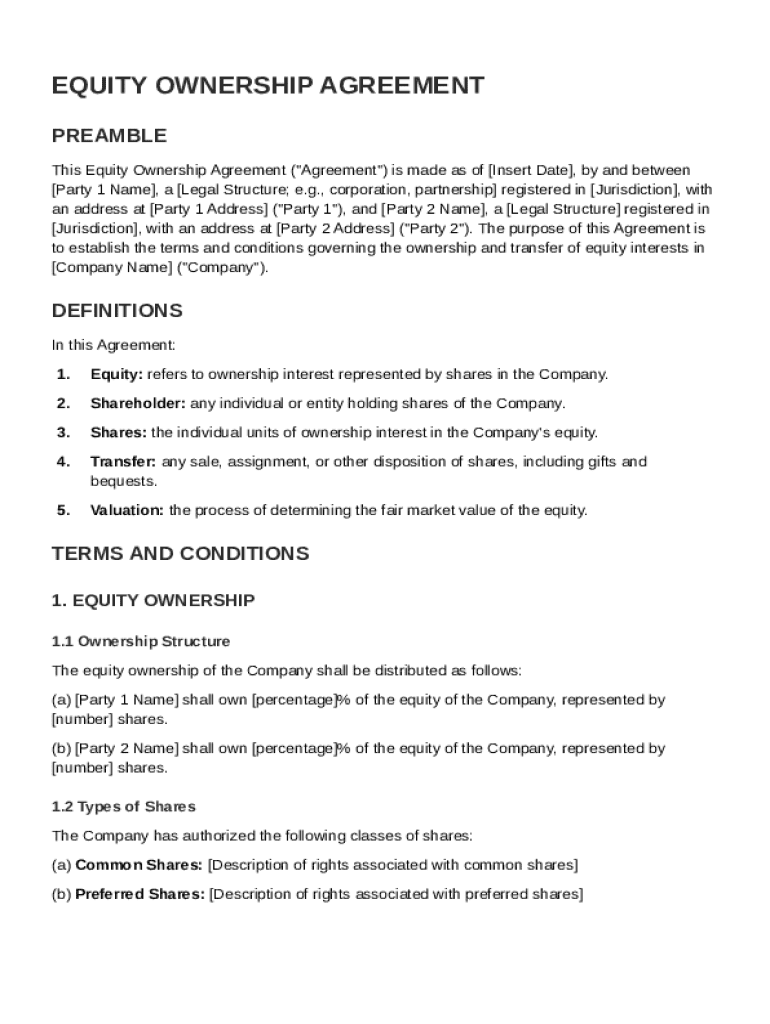
An Equity Ownership Agreement, often encapsulated within a formal template, serves as a foundational document outlining the terms and conditions that govern equity interests between parties in a specified company. This agreement defines crucial concepts such as equity, shares, and shareholders, while also detailing the ownership structure, rights, and obligations of all involved parties. By delineating the scopes of transfer restrictions, buy-sell provisions, confidentiality requirements, and governing laws, the agreement establishes clarity and fairness in managing and transferring equity interests. Real-world scenarios may involve startup founders negotiating shares or investors requiring clear terms before investing in a company.
Key Elements of the Equity Ownership Agreement Template
A comprehensive Equity Ownership Agreement Template will include several key elements that are essential to ensuring legal soundness and operational clarity:
- Ownership Structure: Details the allocation and distribution of shares among parties. This section defines who the shareholders are and the extent of their ownership.
- Rights and Obligations: Outlines the rights of shareholders, including voting rights, dividend entitlements, and obligations such as non-compete clauses or confidentiality.
- Transfer Restrictions: Describes any limitations on the sale or transfer of shares to maintain control within the founding group or prevent dilution of ownership.
- Buy-Sell Provisions: Specifies conditions triggering the sale or purchase of shares, such as death, disability, or departure from the company, and the method of valuation.
- Confidentiality Requirements: Ensures that sensitive information about the company or its owners isn’t disclosed without permission.
Steps to Complete the Equity Ownership Agreement Template
Completing an Equity Ownership Agreement Template involves several structured steps to ensure that all information is accurate and binding:
- Identify Parties: Clearly list all parties involved in the agreement, including their roles and ownership stakes.
- Define Terms: Outline all key definitions, ensuring that terms such as equity, shares, and shareholders are clear to avoid misunderstanding.
- Specify Ownership: Detail the distribution of equity ownership clearly, including any special classes of shares or rights attached to them.
- Outline Rights and Obligations: Enumerate all rights and responsibilities of shareholders, ensuring all legal and operational duties are documented.
- Review Transfer Restrictions: Confirm the agreed-upon restrictions regarding the transfer or sale of shares are documented and understood by all parties.
- Integrate Confidentiality Clauses: Include clauses related to the handling and protection of confidential information.
Who Typically Uses the Equity Ownership Agreement Template
Equity Ownership Agreement Templates are primarily utilized by:
- Startups and New Ventures: Entrepreneurs use this template to divide ownership among co-founders and early investors.
- Investment Firms: Investors or venture capitalists often require a detailed agreement before injecting capital into a business.
- Existing Companies Seeking Expansion: Established businesses pursuing external investment or structuring new business units will utilize the template for clarity in equity allocation.

Legal Use of the Equity Ownership Agreement Template
The legal validity of an Equity Ownership Agreement demands that it complies with pertinent regulations and laws:
- Compliance with State Laws: The agreement must adhere to state-specific corporate laws, with provisions varying from one jurisdiction to another.
- Governing Law Section: The template should include a governing law clause that specifies which jurisdiction's laws will govern any disputes.
- Protection of Minority Shareholders: Legal provisions should protect minority shareholders from potential exploitation by controlling shareholders.
Important Terms Related to Equity Ownership Agreement
Understanding and correctly utilizing pertinent terms within the Equity Ownership Agreement is crucial:
- Equity: Represents ownership interest in a company, typically in the form of stock or shares.
- Shareholders: Individuals or entities that own one or more shares in a company's stock.
- Transfer Restrictions: Legal limitations on the ability to sell or transfer ownership interests.
- Buy-Sell Agreement: A contract outlining conditions under which shares may be bought or sold among shareholders.
State-Specific Rules for the Equity Ownership Agreement Template
While the basic structure of an Equity Ownership Agreement remains consistent, state-specific laws might necessitate variations:
- Securities Regulations: States like California have stringent securities laws that could impact how equity agreements are structured and enforced.
- Tax Considerations: Different states have variable implications for taxes on shares and dividends received by shareholders.
- Incorporation Laws: Some states offer incentives for incorporating companies that might affect decisions around agreements and equity structuring.
Software Compatibility and Integration
While DocHub facilitates document management and editing, it is important to consider how the Equity Ownership Agreement Template integrates with financial and business software:
- Integration with Accounting Software: Ensuring compatibility with platforms like QuickBooks for internal financial tracking and auditing.
- Document Management: Using DocHub, agreements can be seamlessly managed, edited, and shared with stakeholders, integrating easily with Google's suite of apps.
- e-Signature Solutions: The ability to legally bind agreements with electronic signatures for efficient and secure document execution.
By exploring these facets, stakeholders can constructively utilize the Equity Ownership Agreement Template to align with legal, business, and operational objectives, ensuring a comprehensive and compliant framework for equity interest management.




