






Definition & Meaning
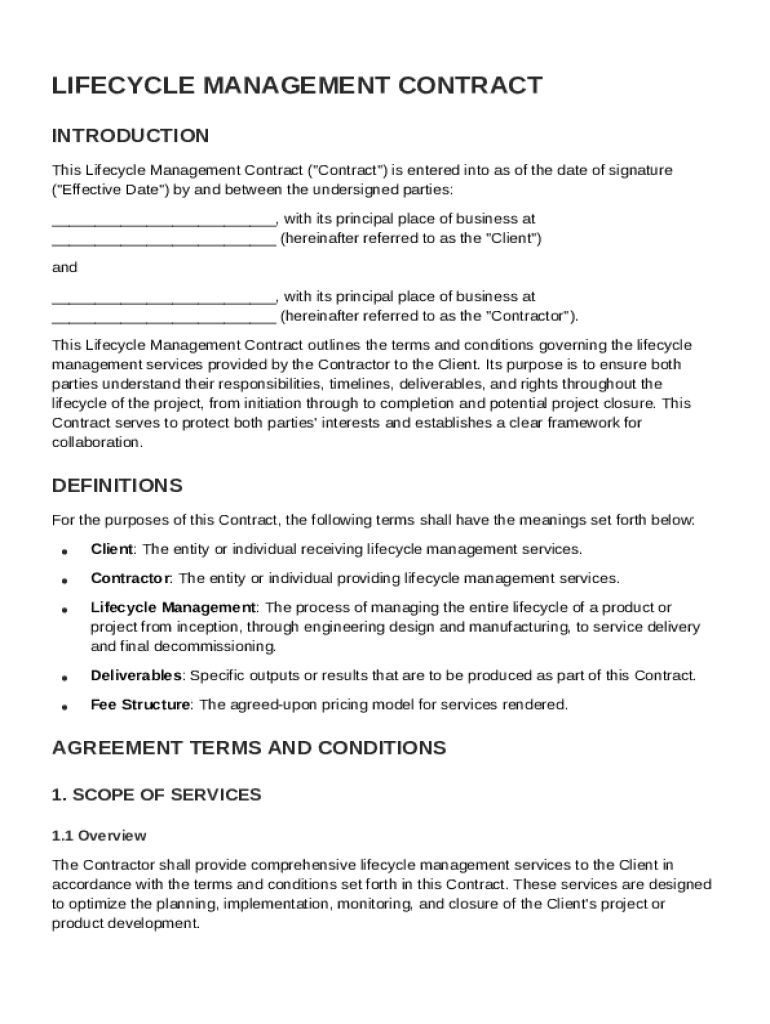
The Lifecycle Management Contract Template is a formal document that outlines the terms and conditions necessary for managing the lifecycle of a project between a client and a contractor. This agreement sets the ground for what each party is expected to deliver, covering critical aspects such as service scope, timelines, payment terms, and performance metrics. The primary aim of this template is to foster clear communication and collaboration throughout the lifecycle of a project, ensuring both parties are aligned from initiation to closure.
Key Components
- Service Scope: Defines the extent and limitations of services to be delivered.
- Project Timelines: Establishes deadlines and milestones for project tasks.
- Payment Terms: Details compensation structure, including method and schedule of payments.
- Performance Metrics: Criteria for measuring project success and contractor performance.
- Confidentiality Obligations: Legal requirements related to the disclosure and protection of sensitive information.
- Termination Conditions: Circumstances under which the contract can be dissolved.
- Dispute Resolution: Mechanisms for resolving disagreements, including mediation and arbitration.
- Governing Law: Specifies the legal jurisdiction governing the contract.
How to Use the Lifecycle Management Contract Template
Using the Lifecycle Management Contract Template involves several precise steps aimed at tailoring the document to the specific needs of the project.
- Download the Template: Access the template from a reliable source like DocHub.
- Customize the Content: Adjust sections to fit the unique aspects of the project, focusing on service scope, timelines, and financial arrangements.
- Review Legal Terms: Ensure all legal elements, such as confidentiality obligations and governing law, comply with local regulations.
- Finalize with Stakeholders: Collaborate with both parties to review and agree upon all terms and conditions.
- Signature Collection: Use DocHub's electronic signature feature to obtain legally binding signatures from all involved parties.
- Maintain a Record: Keep both digital and hard copies of the signed contract for future reference and compliance.
Importance of Customization
- Tailored Responsibilities: Ensures both client and contractor have a clear understanding of their duties.
- Legal Compliance: Customizing the legal aspects ensures adherence to relevant laws and regulations.
- Accuracy: Reflects the precise needs and expectations of both parties involved.
Important Terms Related to Lifecycle Management Contract Template
Understanding the key terms associated with the Lifecycle Management Contract Template is crucial for effective usage and compliance.
Notable Terms
- Client: The party engaging the services.
- Contractor: The party providing lifecycle management services.
- Service Scope: The range of services to be executed.
- Payment Schedule: Timeline and method of payments.
- Confidentiality Obligations: Requirements to protect sensitive information.
- Termination Clause: Terms under which the contract can be terminated.
Legal Jargon Simplified
- Indemnity: Ensures one party is not held responsible for any losses.
- Breach of Contract: Failure to fulfill the terms stated in the contract.
- Force Majeure: Circumstances beyond control, such as natural disasters, that free parties from liability.
Key Elements of the Lifecycle Management Contract Template
The Lifecycle Management Contract Template comprises several essential elements that ensure the comprehensive management of project lifecycle services.
Critical Sections
- Introduction: Identifies both the client and the contractor with basic contact information.
- Scope of Work: Detailed outline of the tasks and services to be performed.
- Milestones and Timelines: Define critical phases and deadlines for the project.
- Payment Details: Terms for compensation, including pricing, invoicing, and payment schedules.
- Performance Standards: Standards by which the contractor's work will be evaluated.
- Confidentiality Agreement: Legal obligations regarding the handling of private information.
- Termination Conditions: Precise terms under which either party can exit the agreement.
- Dispute Resolution and Governing Jurisdiction: Methods for resolving conflicts and the applicable legal jurisdiction.
Real-World Application
Each element ensures both parties are on the same page, promoting transparency, accountability, and efficiency in project management. Properly specifying these sections reduces ambiguity and fosters a more trusting relationship.
Legal Use of the Lifecycle Management Contract Template
Using the Lifecycle Management Contract Template requires compliance with legal standards to ensure that the document is enforceable and protects both parties' rights.
Legal Considerations
- Compliance with State Laws: Ensure the contract adheres to the jurisdiction’s legal requirements.
- Validity: Confirm that all signatures are obtained legally—using electronic signatures can facilitate this process.
- Update Provisions: Regular updates may be necessary to align with new laws or project changes.
- Audit Trails: Maintain records of contract revisions and interactions to support legal validation.
Addressing Legal Risks
- Clear Term Definitions: Reduce potential disputes by clearly defining key terms and responsibilities.
- Consult Legal Professionals: Engage lawyers to review complex legal sections before finalization.
- Safeguard Sensitive Data: Use secure platforms like DocHub to manage and share contract versions securely.
Steps to Complete the Lifecycle Management Contract Template
Completing a Lifecycle Management Contract Template involves a structured approach to ensure all necessary details are covered comprehensively.
- Gather Basic Information: Collect details about both the client and contractor, including business names, contact information, and objectives.
- Define the Project Scope: Articulate the services to be delivered, including detailed descriptions.
- Establish Payment Terms: Clearly outline the cost, payment schedule, and payment method.
- Specify Timelines and Milestones: Identify critical dates for project deliverables.
- Include Performance Metrics: Establish how both parties will measure success and quality.
- Outline Legal Obligations: Add sections that cover confidentiality, dispute resolution, and termination conditions.
- Review and Adjust: Reassess the template with stakeholders to incorporate necessary adjustments.
- Sign and Save: Use electronic signing on DocHub to finalize the document, ensuring legal enforceability.
Practical Scenarios
In a real-world context, following these steps ensures that both parties are aligned on expectations, thereby minimizing disputes and enhancing project efficiency.
Examples of Using the Lifecycle Management Contract Template
Examples of how this contract template can be used in various situations help illustrate its versatility and importance in project management.
Case Studies
- Tech Development: A tech company outsourcing the development of a software application can use the template to clearly define deliverables, timelines, and payment terms.
- Construction Projects: Contractors and clients in the construction industry can stipulate specific phases and sign-off points, reducing the risk of costly overruns.
- Consulting Services: A management consulting firm can outline the scope of productivity evaluation services for a client, ensuring both parties agree on expected outcomes.
Variations Across Industries
- Healthcare IT: Focus on privacy clauses due to sensitive patient information.
- E-commerce Platforms: Emphasize performance metrics to align with high transaction volumes.
Utilizing specific examples demonstrates the template's flexibility and adaptability across different sectors and scenarios.
Who Typically Uses the Lifecycle Management Contract Template
This contract template is designed for a broad range of users who engage in long-term projects, focusing on lifecycle management.


Primary Users
- Business Managers: Oversee and ensure project delivery aligns with organizational goals.
- Project Managers: Implement lifecycle strategies, supervising from project initiation to completion.
- Contractor Firms: Service providers seeking formal agreements for project engagements.
- Consultants: Individuals or firms offering expertise to improve project outcomes.
Supporting Roles
- Legal Advisors: Ensure the document's compliance with applicable laws.
- Financial Controllers: Monitor payment schedules to maintain budget adherence.
Understanding who typically uses the template helps tailor its components to suit specific role requirements, enhancing its efficiency and effectiveness.