
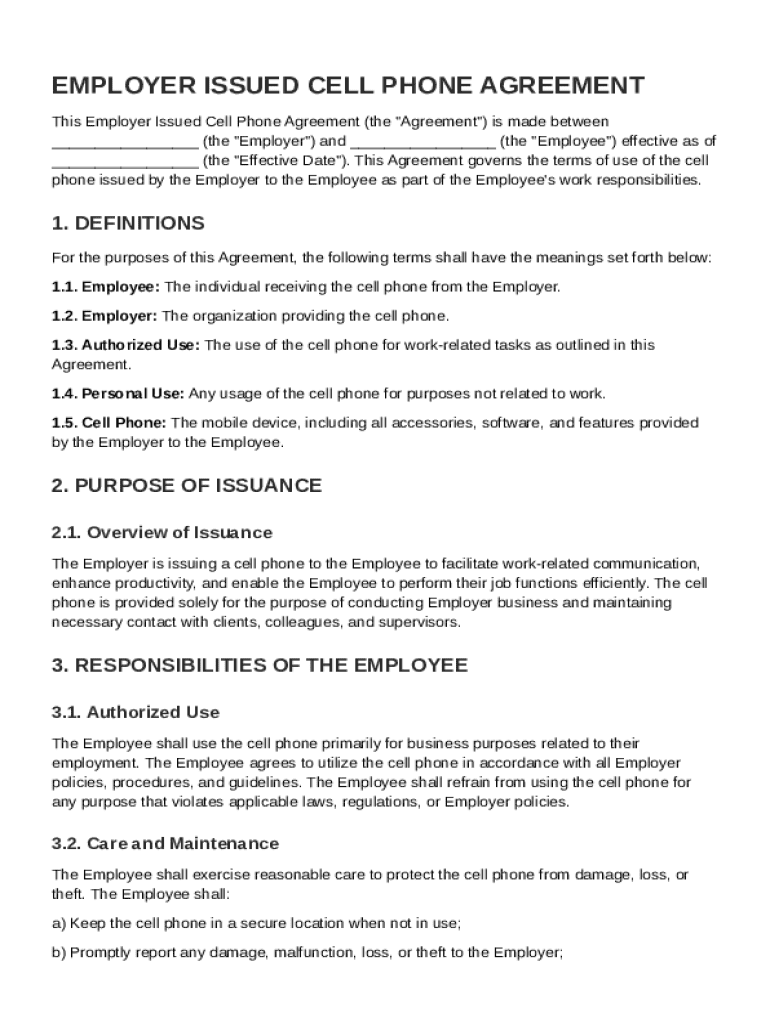







Definition & Meaning
An Employer Issued Cell Phone Agreement Template is a formal document used by companies to outline the terms and conditions under which an employee is provided with a company-owned cell phone. This contract details the responsibilities of both the employer and the employee regarding the use, maintenance, and return of the cell phone. Key elements include authorized usage for business purposes, data security protocols, and the ownership and monitoring rights of the employer. By using this agreement, employers aim to ensure that company resources are used appropriately and to protect sensitive business information accessed via the device.
How to Use the Employer Issued Cell Phone Agreement Template
To effectively use the Employer Issued Cell Phone Agreement Template, employers should begin by customizing the template to fit their specific business needs. This involves:
- Inserting Company Information: Add the company's name, address, and contact information.
- Detailing Usage Guidelines: Specify what constitutes acceptable and unacceptable use. For instance, the phone may be used to access company email but should not be used for personal streaming services.
- Clarifying Employee Responsibilities: Outline maintenance expectations, such as keeping the phone updated and handling it with care.
- Establishing Security Protocols: Include requirements for password protection and guidelines on how to manage sensitive data.
- Explaining Reimbursement Policies: Describe any circumstances under which the employee might be reimbursed for personal usage.
- Defining Return Procedures: Clearly state the process for returning the cell phone, whether upon termination of employment or upon request.
Key Elements of the Employer Issued Cell Phone Agreement Template
The template includes several fundamental components that ensure comprehensive coverage of all necessary areas:
- Ownership Rights: Affirms the employer's ownership of the cell phone and all data it contains.
- Monitoring: Allows for the monitoring of phone usage to ensure adherence to company policies.
- Acceptable Use Policy: Defines the boundaries of how the cell phone should be used during work hours and the restrictions on personal use.
- Security Requirements: Highlights the importance of securing the phone with passwords and other security measures to protect sensitive company information.
- Maintenance and Care: Specifies who is responsible for any repairs or maintenance and outlines the expected condition of the phone throughout its use.
- Return of Equipment: Details the process and timeline for returning the company phone when employment ends or when requested.
Legal Use of the Employer Issued Cell Phone Agreement Template
The legal use of the Employer Issued Cell Phone Agreement Template is crucial for protecting both the employer and employee. This agreement creates a clear legal framework that:
- Protects Company Assets: Ensures the company's data and physical property are used correctly and returned in good condition.
- Defines Liability: Clarifies who is responsible in case of loss, damage, or misuse of the cell phone.
- Supports Compliance: Helps companies comply with data protection laws by enforcing security protocols.
- Establishes Consequences: Details the repercussions for violating any part of the agreement, such as loss of privileges or disciplinary actions.
Steps to Complete the Employer Issued Cell Phone Agreement Template
Completing the Employer Issued Cell Phone Agreement Template involves:
- Filling Company and Employee Information: Both parties need to provide accurate contact details.
- Customizing Terms and Conditions: Modify the template to reflect specific usage policies and responsibilities.
- Reviewing Security Measures: Ensure that the security protocols listed are up-to-date and comprehensive.
- Signing: Have both the employer and employee sign the document to indicate understanding and agreement to the terms.
- Distributing Copies: Provide signed copies to both parties and store a digital copy for easy access and record-keeping.
Why Use the Employer Issued Cell Phone Agreement Template
Employers use this template to:
- Define Clear Expectations: Set rules for how the cell phone should be used to prevent misuse and ensure it serves its intended purpose.
- Enhance Security: Protect against potential breaches or data loss by enforcing strict security practices.
- Manage Costs: Control expenses by outlining reimbursement policies and ensuring that business resources are used efficiently.
- Reduce Liability: Having a signed agreement can protect the company from liability in case of any disputes related to cell phone use.
State-Specific Rules for the Employer Issued Cell Phone Agreement Template
In the U.S., state-specific laws can influence how an Employer Issued Cell Phone Agreement is structured:
- California: Employees may need to be reimbursed for work-related cell phone use, even if the phone is company-issued.
- New York: Employers must ensure that their monitoring policies comply with state privacy laws.
- Texas: Agreements must specify that employees are not permitted to text while driving.
Employers should consult state laws to ensure that the template complies with local regulations.
Examples of Using the Employer Issued Cell Phone Agreement Template
Large corporations, start-ups, and small businesses provide practical examples of the diverse use of the Employer Issued Cell Phone Agreement Template:
- Technology Firms: Often provide employees with cell phones for remote work and need strong security guidelines to protect intellectual property.
- Retail Chains: Equip managers with phones to handle logistics and store operations, requiring clear guidelines on business and personal use.
- Consulting Services: Consultants receiving company phones for communication with clients benefit from clear instructions on data protection and client confidentiality.
State-by-State Differences
Different states may have unique requirements for cell phone usage in the workplace:
- California: Requires precise reimbursement for any work-related phone use, reflecting the state's labor code.
- Massachusetts: Offers stricter privacy protections that may impact monitoring provisions within agreements.
- Florida: Encourages but does not mandate employers to reimburse employees for work-related expenses, impacting how agreements may be structured to address reimbursement policies.




