






Definition & Meaning
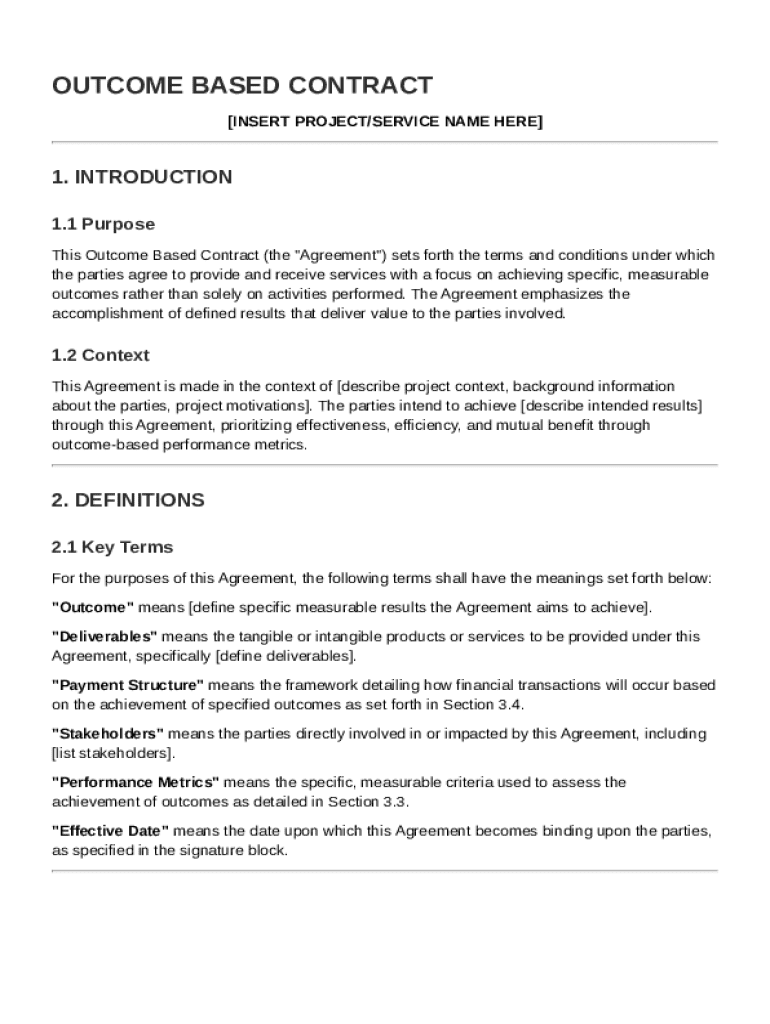
An Outcome Based Contract Template is a document framework designed to facilitate agreements centered around achieving specific, measurable results. Unlike traditional contracts that may focus primarily on the activities or tasks to be performed, this template emphasizes defining and meeting desired outcomes. This structure aims to align the incentives of both parties involved, ensuring that service delivery is directly linked to the success metrics agreed upon at the outset. The template includes essential components such as performance metrics, payment terms based on achieving outcomes, and clear definitions of the scope of work.
Key Elements of the Outcome Based Contract Template
The Outcome Based Contract Template consists of several crucial components:
- Purpose: Defines the overall goal and intention behind the contract.
- Parties Involved: Specifies all parties participating in the contract, ensuring clarity in responsibilities and roles.
- Scope of Work: Outlines all the services to be provided and the results that are expected.
- Performance Metrics: Details the measurable outcomes that must be achieved for successful completion of the contract.
- Payment Terms: Links compensation to the achievement of performance targets, motivating the service provider to meet or exceed expectations.
- Confidentiality: Protects sensitive information disclosed during the contract's execution.
- Termination Conditions: Establishes conditions under which the contract may be terminated by either party.
- Dispute Resolution Procedure: Specifies methods for resolving disagreements to avoid legal escalation.
Steps to Complete the Outcome Based Contract Template
Completing the Outcome Based Contract Template involves a structured approach:
- Define the Purpose: Clearly articulate the objectives of the agreement.
- Identify the Parties Involved: Include all relevant entities or individuals, outlining their roles.
- Outline the Scope of Work: Provide detailed descriptions of the tasks and desired outcomes.
- Set Performance Metrics: Establish clear, quantifiable criteria to measure success.
- Agree on Payment Terms: Determine how compensation will be tied to outcomes.
- Include Confidentiality Terms: Protect proprietary and sensitive information.
- Specify Termination Conditions: Define what constitutes a breach and possible contract termination.
- Outline the Dispute Resolution Procedure: Select an approach for handling disputes.
Why Use the Outcome Based Contract Template
Utilizing an Outcome Based Contract Template offers several advantages:
- Alignment of Interests: Encourages collaboration by aligning the goals of both parties towards mutual success.
- Enhanced Accountability: Clearly defined outcomes increase accountability on the service provider's part.
- Performance-Driven Compensation: Links payments directly to achieving predefined outcomes, incentivizing optimal performance.
- Flexibility: Allows for changes in strategies or methods, provided the outcomes are met.
- Reduced Risk: Clearly defined expectations and metrics reduce ambiguity and potential disputes.
Legal Use of the Outcome Based Contract Template
The Outcome Based Contract Template must adhere to legal guidelines to be enforceable. Considerations include:
- Compliance with Local Laws: Ensure that the contract conforms to federal, state, and local regulations.
- Legally Binding Signatures: Use compliant electronic signature tools such as those provided by platforms like DocHub.
- Confidentiality Agreements: Implement legally sound confidentiality clauses to protect all parties.
- Amendment Processes: Clearly specify procedures for contract adjustments, ensuring mutual consent and documentation.
Examples of Using the Outcome Based Contract Template
The Outcome Based Contract Template is versatile and can be applied in various sectors. Examples include:
- IT Services: An IT company contracts to achieve specified performance metrics like system uptime and response times.
- Construction Projects: Linking payments to reaching stages of completion within budgetary and time constraints.
- Healthcare Services: Providers receive compensation based on patient recovery rates or the achievement of health improvement metrics.
Business Types That Benefit Most from Outcome Based Contract Template
Several business types see pronounced benefits from using this template:
- Service Providers: Especially those in consultancy, IT, or healthcare, where quality and results are often the focus.
- Start-ups: These entities often need to demonstrate tangible returns quickly to sustain growth and fund further endeavors.
- Customer-Centric Organizations: These businesses can leverage outcome-based contracts to enhance customer satisfaction by focusing on quantifiable results.
Software Compatibility
The Outcome Based Contract Template can be effectively used with various software tools to streamline processes:
- DocHub: Utilize its capabilities for editing, signing, and sharing documents securely.
- Google Workspace: Import and export files seamlessly using its integration, facilitating efficient workflows.
- Other Tools: Software such as TurboTax and QuickBooks may provide relevant financial insights and management capabilities, although primarily outcome-based contracts focus on agreed metrics and completion verification.