




Definition and Meaning of Employee Confidentiality Agreement
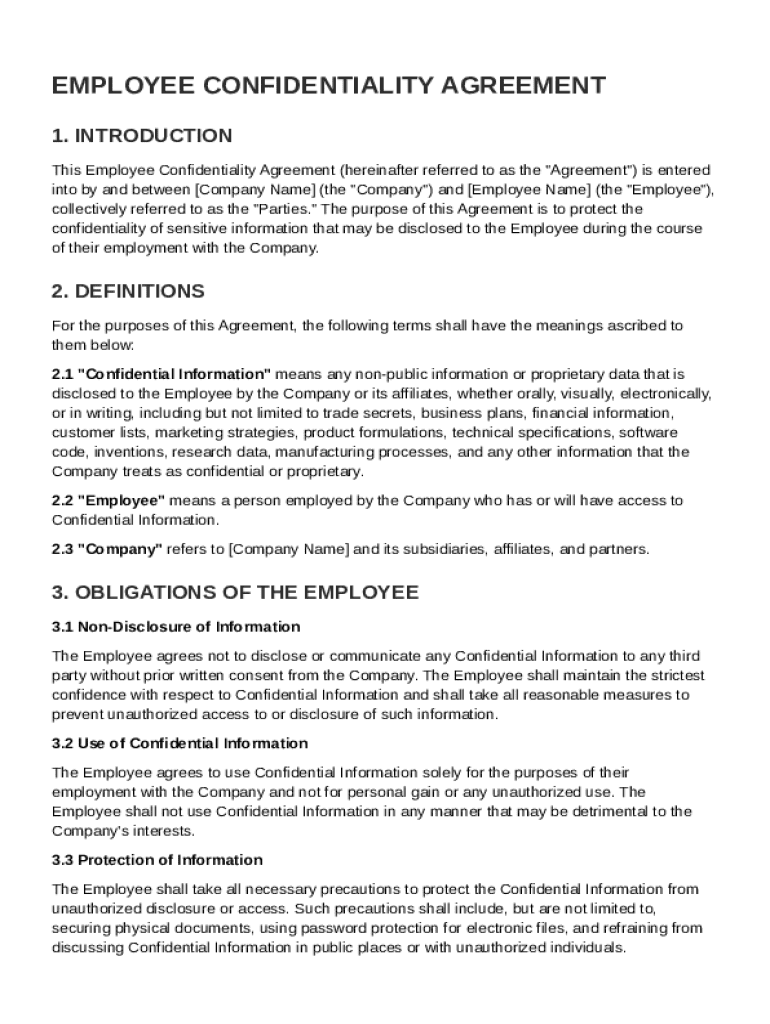
An Employee Confidentiality Agreement, also referred to as a Non-Disclosure Agreement (NDA), is a legal contract between an employer and an employee, mandating the protection of sensitive information. This document outlines the types of information considered confidential, detailing the obligations regarding use and disclosure. It safeguards proprietary secrets, client details, and any internal processes or data the company deems protected. By signing this agreement, employees legally commit to maintaining confidentiality during and after their employment, thereby limiting unauthorized dissemination that could harm the organization.
How to Use the Employee Confidentiality Agreement Template
The Employee Confidentiality Agreement Template is designed to streamline the process of securing sensitive company information. To utilize the template, begin by reviewing its standard clauses to ensure they align with your organization's specific needs. Customize sections such as the definition of 'Confidential Information,' the scope of non-disclosure obligations, and the duration of the agreement. Include any state-specific or industry-specific regulations that might influence the content. Once customized to your satisfaction, distribute the agreement to employees for their signatures to formalize their commitment.
Steps to Complete the Employee Confidentiality Agreement Template
-
Review and Personalize Content: Carefully read the template, focusing on clauses defining 'Confidential Information' and obligations. Adjust these to fit the particular needs of your business.
-
Define Key Terms: Clarify all technical terms or industry jargon within the document to eliminate misunderstandings. Specify which types of information the company considers confidential.
-
Include Legal Provisions: Ensure the agreement includes all necessary legal provisions, such as the applicable laws, remedies for breach, and dispute resolution mechanisms.
-
Signature Collection: Once finalized, distribute the agreement to employees for their signatures. This can be done digitally through platforms like DocHub for efficiency and security.
-
Maintain Documentation: Keep a signed copy securely stored, and consider periodic reviews or updates to the agreement as business needs evolve.
Key Elements of the Employee Confidentiality Agreement Template
-
Definition of Confidential Information: Clearly specifies what constitutes confidential data, such as trade secrets, client lists, and proprietary methodologies.
-
Duration of Confidentiality: States how long the confidentiality obligations last. It often extends beyond employment termination.
-
Non-Disclosure Obligations: Details the limitations on the sharing of sensitive information, emphasizing what is permitted and what is prohibited.
-
Exclusions: Lists any exceptions to confidentiality, such as information already in the public domain.
-
Consequences of Breach: Outlines potential penalties or remedies if an employee violates the agreement, including legal action or financial restitution.
Legal Use and Implications
The Employee Confidentiality Agreement is legally binding and used to protect an organization's intellectual property. It adheres to U.S. law and standards, emphasizing the ESIGN Act's role in permitting electronic signatures. Employers must tailor agreements to align with federal and state regulations, ensuring enforceability. This legal tool serves as a critical deterrent against employee-initiated leaks, providing grounds for legal recourse and supporting claims of attempted sabotage or breach of trade secret laws.
Who Typically Uses the Employee Confidentiality Agreement Template
A wide range of businesses across multiple industries employs this template. It is particularly beneficial for companies dealing with sensitive data, such as technology firms, legal practices, and financial institutions. Additionally, startups seeking to protect intellectual property and competitive advantages, and any organization with proprietary processes, benefit from its use. Human Resources departments often handle the distribution and administration of these agreements during onboarding.

Important Terms Related to Employee Confidentiality Agreement Template
-
Non-Disclosure Agreement (NDA): Another term for confidentiality agreements, emphasizing non-disclosure over general confidentiality.
-
Proprietary Information: Specific data regarded as confidential and essential to the company's competitive edge.
-
Trade Secrets: A subset of proprietary information that, if disclosed, could significantly impair a company’s market position.
-
Breach: The act of disclosing or using confidential information in violation of the agreement’s terms.
State-Specific Rules for Employee Confidentiality Agreements
Different U.S. states may have varying requirements or interpretations concerning NDAs. For instance:
-
California: Known for its non-compete limitations, ensuring NDAs do not unfairly restrict future employment opportunities.
-
Texas: Enforces NDAs strictly, offering robust protection to business interests.
-
New York: Requires a clear delineation of confidential materials and generally favors employee-friendly interpretations.
Ensuring compliance with state laws is crucial to the effectiveness and enforceability of these agreements. Employers should regularly review state-specific laws to make necessary adjustments to their documents.