
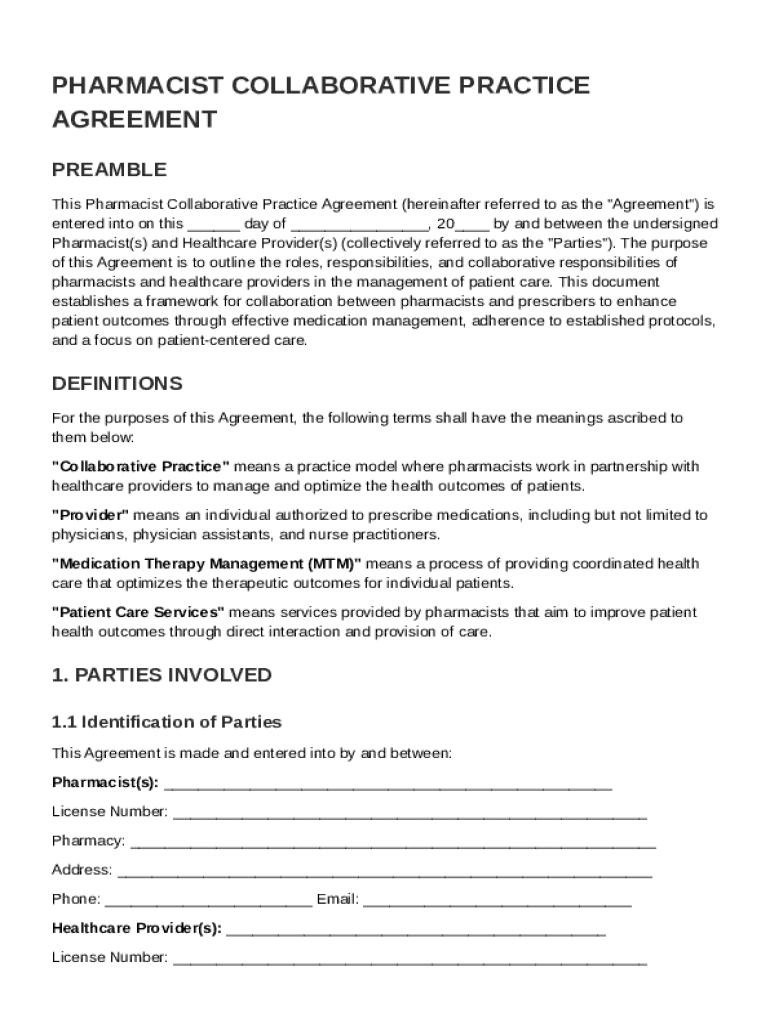







Definition & Meaning
A Pharmacist Collaborative Practice Agreement (CPA) is a legally binding document that stipulates the responsibilities and roles of pharmacists in collaboration with healthcare providers. Primarily, it establishes a framework to enhance patient care, focusing on effective medication management, adherence to established protocols, and a commitment to patient-centered approaches. Pharmacists can operate at an expanded capacity under this agreement, optimizing health outcomes through collective expertise.
Key Components
- Roles and Responsibilities: Outlines specific duties each party undertakes.
- Scope of Practice: Details what pharmacists can do, like adjusting medication doses.
- Communication Protocols: Specifies how communication between collaborators should occur to ensure seamless operation.
- Quality Assurance: Ensures adherence to high standards in pharmaceutical care.
- Legal Compliance: Aligns with applicable legal and healthcare standards.
How to Use the Pharmacist Collaborative Practice Agreement Template
This template serves as a structured guide for drafting a comprehensive CPA. It includes predefined sections where the necessary details can be filled, ensuring all crucial aspects are addressed. Beginning with the introduction of involved parties, it flows through to detailing the comprehensive roles and boundaries.
Steps to Use
- Download or Access: Obtain the template from a compatible document management platform like DocHub.
- Customize Content: Tailor the language and specifics to match the needs of both the pharmacist and the healthcare facility.
- Review Legal Terms: Ensure the legal language aligns with federal and state requirements.
- Finalize Agreement: Collaborate with legal advisors to review before signing.
Steps to Complete the Pharmacist Collaborative Practice Agreement Template
Completing a CPA template requires careful attention to detail and comprehensive data entry in all sections. Here’s a step-by-step approach to ensure accuracy:
- Identify Participating Parties: Input full legal names and associated organizations.
- Define Scope of Practice: Clearly outline the scope under which the pharmacist will operate.
- Develop Protocols: Include detailed protocols for communication and documentation procedures.
- Set Quality Assurance Measures: Detail metrics and methods for evaluating performance.
- Incorporate Legal Provisions: Ensure explicit necessity for legal compliance and patient consent.
- Add Signature Fields: Provide spaces for the necessary signatures to validate the Agreement.
Key Elements of the Pharmacist Collaborative Practice Agreement Template
To be effective, a CPA template must contain several critical elements that reflect the intent and necessities of the arrangement.
Essential Elements
- Collaborative Overview: Introduction to the purpose and scope of the Agreement.
- Operational Guidelines: Comprehensive procedures to guide pharmacy operations.
- Scope & Authority: Clarity on the tasks pharmacists can perform under the CPA.
- Limitations and Exclusions: Details on what falls outside the pharmacist's remit.
- Compliance & Ethical Standards: Emphasis on maintaining ethical practices aligned with national standards.
Who Typically Uses the Pharmacist Collaborative Practice Agreement Template
Typically, CPAs are utilized by licensed pharmacists in conjunction with healthcare providers, such as doctors or clinics, who seek to enhance collaborative efforts in patient care. This Agreement is crucial in settings where pharmacists take on proactive roles in direct patient care and medication management.


Common Users
- Community Pharmacies: Utilizing CPAs to improve patient outcomes through medication therapy management.
- Hospital Departments: Collaborative efforts in internal medicine and specialty cases.
- Healthcare Clinics: Implementing CPAs for integrated care delivery models.

Important Terms Related to Pharmacist Collaborative Practice Agreement Template
Understanding the terminologies associated with CPAs can provide greater clarity and enable more efficient usage of the template.
- Medication Therapy Management (MTM): A pharmacist-led approach to ensure optimal therapeutic outcomes.
- Collaborative Drug Therapy Management (CDTM): Allows pharmacists to manage a limited set of medications under a collaborative agreement.
- Protocol: A specific plan delineating the actions pharmacists may undertake in managing patient drug therapy.
Legal Use of the Pharmacist Collaborative Practice Agreement Template
The CPA must comply with both federal and state regulations. Legal compliance ensures that the agreement is enforceable and recognized by healthcare authorities.
Compliance Areas
- Federal Regulations: Adhering to the ESIGN Act for electronic validations.
- State Laws: Different states have varied requirements on what CPAs can encompass.
- Certification Requirements: Ensuring all parties involved are licensed and certified.
State-Specific Rules for the Pharmacist Collaborative Practice Agreement Template
Pharmacy practice is subject to state-specific variations, which influence how CPAs are framed and executed. Each state prescribes distinct stipulations regarding the scope and authority of pharmacists in collaborative settings.
Variations to Consider
- Scope of Authority: Some states allow broader responsibilities than others.
- Regulatory Compliance: Ensure documentation and practices align with state board requirements.
- Pharmacy Technician Utilization: Scrutinize how auxiliary staff might engage in practice agreements within the state legal context.




