




Definition and Meaning
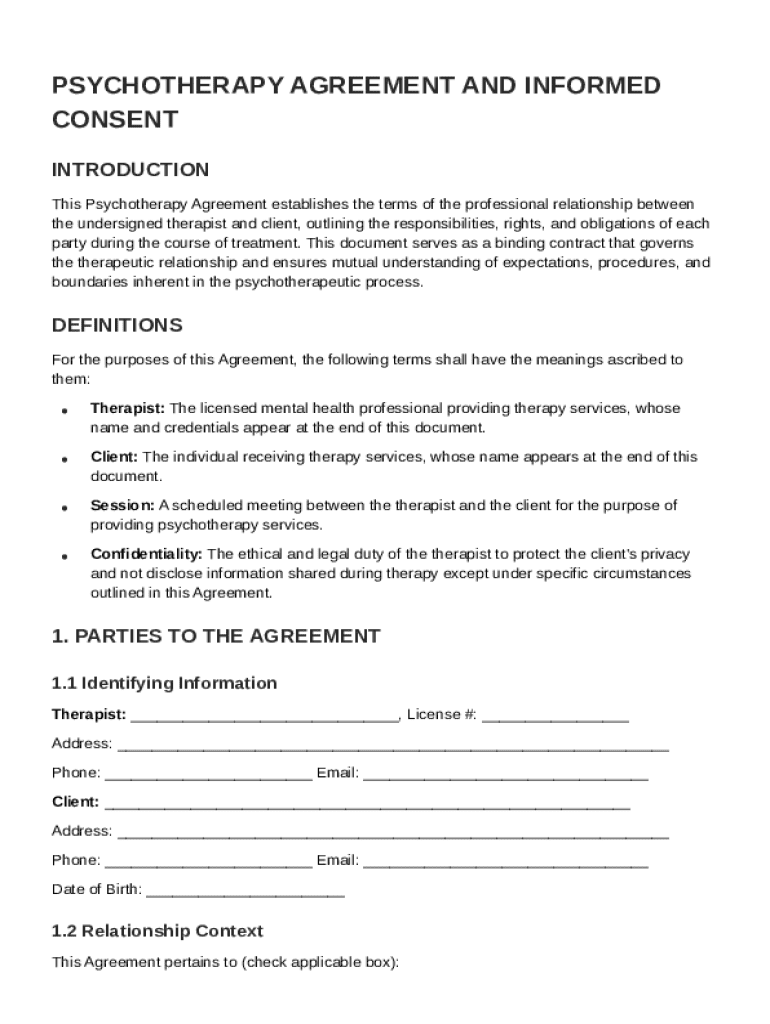
The Psychotherapy Contract Template serves as an agreement outlining the professional relationship between a therapist and a client. This document defines the responsibilities, rights, and obligations of both parties involved. It is designed to ensure mutual understanding of the therapeutic process and establish clear boundaries, promoting a structured and respectful environment. By detailing key aspects such as confidentiality limits, fees, session structure, and termination conditions, the template helps maintain clarity and transparency throughout the therapy.
How to Use the Psychotherapy Contract Template
To effectively utilize the Psychotherapy Contract Template, start by gathering all relevant information needed for the contract, such as personal details of both the therapist and the client. Review each section to ensure it accurately reflects the agreed terms of the therapeutic relationship. Customize the template by adding specific details relevant to the practice, including payment terms, session frequency, and contact protocols. Once both parties are satisfied with the document, it must be signed to officially validate the agreement.
Steps to Customize the Template
- Personal Information: Input the names and contact information of both the therapist and the client.
- Session Details: Specify the frequency, duration, and location of the therapy sessions.
- Payment Terms: Include details about fees, payment methods, and cancellation policies.
- Confidentiality Agreement: Outline the confidentiality terms, including any legal exceptions.
- Termination Conditions: Define the terms under which the therapy can be concluded by either party.
Key Elements of the Psychotherapy Contract Template
The template includes various crucial elements to ensure a comprehensive agreement:
- Therapy Objectives: Clear articulation of the goals and expectations from the therapy sessions.
- Session Logistics: Details about the length, frequency, and nature of the sessions.
- Fees and Payments: Information about the cost of therapy, accepted payment methods, and cancellation fees.
- Confidentiality Terms: Stipulations regarding the therapist’s obligations to maintain client privacy, with exceptions for legal mandates.
- Client Rights: Assurance of the client’s rights to informed consent, confidentiality, and the right to end therapy at any time.
- Termination Provisions: Conditions that allow for either party to terminate the agreement, ensuring flexibility and mutual respect.
Legal Use of the Psychotherapy Contract Template
In the United States, the Psychotherapy Contract Template serves as a legally binding document that protects the interests of both the therapist and the client. It ensures compliance with mental health laws and ethical standards. By signing this contract, both parties acknowledge their understanding and acceptance of the terms, which can be referenced in case of disputes. It is recommended to consult with a legal professional before finalizing the document to ensure full legal compliance.
Important Terms Related to Psychotherapy Contract Template
Understanding specific terms within the contract is essential for clear communication:
- Informed Consent: The client's right to be informed about the therapy process and to agree to it voluntarily.
- Confidentiality: Obligation of the therapist to keep client information private unless legally obligated to disclose.
- Session Frequency: Agreed interval at which therapy sessions are conducted.
- Payment Methods: Accepted ways to pay for therapy services, including cash, credit, or insurance.
Who Typically Uses the Psychotherapy Contract Template
This template is primarily used by mental health professionals, including:
- Licensed Therapists: To formalize their relationships with clients and maintain professional standards.
- Counselors: To provide structure and clarity in their therapeutic practices.
- Therapy Clients: To ensure they understand their rights and responsibilities within the therapy process.

State-Specific Rules for the Psychotherapy Contract Template
Certain states in the U.S. might have specific regulations that need to be incorporated into the Psychotherapy Contract Template. For example:
- California: Requires specific disclosures about confidentiality exceptions.
- New York: May necessitate the inclusion of mental health parity laws affecting insurance coverage.
- Texas: Could demand details about mandated reporting laws for harm to self or others.
Examples of Using the Psychotherapy Contract Template
Practitioners can apply the Psychotherapy Contract Template in various scenarios:
- Initial Client Intake: Use the template to create a solid foundation for new client relationships.
- Agreement Revisions: Modify existing contracts when there are significant changes to therapy terms or client needs.
- Dispute Resolution: Refer to the contract as a legal document for resolving disagreements over therapy terms or fees.
By thoroughly utilizing the Psychotherapy Contract Template, therapists and clients can foster an environment of trust and mutual understanding, ultimately enhancing the therapeutic journey.