Definition & Meaning
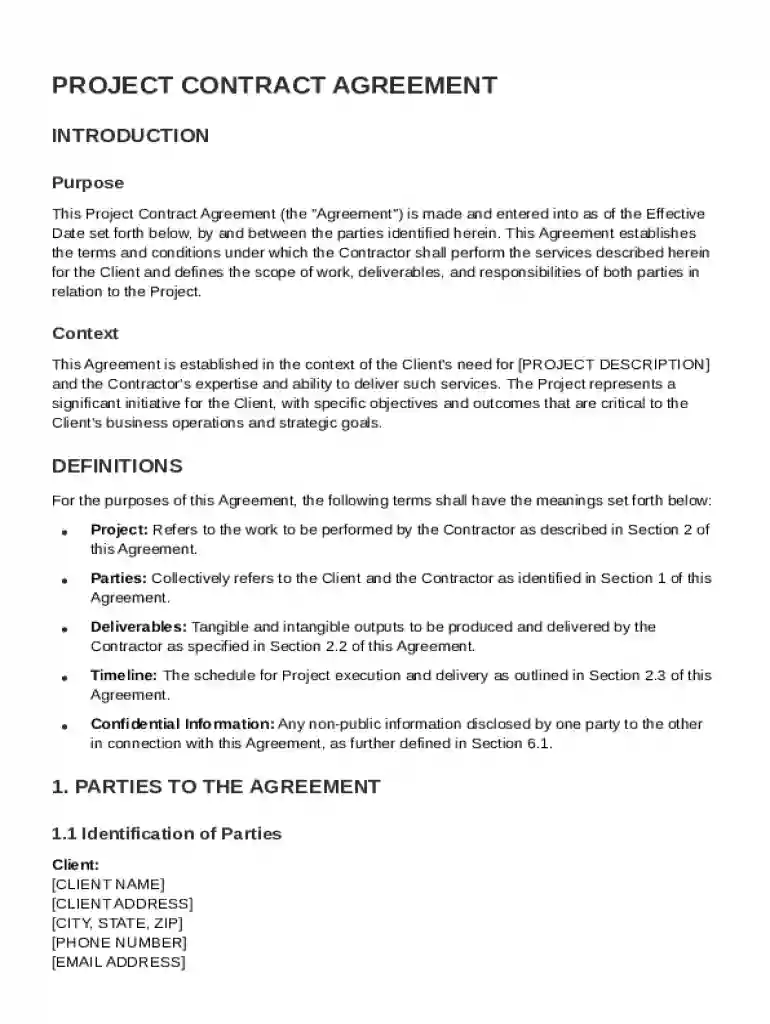
The "Project Contract Template" serves as a structured framework to establish the terms and conditions for a project between a client and a contractor. This template lays out the project’s objectives and delivers clarity on various aspects such as scope of work, responsibilities, and deliverables. It also addresses payment terms, confidentiality obligations, intellectual property rights, termination conditions, and other legal components relevant to the project's execution. By using a standardized template, parties can ensure consistency and reduce misunderstandings.
Key Features:
- Scope of Work: Outlines specific tasks and objectives for the project.
- Deliverables: Details on what constitutes completion of the work.
- Payment Terms: Payment schedule, method of payment, and milestones.
- Legal Clauses: Inclusion of confidentiality, indemnification, and disputes.
- Termination: Conditions under which the contract can be ended.
Key Elements of the Project Contract Template
The Project Contract Template includes vital components to ensure an effective and clear agreement.
Essential Sections:
- Introduction and Parties Involved: Identifies the client and contractor.
- Description of Work: Detailed explanation of the tasks to be carried out.
- Payment Structure: Defines how and when contractors will be paid, including any deposit required.
- Deadlines and Milestones: Important dates and timelines for project phases.
- Confidentiality Clause: Protects sensitive information shared during the project.
- Intellectual Property Rights: Clarifies ownership of any intellectual property developed.
How to Use the Project Contract Template
Utilizing the template efficiently requires understanding its structure and adapting it to specific project needs.
Step-by-Step Process:
- Review the Template: Ensure that the terms and conditions align with the project goals.
- Customize Details: Adjust sections like scope, deliverables, and timelines to fit the specific project.
- Consult Legal Advice: For crucial legal terms, consulting with a legal expert is important.
- Role Assignment: Clearly define the roles and responsibilities of each party involved.
- Final Review and Signoff: Have both parties review and sign the agreement to validate it.
Legal Use of the Project Contract Template
Ensuring that the Project Contract Template is used legally is crucial for compliance and protection.
Legal Guidelines:
- Compliance with Laws: Follow local, state, and federal laws relevant to the contract.
- Signatory Authority: Confirm that the individuals signing have the authority to do so.
- Binding Agreement: Once signed, the terms become legally binding, enforcing adherence to specified conditions.
- Amendments: Any changes to the contract should be documented formally and signed by both parties.
Who Typically Uses the Project Contract Template
The template is most commonly used by a variety of professionals and organizations to formalize project-related agreements.

Common Users:
- Freelancers and Independent Contractors: Individuals offering specialized services.
- Businesses and Corporations: Companies outsourcing tasks or collaborating with other businesses.
- Consultants: Professionally guiding organizations and industries.
- Project Managers: Overseeing executions that involve multiple stakeholders.
Important Terms Related to Project Contract Template
Understanding specific terminology within the contract is essential for proper interpretation and implementation.
Terms Explained:
- Force Majeure: Protects parties from liability in extraordinary circumstances.
- Indemnification: An agreement to compensate for harm or loss.
- Non-Disclosure: A promise to keep certain information confidential.
- Arbitration: Alternative dispute resolution outside of court.
Steps to Complete the Project Contract Template
Filling out the Project Contract Template requires careful completion of various sections to ensure accuracy and completeness.
Completion Steps:
- Input Basic Information: Enter the names and details of both parties.
- Define Scope and Deliverables: Clearly describe the work expected.
- Establish Payment Terms: Include details on payment amounts and schedules.
- Detail Timelines: List all significant deadlines and milestones.
- Include Legal Clauses: Add mandatory and optional clauses like confidentiality and termination.
- Review and Revise: Thoroughly check for accuracy before finalizing.
State-Specific Rules for the Project Contract Template
Variations can exist based on state laws, impacting elements like enforceability and terminology.
State Differences:
- Legal Minimums: Some states have specific requirements regarding contract content.
- Language and Terminology: Variations in legal language might be required.
- Local Business Practices: Understanding standard regional practices can be beneficial.
- Governing Law Clauses: Specify which state's law will govern the contract.
By adhering to these structured guidelines and headings, users can maximize understanding and application of the Project Contract Template, ensuring legal compliance and effective project management.