
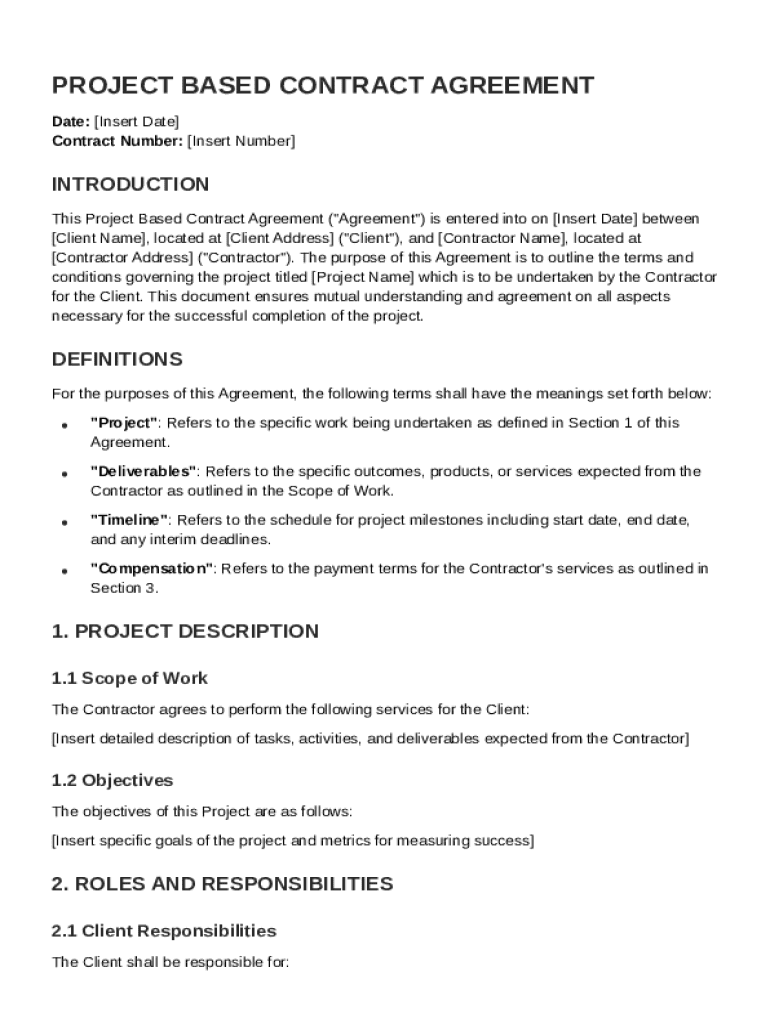







Definition and Meaning of a Project-Based Contract
A Project-Based Contract Template is a document that establishes the terms and conditions between a client and a contractor for the completion of a specific project. Such contracts are integral in ensuring both parties have a clear understanding of their responsibilities and expectations. This template typically includes a detailed breakdown of the project scope, objectives, and deliverables. By standardizing these elements, the contract facilitates smoother communications and minimizes the risk of misunderstandings. Project-based agreements are often used in various industries, from construction and IT to freelance and consulting services, where the work is defined by finite projects with clear start and end points.
How to Use the Project-Based Contract Template
Utilizing a project-based contract template involves customizing the document to fit the unique requirements of each project. First, ensure accurate representation of the project description, including objectives and timeline. It's important to clarify the roles and responsibilities of both parties, providing detail on deliverables and the scope of work. Compensation and payment terms should be specified, indicating the total fee and payment schedule. To finalize, both parties need to review the document thoroughly, ensuring all necessary agreements are outlined, before signatures are added for legal validation.
Key Sections to Include
- Project Description: Outline the goal, objectives, and key deliverables.
- Roles and Responsibilities: Define each party's involvement and duties.
- Compensation and Payment Terms: Include total compensation, payment milestones, and method of payment.
- Project Timeline: Specify start, interim checkpoints, and completion dates.
- Amendments and Termination: Processes for modifying the contract and conditions for termination.
Steps to Complete the Project-Based Contract Template
- Download the Template: Obtain a suitable template from a trusted source like DocHub.
- Enter Project Details: Fill in specifics about the project, including the name, description, and objectives.
- Define Roles: Clearly state the roles of both the client and contractor.
- Specify Compensation: Include details about payment terms and any contingencies.
- Set Timelines: Enter start and end dates and any critical milestones.
- Review and Revise: Ensure all elements are addressed and make necessary adjustments.
- Sign and Save: Finalize by obtaining signatures from all involved parties.
Key Elements of the Project-Based Contract Template
The essential components of a project-based contract template aim to cover all potential aspects of the project. Critical elements include:
- Intellectual Property Rights: Determine who retains rights over work products.
- Confidentiality: If applicable, include clauses about non-disclosure of sensitive information.
- Dispute Resolution: Outline how disagreements will be handled, such as through mediation or arbitration.
- Limitations of Liability: Specify any restrictions on the amount of damages parties can claim.
- General Provisions: Address modifications, legal compliance, and entire agreement clauses.
Legal Use and Compliance
The legal use of a project-based contract template requires adherence to various laws and regulations to ensure enforceability. The contract should meet all applicable legal standards within the jurisdiction where the project is executed. Parties involved must be of legal age and competent to enter into binding agreements. Additionally, the contract should be clear in its language, leaving no ambiguous terms, to avoid potential legal disputes.
Examples of Key Legal Provisions
- Capacity and Authority: Ensure parties are legally authorized to make commitments.
- Compliance with Laws: Both parties should adhere to relevant federal and state regulations.
- Governing Law: Designate which jurisdiction's law will govern the contract.
Who Typically Uses the Project-Based Contract Template
Various professionals and businesses employ project-based contract templates to streamline their engagements. This includes:
- Freelancers and Consultants: Use to clearly define project boundaries and expectations.
- IT and Tech Firms: Often required to articulate specific deliverables and project milestones.
- Construction Companies: Specify scope, timeline, and payment for construction projects.
- Marketing Agencies: Define campaign parameters and deliverables.


Versions or Alternatives to the Project-Based Contract Template
For contractors and clients seeking different structures, multiple versions or alternatives may better suit their needs. Variations can include:
- Time and Materials Contracts: Agreeing to pay based on the time spent and materials used.
- Fixed-Price Contracts: Outlining a set price for the completion of the project regardless of resources used.
- Retainer Agreements: Offering payment for a regular supply of services instead of a single project.
Each alternative has its benefits and potential drawbacks, making it crucial to assess the project requirements carefully before selecting a contract type.




