






Definition & Meaning
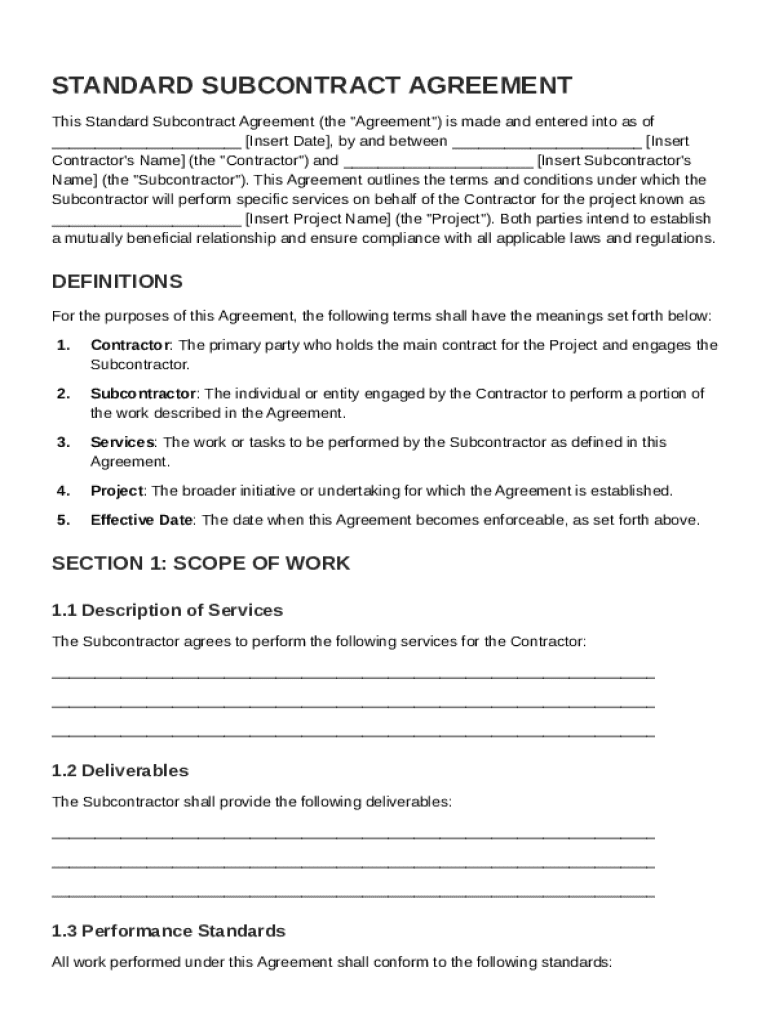
The Standard Subcontract Agreement Template is a legal document used to establish a formal relationship between a Contractor and a Subcontractor. This agreement outlines the terms and conditions under which specific services will be performed on a designated project. The primary goal of this template is to ensure that both parties have a clear understanding of their responsibilities and obligations. It typically includes key definitions, such as "Contractor," "Subcontractor," and "Project," to avoid ambiguity. By using a comprehensive template, parties can minimize misunderstandings and legal disputes.
Components of the Agreement
- Scope of Work: Details the specific tasks that the Subcontractor is expected to perform.
- Compensation: Outlines payment terms, including rates, schedule, and method of payment.
- Duration and Termination: Specifies the timeline for project completion and conditions under which the agreement can be terminated.
How to Use the Standard Subcontract Agreement Template
To effectively utilize the Standard Subcontract Agreement Template, follow these steps:
- Download the Template: Obtain a copy of the template from a reliable source, ensuring it aligns with current legal standards.
- Customize the Document: Edit the template to reflect the specific details of your project, including party names, project description, and compensation terms.
- Review with Legal Counsel: Have a legal professional review the draft to ensure compliance with local laws and regulations.
- Finalize and Sign: Once both parties agree to the terms, sign the document to formalize the agreement.
Key Considerations
- Always ensure that all parties fully understand and consent to the terms outlined in the agreement.
- Keep a copy of the signed agreement for your records and future reference.
Important Terms Related to Standard Subcontract Agreement Template
Understanding the important terms within the agreement is critical for both Contractor and Subcontractor. Here are key terms typically included:
- Indemnity: A provision requiring one party to compensate the other for any loss or damage incurred.
- Confidentiality: Obligations related to the non-disclosure of proprietary information.
- Compliance with Laws: Ensures that all work performed adheres to relevant statutes and regulations.
Legal Use of the Standard Subcontract Agreement Template
The legal framework provided by the Standard Subcontract Agreement Template is crucial for mitigating risks and ensuring both parties are protected. The agreement adheres to the ESIGN Act, making any electronic signatures legally binding. It covers:
- Dispute Resolution: Procedures for resolving conflicts, such as mediation or arbitration, are clearly defined.
- Liability Provisions: Specifying the extent of each party's financial and legal responsibility.
Ensuring Enforceability
- Make sure the agreement is signed by authorized representatives from both parties.
- Verify that the agreement does not contradict any other legal obligations or government regulations.
Key Elements of the Standard Subcontract Agreement Template
Several core elements make up the template, each crucial for the agreement's effectiveness:
- Definitions and Roles: Clear definitions of terminology and a delineation of roles make for a robust agreement.
- Work Specifications: A detailed description of the services to be provided helps manage expectations.
- Payment Terms: Clarity around compensation prevents future disputes.
Examples of Key Elements
- A "Scope of Work" section might specify that installation services will be rendered, including material procurement, within a given timeframe.
- "Termination Clauses" could offer conditions like mutual agreement or breach of contract for ending the agreement early.
State-Specific Rules for the Standard Subcontract Agreement Template
While a standard template provides a general framework, variations can occur based on specific state laws. Each state may have unique requirements related to:
- Licensing: Subcontractors may need to hold specific licenses to perform work legally.
- Lien Rights: State laws can affect the ability of subcontractors to file liens for unpaid work.
Navigating State Differences
- Consult with an attorney familiar with the construction laws of the state in which the project is being executed.
- Modify the template as necessary to comply with any state-specific legal requirements.
Examples of Using the Standard Subcontract Agreement Template
The template is widely applicable across different industries, such as construction, IT services, and more. Consider these practical applications:
- Construction Projects: A contractor hires a subcontractor for electrical work on a new building.
- IT Services: A tech firm outsources software development to a specialized provider.
Case Scenarios
- A construction company uses the template to formalize its relationship with an HVAC subcontractor, detailing installation timelines and quality standards.
- An IT firm leverages the agreement to outsource specific project tasks, such as database management, to consultants experienced in specific software.
Steps to Complete the Standard Subcontract Agreement Template
Completing the template involves several detailed steps to ensure thoroughness and legal sufficiency:
- Gather Information: Collect all necessary details, including contact info and project specifics.
- Fill Out Template Sections: Customize each section to suit the project's needs.
- Review for Accuracy: Ensure all inputs are accurate and reflect the mutual understanding of both parties.
- Consult Legal Advice: Seek assistance from legal professionals for additional revisions.
- Obtain Signatures: Formalize the agreement with signatures from authorized parties.
Final Checks
- Double-check all entries for spelling and grammatical accuracy to prevent misinterpretations.
- Validate that all necessary clauses pertinent to the project are included and clear.