






Key Elements of the Home Improvement Contract Template
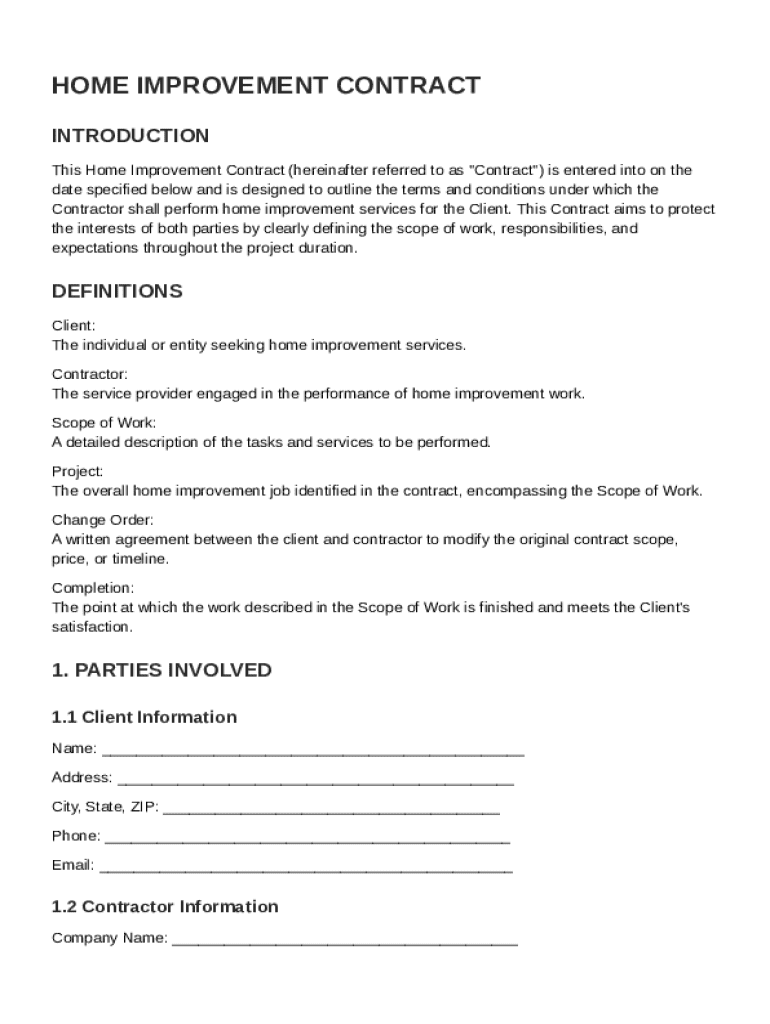
A Home Improvement Contract Template is essential for clearly outlining the agreement between a client and a contractor. This form ensures that all parties understand their roles and responsibilities, reducing the potential for disputes. Key components of such a contract include:
-
Scope of Work: Detailed descriptions of the tasks the contractor will undertake. This includes specifications of materials, start and end dates, and any deliverables.
-
Payment Terms: Clearly defined payment structures, including the total cost, payment schedule, and terms for additional charges.
-
Change Orders: Procedures for managing changes to the original contract, detailing how adjustments to the project's scope or cost will be handled.
-
Warranties: Information regarding the quality guarantees provided by the contractor. This section might include duration and coverage specifics.
-
Termination Clauses: Conditions under which either party might terminate the contract, alongside any penalties or fees associated with termination.
-
Dispute Resolution: Mechanisms for resolving disagreements, potentially including mediation or arbitration procedures.
These elements work together to ensure a comprehensive understanding between all parties involved in the contract.
How to Use the Home Improvement Contract Template
Using a Home Improvement Contract Template effectively involves several key steps to ensure it fully represents the agreement between parties:
-
Customization: Modify the template to fit the specific project by inputting relevant details such as names, dates, and project descriptions.
-
Review: Both parties should review the contract in detail, confirming alignment on all terms and conditions before proceeding.
-
Consultation: Consider consulting with legal professionals to ensure all clauses comply with local laws and are enforceable.
-
Finalization: Ensure the document is complete with all necessary signatures. Use electronic signature tools, like those provided by DocHub, for a seamless process.
-
Distribution: Both parties should retain a copy of the signed document for their records.
Customizing and carefully managing the contract ensures both parties have a clear, binding agreement.
Steps to Complete the Home Improvement Contract Template
Completing a Home Improvement Contract Template requires attention to detail and careful execution of the following steps:
-
Gather Information: Collect all necessary project details, including timelines, cost estimates, and specific work descriptions.
-
Fill Out the Template: Input the gathered information into the template, ensuring accuracy and completeness.
-
Clarify Terms: Ensure all terms like payment schedules, responsibilities, and potential additional costs are clearly spelled out.
-
Review and Edit: Check for errors or omissions. Engage both parties in reviewing the draft to confirm mutual understanding and consent.
-
Sign the Document: Use an electronic signature tool to finalize the agreement. DocHub can facilitate this process by providing legally binding e-signatures and an audit trail for compliance.
By meticulously following these steps, parties can ensure the contract serves its purpose effectively.
Important Terms Related to Home Improvement Contract Template
Understanding key terminology within a Home Improvement Contract Template is crucial for interpretation and implementation:
-
Contractor: The individual or company responsible for completing the work described in the contract.
-
Client: The individual or organization that hires the contractor to perform the specified work.
-
Scope of Work: The comprehensive list of services agreed to by both contractor and client.
-
Change Order: A formal modification to the contract terms or project scope.
-
Arbitration: A method of dispute resolution that involves a neutral third party instead of going to court.
Clarifying these terms helps all parties to have clear expectations and a mutual understanding of the contract's provisions.
State-Specific Rules for the Home Improvement Contract Template
When drafting and executing a Home Improvement Contract Template, the applicability of state-specific regulations must be considered:
-
Licensing Requirements: Ensure the contractor holds a valid license in accordance with state laws.
-
Deposits and Payments: Some states, like California, regulate the maximum deposit allowable prior to work commencement.
-
Right to Cancel: Certain states provide clients with a window within which they can cancel the contract without penalty.
-
Lien Laws: Understand local lien rights for contractors if payments are delayed or defaulted.
Researching and incorporating these state-specific rules helps in drafting a contract that complies with applicable legal standards.
Legal Use of the Home Improvement Contract Template
The legal enforceability of a Home Improvement Contract Template depends on several elements being in place:
-
Legally Competent Parties: All signatories to the contract must be of legal age and mental competence.
-
Clear Offer and Acceptance: The contract should demonstrate that an offer was made and accepted explicitly by both parties.
-
Lawful Purpose: The agreement must involve a legal activity.
-
Consideration: There should be something of value exchanged between the parties, such as payment for services.
-
Written Agreement: Certain contracts must be in writing to be enforceable, depending on state law and contract complexity.
Ensuring these conditions are met fosters a legally binding and enforceable contract.
Examples of Using the Home Improvement Contract Template
Real-world scenarios where a Home Improvement Contract Template proves invaluable include:
-
Renovations: A homeowner seeking kitchen remodeling can use a template to ensure all aspects of the renovation are clearly articulated.
-
Additions: Contractors and clients might outline terms for building additional rooms or structures on existing properties.
-
Repairs: The template covers arrangements for extensive repair work, guaranteeing agreed specifications and completion timelines.
In these examples, the template provides structure and clarity, reducing misunderstandings and protecting both parties' interests.
Versions or Alternatives to the Home Improvement Contract Template
While the standard Home Improvement Contract Template is comprehensive, variations or alternatives exist to meet diverse needs:
-
Short Form Contract: A simplified version for small or straightforward projects that don’t require full documentation of the longer template.
-
Room-Specific Agreements: Contracts tailored to specific types of renovations, like bathrooms or kitchens, facilitating more targeted agreements.
-
Renovation vs. New Construction: Adjustments to templates may be necessary depending on whether the work involves renovating existing structures or building anew.
Choosing the appropriate version ensures the contract aligns with specific project requirements, enhancing clarity and efficacy.