






Definition & Meaning
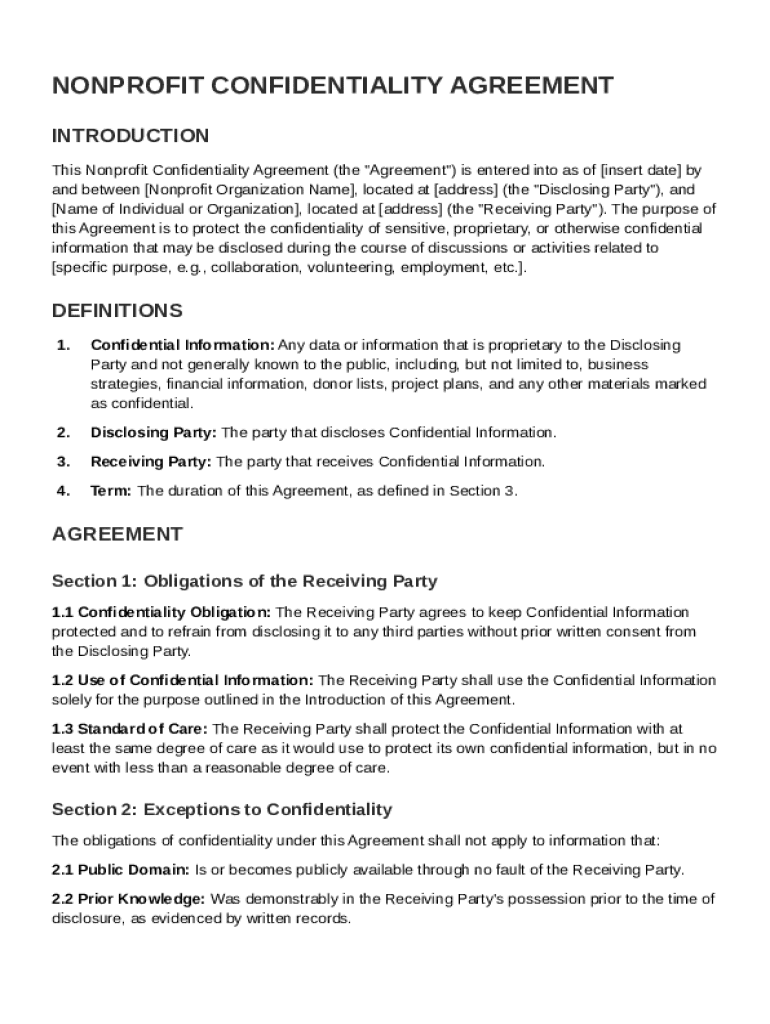
A Nonprofit Confidentiality Agreement Template is a structured legal document that facilitates the protection of sensitive information exchanged between a nonprofit organization, often referred to as the Disclosing Party, and another entity, known as the Receiving Party. This agreement specifies the obligations of the Receiving Party to maintain the confidentiality of the information shared, safeguarding organizational secrets and personal data from unauthorized disclosure. By outlining exceptions, duration, and procedures for handling confidential materials, it ensures that both parties understand their roles and responsibilities clearly.
Key Concepts
- Nonprofit Organization: Typically the provider of confidential data.
- Receiving Party: Any entity, individual, or organization receiving the sensitive information.
- Confidential Information: Any data or material deemed sensitive and proprietary, which is disclosed under specific terms.
How to Use the Nonprofit Confidentiality Agreement Template
Using the Nonprofit Confidentiality Agreement Template involves several steps and considerations to ensure the document serves its intended protective purpose. The template can be adapted to fit the specific needs and circumstances of any nonprofit organization.
Steps to Use the Template
- Identify Parties Involved: Clearly define the Disclosing and Receiving Parties.
- Specify the Scope: Determine the type of information classified as confidential.
- Set the Duration: Define how long the confidentiality obligations will last.
- Outline Exceptions: Specify any scenarios where the confidentiality agreement may be waived or not applicable.
- Add Extra Provisions: Include clauses for governing law, dispute resolution, and severability if necessary.
Key Elements of the Nonprofit Confidentiality Agreement Template
This agreement template consists of several essential elements that must be clearly articulated to ensure comprehensive protection.
Essential Components
- Definition of Confidential Information: Provides clarity on what constitutes confidential data.
- Obligations of the Receiving Party: Outlines their duty to protect sensitive data.
- Duration of Agreement: Specifies time limits for confidentiality.
- Exceptions and Exclusions: Lists conditions under which information may be disclosed.
- Return of Materials: Describes procedures for returning information once the agreement ends.
Steps to Complete the Nonprofit Confidentiality Agreement Template
Completing the Nonprofit Confidentiality Agreement involves a series of methodical steps to ensure its legality and applicability to the involved parties.
Procedural Steps
- Gather Necessary Information: Collect all relevant data pertaining to both parties.
- Use the Template: Fill in all predefined fields with specific details like names, addresses, and descriptions of the parties.
- Review for Accuracy: Ensure that all elements are accurately completed and check for any missing information.
- Obtain Signatures: Secure signatures from authorized representatives of both the Disclosing and Receiving Parties. This can be facilitated through electronic signature platforms such as DocHub.
- Retain Copies: Make copies for both parties as documented evidence of the agreement.
Legal Use of the Nonprofit Confidentiality Agreement Template
Legal aspects are crucial when employing a Nonprofit Confidentiality Agreement to ensure it's binding and enforceable.
Compliance Considerations
- Legal Binding Terms: Ensure all terms meet legal standards for contracts under U.S law.
- Dispute Resolution Processes: Outline measures and processes for resolving disagreements or disputes that may arise.
- Governing Law: Specify which state laws govern the agreement to clarify the legal framework.
- Severability Clause: Include a clause stating that if any part of the agreement is found invalid, the rest remains effective.
Who Typically Uses the Nonprofit Confidentiality Agreement Template
Various entities and individuals may use this type of agreement to safeguard sensitive information pertinent to nonprofit operations.


Common Users
- Nonprofit Organizations: Protecting donor information, business strategies, and internal processes.
- Consultants and Contractors: Handling confidential tasks or projects for nonprofits.
- Nonprofit Partners and Collaborators: Sharing sensitive data during joint ventures or collaborations.

Important Terms Related to Nonprofit Confidentiality Agreement Template
The template includes several important legal and technical terms that define its scope and application.
Critical Legal Terms
- Non-Disclosure: The primary obligation to keep disclosed information confidential.
- Obligation: The Receiving Party's duty to safeguard information.
- Breach: Occurs when the terms of confidentiality are violated.
- Intellectual Property: Includes proprietary insights or innovations belonging to the nonprofit.
State-Specific Rules for the Nonprofit Confidentiality Agreement Template
State-specific regulations can influence how a Nonprofit Confidentiality Agreement is crafted and enforced.
Considerations by State
- Jurisdictional Differences: Different states have unique requirements for contract validity and enforcement.
- State-Specific Laws: Be aware of how state laws affect confidentiality agreements, especially concerning governing law clauses and enforceability.
By integrating these structured elements into the Nonprofit Confidentiality Agreement Template, users can ensure robust protection for sensitive information, adapting the document to their specific organizational needs.