






Definition and Purpose of the Non-Monogamy Agreement Template
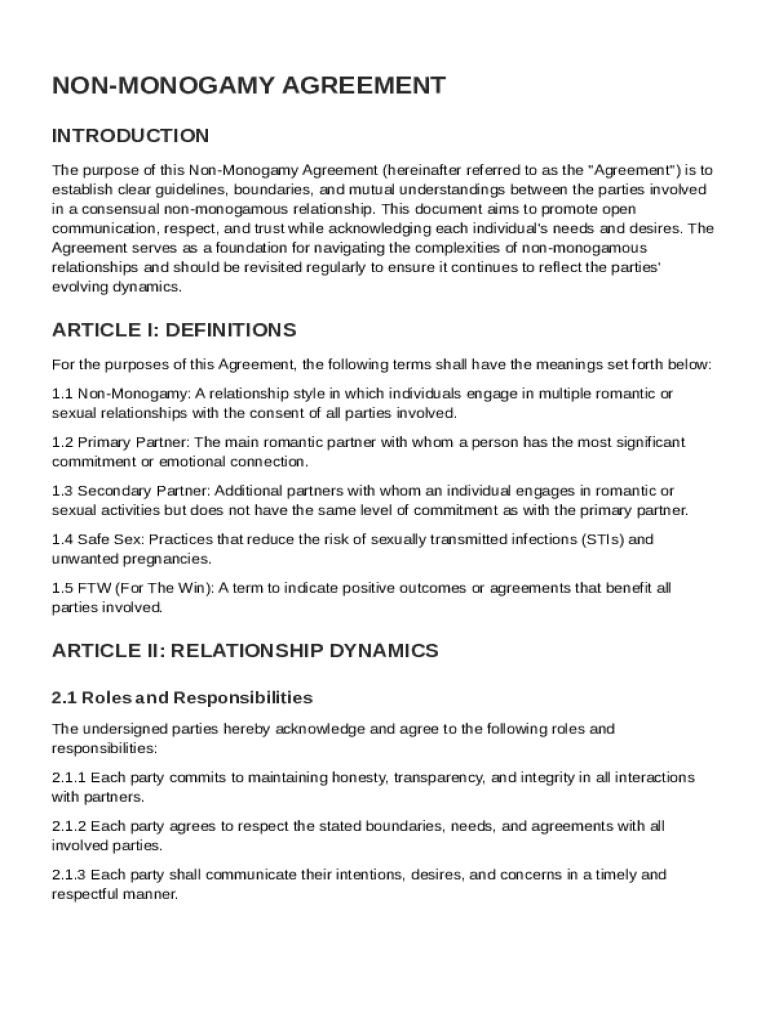
The Non-Monogamy Agreement Template is a structured document designed to facilitate clear communication and mutual agreement among individuals engaged in non-monogamous relationships. This template outlines essential guidelines, boundaries, and shared understandings to ensure that all parties maintain a respectful and trusting relationship. It encompasses a wide range of topics such as emotional and physical boundaries, roles, responsibilities, and time management, offering a comprehensive approach to navigating the complexities associated with consensual non-monogamy.
Components of the Agreement
- Emotional Boundaries: Defines the emotional limits each party agrees to maintain within relationships outside the primary partnership.
- Physical Boundaries: Establishes guidelines for physical interactions with other partners.
- Time Management: Organizes time allocation among partners to ensure balance and fulfillment for all parties involved.
By providing a clear framework, the Non-Monogamy Agreement Template serves as both a preventative measure against misunderstandings and a supportive tool throughout the evolution of non-monogamous relationships.
How to Use the Non-Monogamy Agreement Template
Utilizing the Non-Monogamy Agreement Template involves several key steps to ensure it effectively serves its intended purpose:
- Open Discussion: All parties should engage in an open and honest discussion before drafting the agreement. Express desires, concerns, and expectations.
- Customization: Tailor the template based on individual relationship dynamics. Individual needs may vary considerably, so ensuring these are reflected in the agreement is essential.
- Review and Revise: Regularly revisit and update the agreement as relationships and conditions change.
This process not only helps customize the document to accurately reflect each participant's needs but also reinforces ongoing communication and adaptability.
Key Elements of the Non-Monogamy Agreement Template
The template is composed of several fundamental components that ensure comprehensive coverage of the involved parties' expectations and agreements. These include:
- Conflict Resolution: Mechanisms and strategies outlined for resolving disputes or misunderstandings.
- Review and Amendments: Scheduled reviews to assess the effectiveness of the agreement, with provisions for making necessary amendments.
- Confidentiality: Clauses that protect the privacy and sensitive information of all parties involved.
These elements, when clearly defined, provide a robust framework that supports both immediate needs and long-term relationship goals.
Important Terms Related to Non-Monogamy Agreement Template
Understanding specific terminology is crucial for ensuring clarity and shared understanding within the agreement. Key terms to be aware of include:
- Primary Partner: The individual(s) considered the main partner(s) in a hierarchical non-monogamous structure.
- Compersion: The feeling of happiness stemming from a partner's enjoyment of another relationship.
- New Relationship Energy (NRE): The heightened excitement and infatuation often experienced at the start of a new relationship.
Clearly defining these and other terms within the agreement helps prevent confusion and ensures that all parties share the same understanding.
Legal Use of the Non-Monogamy Agreement Template
While not legally binding like a marriage contract, the Non-Monogamy Agreement Template serves as a mutual pact, enhancing accountability and shared commitment among participants. It is vital to note:
- Legal Recognition: This template does not replace legal documents concerning marriage or domestic partnerships.
- Data Protection: Sensitive personal data shared within the agreement should comply with privacy laws to protect all parties.
Including these legal considerations ensures that the agreement is used ethically and responsibly.
Steps to Complete the Non-Monogamy Agreement Template
To effectively complete the Non-Monogamy Agreement Template, follow these steps:
- Draft Initial Agreement: Fill in the template with the initial terms and conditions agreed upon by all parties.
- Seek Feedback: Each participant reviews the draft, suggesting changes or additions as necessary.
- Finalize and Sign: Once consensus is reached, each party reads through the final document carefully before signing.
- Store Securely: Keep the document in a secure but accessible location. Opt for digital copies with encryption for extra security.
This step-by-step approach ensures accuracy and mutual consent, reinforcing the contract's legitimacy and utility.
Real-World Scenarios of Using the Non-Monogamy Agreement Template
Real-world application of the Non-Monogamy Agreement Template can be seen in various relationship dynamics:
- Triads or Quads: Individuals in triads or quads use the template to delineate interpersonal dynamics and shared expectations.
- Long-Distance Relationships: Couples geographically separated may find structuring an agreement essential for maintaining connection and understanding.
- Intersection with Parenting: Partnered parents might include childcare and parental roles within their non-monogamy agreement to ensure balanced responsibilities.
These examples demonstrate the template's flexibility and utility across diverse non-monogamous arrangements.
Versions and Alternatives to the Non-Monogamy Agreement Template
Several variations of non-monogamy agreements exist to cater to different needs and preferences:
- Open Relationship Agreements: More generalized frameworks for partners interested in exploring non-exclusive relationships.
- Polyamory Contracts: Focused specifically on managing multiple committed relationships simultaneously.
- Casual Partnership Agreements: Less formal documents outlining boundaries for less committed non-monogamous interactions.
Understanding these alternatives allows users to select or adapt a version most suitable for their unique relationship goals.
By carefully examining these aspects, users can create an agreement that not only caters to their current relationship needs but evolves with them. Each block of this comprehensive coverage provides deep insights into utilizing a Non-Monogamy Agreement Template effectively.