Definition and Meaning
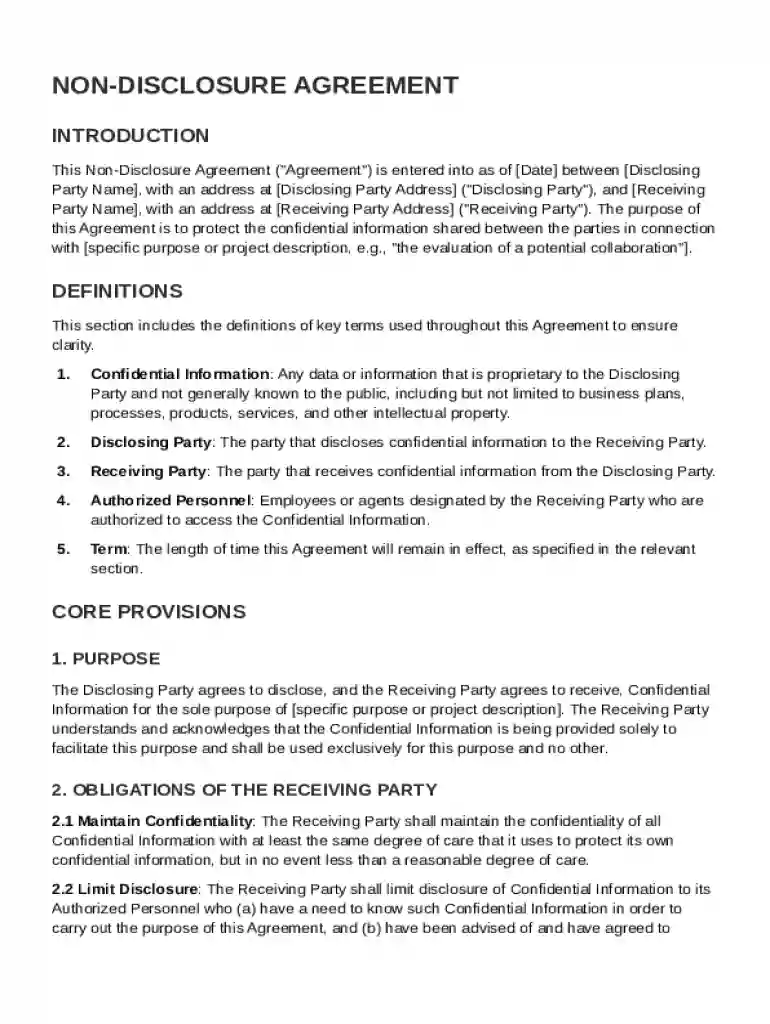
A Non-Disclosure Agreement (NDA) Template is a pre-formatted legal document designed to facilitate the creation of a binding agreement between two parties regarding the confidentiality of shared information. This template serves as a basis for establishing the terms under which sensitive and proprietary information can be exchanged between the Disclosing Party and the Receiving Party without risking unauthorized disclosure.
Components of the NDA Template
- Parties Involved: Defines the Disclosing and Receiving Parties, establishing who will be sharing and who will be safeguarding the information.
- Confidential Information: Outlines what constitutes confidential information, including trade secrets, business strategies, or any other proprietary data.
- Duration: Specifies how long the confidentiality obligations are in effect, which can range from a few years to indefinitely, depending on the nature of the information.
- Obligations of Receiving Party: Details the responsibilities of the Receiving Party in ensuring protection and non-disclosure of the shared information.
- Exclusions: Clarifies what information is not considered confidential, such as information already in the public domain or independently developed data.
Steps to Complete the Non-Disclosure Document Agreement Template
Completing the Non-Disclosure Agreement Template involves several crucial steps to ensure all necessary details are captured for legal enforceability.
- Identify Parties: Clearly specify the full legal names of both the Disclosing and Receiving Parties.
- Define Confidential Information: Accurately list the types of information that will be shared and are to be kept confidential.
- Set Obligations and Exclusions: Detail the responsibilities of the Receiving Party and any exclusions to what is deemed confidential.
- Determine Duration: Establish the time period for which the NDA will be active, considering the sensitivity of the information.
- Legal Review: Have the draft reviewed by a legal professional to ensure compliance with relevant laws and completeness.
- Execute the Agreement: Secure signatures from both parties to formalize the agreement.
Tips for Completion
- Utilize clear and specific language to prevent ambiguities.
- Ensure consistency in terminologies used throughout the document.
- Consider potential legal disclosures and include relevant clauses where applicable.
Key Elements of the Non-Disclosure Document Agreement Template
Key elements form the foundation of an effective NDA template, ensuring that both parties have a clear understanding of their rights and obligations.
Critical Provisions
- Definitions: Clear explanations of terms and terminologies to prevent misunderstandings.
- Non-Disclosure Obligations: Specific instructions regarding the protection and non-disclosure of the confidential information.
- Remedies: Stipulations detailing consequences and legal recourse available in the event of a breach.
- Governing Laws: Indication of which state laws will govern the agreement to ensure enforceability and alignment with local legal standards.
Practical Examples
- A technology company sharing proprietary software code with a development partner.
- A startup disclosing its business model to investors while seeking funding.
Legal Use of the Non-Disclosure Document Agreement Template
The NDA template is used to form legally binding agreements designed to protect sensitive information across a variety of professional scenarios.
Legal Considerations
- State Laws: The NDA should be crafted in compliance with state-specific regulations to ensure validity.
- ESIGN Act Compliance: Employ digital signatures where necessary, ensuring they are recognized legally under the ESIGN Act.
Use Cases
- Collaborative projects between different businesses requiring sharing trade secrets.
- Entering into partnerships where strategic information sharing is necessary.
Why You Should Use a Non-Disclosure Document Agreement Template
Using an NDA template can significantly mitigate the risks associated with unauthorized information sharing, thus protecting business interests.
Benefits of Templates
- Efficiency: Pre-formatted templates save time, enabling quick adaptation to specific needs.
- Consistency: Provides a structured approach to confidentiality restrictions, ensuring thorough coverage of all critical aspects.
- Legal Protection: Offers a clear framework backed by legal principles to protect sensitive information.
Scenarios Benefiting from NDAs
- Companies engaging in research and development collaborations.
- Businesses outsourcing tasks involving access to proprietary data.
State-Specific Rules for the Non-Disclosure Document Agreement Template
While NDAs serve a universal purpose, their legal enforceability can vary depending on jurisdictional stipulations.
Considerations in the U.S.
- Variability in Duration and Scope: States may have different rules regarding acceptable timeframes or the breadth of what can be deemed confidential.
- Court Interpretations: Some states may interpret and enforce agreements differently, necessitating tailored language and provisions.
Illinois vs. California Example
- Illinois: Typically allows for broader definitions of trade secrets.
- California: Often has more stringent limitations on what can be considered confidential under NDAs.
Important Terms Related to the Non-Disclosure Document Agreement Template
Familiarity with key terms ensures proper use and understanding of the agreement.
Common Terminologies
- Confidential Information: Data or material intended to be kept secret.
- Disclosing Party/Receiving Party: Entities involved in sharing and receiving information, respectively.
- Trade Secret: A type of confidential information that provides a competitive edge.
- Breach: Failure to uphold obligations as specified in the agreement.
Consequences of Breaching an NDA
- Legal penalties and potential damages.
- Loss of business reputation and trust.