




Definition & Meaning
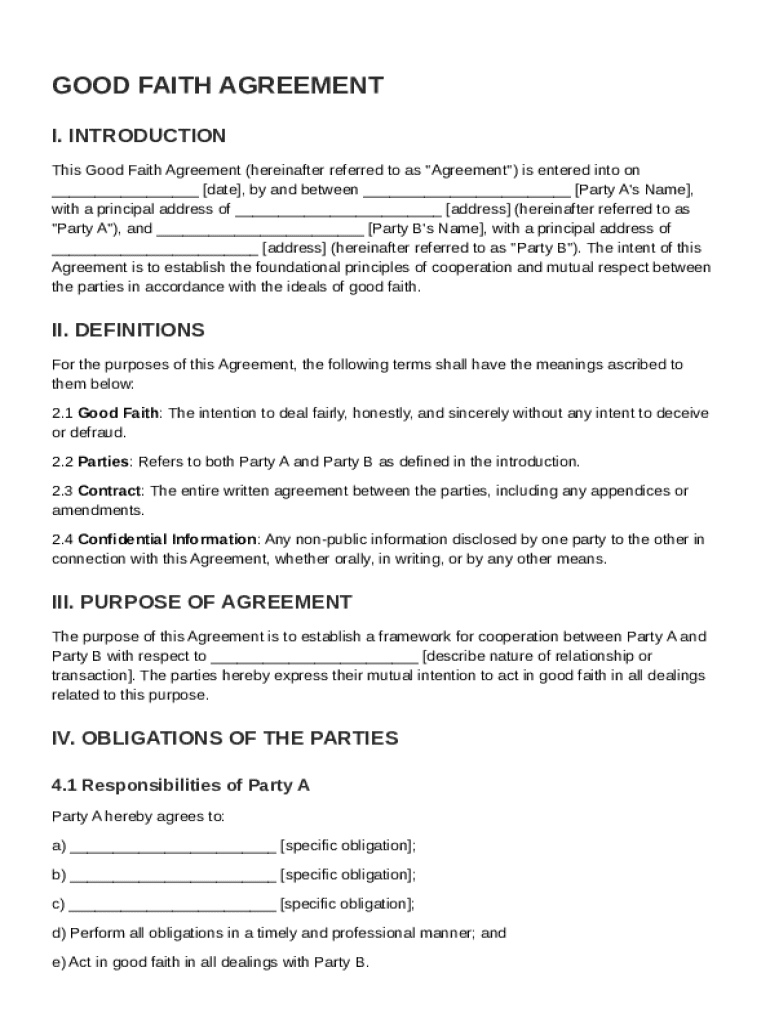
The Good Faith Contract Template is a legal document designed to establish a framework of cooperation and mutual respect between two parties, commonly referred to as Party A and Party B. This template emphasizes the importance of acting in good faith, which involves honesty, fairness, and reasonableness. The document typically defines key terms, outlines each party's obligations, and sets procedures for communication, conflict resolution, confidentiality, and termination. By explicitly stating these elements, the template aims to foster a collaborative environment in which both parties are committed to adhering to their responsibilities and maintaining confidentiality.
Key Elements of the Good Faith Contract Template
A Good Faith Contract Template generally comprises several critical elements that lay the foundation for a trusting and equitable business relationship. These elements include:
- Definitions: Clearly define any specialized terms used within the contract to prevent misunderstandings.
- Obligations of Parties: Outline what each party is expected to do, ensuring the duties are specific, measurable, and achievable.
- Procedures for Communication: Establish clear lines and methods of communication to prevent disputes and ensure timely information exchange.
- Conflict Resolution: Include mechanisms for resolving disputes, such as mediation or arbitration, which can provide a cost-effective alternative to litigation.
- Confidentiality Agreements: Protect sensitive information shared during the contract's term, specifying what can be disclosed and to whom.
- Termination Clauses: Specify the conditions under which the agreement can be terminated to avoid potential breaches and ensure orderly exit processes.
How to Use the Good Faith Contract Template
Utilizing a Good Faith Contract Template involves a systematic approach to ensure comprehensive coverage of all relevant aspects. Here’s a step-by-step guide to using the template effectively:
- Customization: Adapt the template to suit the specific needs and context of the parties involved. This customization involves filling in the names, roles, and details pertaining to the specific agreement.
- Review Definitions: Familiarize yourself with the defined terms within the template and ensure all parties have a mutual understanding.
- Specify Obligations: Identify the unique obligations pertinent to each party, detailing what needs to be accomplished within the contract's framework.
- Set Communication Protocols: Determine the preferred communication channels and frequency to facilitate seamless operations and feedback.
- Discuss Conflict Resolution: Agree on methods for resolving potential disputes, such as involving a neutral mediator, to maintain professional interactions.
- Apply Security Measures: Incorporate any necessary clauses to protect confidential information, tailoring the template’s provisions to the sensitivity of the shared data.
- Establish Termination Protocols: Clearly define the scenarios and processes that will lead to the contract’s termination to safeguard both parties' interests.
Legal Use of the Good Faith Contract Template
The Good Faith Contract Template is often employed in various legal contexts to lay the groundwork for fair dealings and mutual collaboration. It functions as a legally binding agreement, adhering to principles found in U.S. contract law. When using this template, parties should:
- Ensure that all clauses comply with federal and state laws pertinent to their specific industry and locale.
- Verify that the parties involved have the legal capacity to enter into the contract, which includes age, soundness of mind, and authority to represent a business if applicable.
- Consider any additional state-specific legal requirements or customary practices that might influence the contract's enforceability.
- Obtain legal counsel if necessary to verify that the template's terms are appropriately tailored and enforceable in the intended jurisdiction.
Steps to Complete the Good Faith Contract Template
Completing a Good Faith Contract Template involves preparatory research, document drafting, and consensus-building between the involved parties. Follow these procedural steps:
- Initial Planning: Gather all necessary information about the involved parties and the scope of the agreement. This includes basic details, the objective of the contract, and specific responsibilities.
- Drafting: Begin drafting the document using the template as a guide. Ensure you personalize the sections to reflect the specifics of the agreement while maintaining the template's structure.
- Review and Revise: Conduct thorough reviews of the draft to identify any areas that require clarification or additional detail. Invite input from legal advisors or third parties if needed.
- Negotiation: Present the draft to the involved parties for discussion. Negotiate any terms that may need adjustment and make amendments accordingly.
- Finalization: Prepare the final version of the document, ensuring all agreed-upon terms are included, and both parties understand their obligations.
- Signing: Facilitate a signing session where both parties can sign the document, witnessed if required. Ensure each party receives a copy for their records.
Who Typically Uses the Good Faith Contract Template
The Good Faith Contract Template is commonly used by businesses and individuals seeking to establish a foundational relationship based on mutual trust and cooperation. Typical users include:
- Business Partners: Entering joint ventures where transparency and fair dealing are essential for success.
- Service Providers and Clients: Outlining the scope of work, payment terms, and confidentiality agreements for service agreements.
- Employment Relationships: Establishing expectations and obligations between employers and employees in a new partnership.
- Vendors and Suppliers: Detailing orders, deliveries, payment, and confidentiality agreements to ensure smooth business operations.

State-specific Rules for the Good Faith Contract Template
While the fundamental principles of good faith are universally recognized, each state in the U.S. may have specific laws and rules regarding contract formation, enforcement, and interpretation. Here are some considerations:
- Variations in Definitions: Some states may have divergent interpretations of good faith, affecting how contracts are adjudicated.
- Local Business Norms: States may have customary business practices that influence contract negotiations and terms.
- Regulatory Compliance: Certain industries might need additional compliance checks in line with state laws and sector-specific regulations.
Important Terms Related to Good Faith Contract Template
Understanding key terms associated with a Good Faith Contract Template is crucial for effective usage and compliance. Here are vital terms often used:
- Good Faith: Signifies honesty, fairness, and reasonableness expected in all dealings under the contract.
- Mutual Obligations: Refers to the duties both parties are committed to perform as stipulated in the contract.
- Termination Clause: Specifies the circumstances under which the contract may be ended before fulfilment.
- Confidentiality Agreement: A binding commitment to protect and refrain from disclosing specified information to unauthorized parties.
These terms help frame the intentions and responsibilities of each party in the Good Faith Contract, ensuring clarity and consistency throughout the document’s lifecycle.