






Definition & Meaning
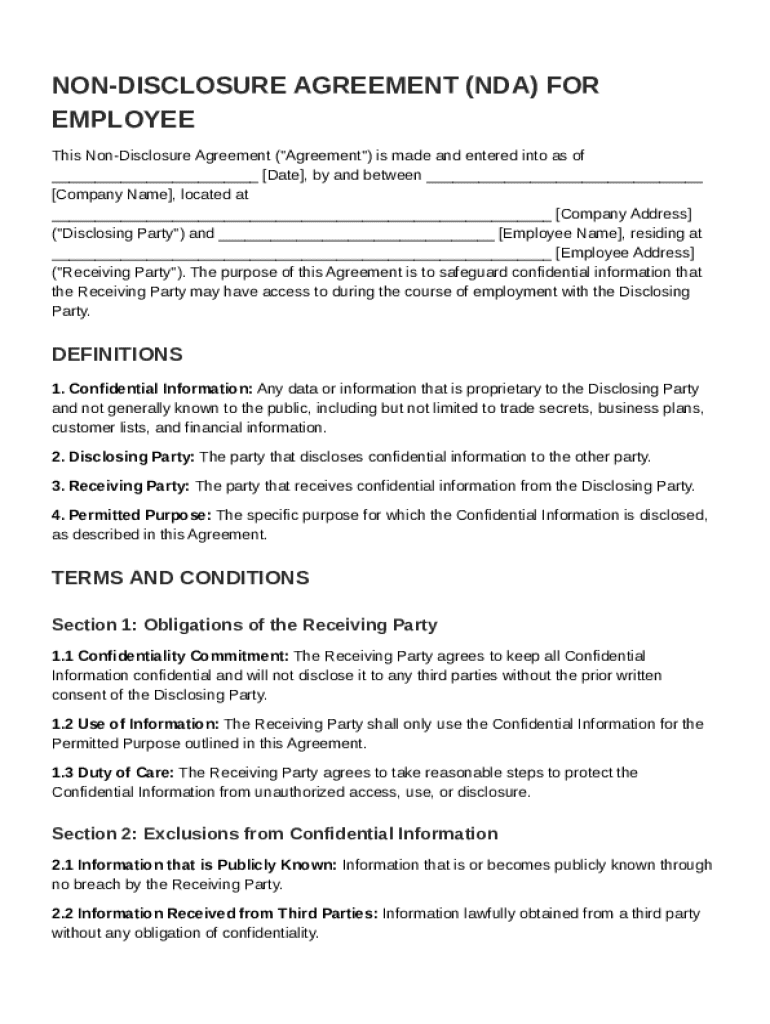
A Non-Disclosure Agreement (NDA) for an Employee Agreement Template is a legal document designed to protect confidential information accessed by an employee during their employment with a company. NDAs are crucial in maintaining the confidentiality of sensitive information such as trade secrets, proprietary data, client lists, and other critical business information. The agreement establishes the rights and obligations of both parties concerning the handling of confidential information, ensuring that the company’s interests are safeguarded. In most cases, the document outlines what is considered confidential, obligations of the employee, exclusions from confidentiality, and the duration of the confidentiality obligations. NDAs are essential tools for businesses looking to protect their intellectual property and maintain a competitive edge.
How to Use the Non-Disclosure NDA for Employee Agreement Template
Using the Non-Disclosure NDA for Employee Agreement Template involves several steps to ensure its effectiveness and legality:
-
Review Template: Start by thoroughly reviewing the template to ensure it matches the company's specific confidentiality needs. Make necessary edits to customize it to your business requirements.
-
Identify Confidential Information: Clearly define what constitutes confidential information within your business context. This might include proprietary data, business plans, and technical information.
-
Set Terms and Duration: Determine the length of the confidentiality period and clarify the employee's obligations during and after their employment.
-
Include Exclusions: List any exceptions to what is considered confidential, which might include publicly available information or data received from third parties without restrictions.
-
Finalize and Distribute: After tailoring the template, distribute it to employees for review and agreement. Ensure both parties fully understand their obligations and rights under the NDA.
Steps to Complete the Non-Disclosure NDA for Employee Agreement Template
Completing the NDA template requires several critical steps to maintain legal effectiveness:
-
Gather Essential Information: Gather all necessary details, including the employee’s and employer's names, company address, and details about what will be deemed confidential.
-
Customize for Your Needs: Modify sections to specify the types of information that need protection, the scope of the employee’s confidentiality obligations, and any legal jurisdictions.
-
Clarify Employee Obligations: Outline what the employee can and cannot do with the confidential information, which may include restrictions on sharing, copying, or using the information for personal gain.
-
Determine Handling of Violations: Include terms regarding the penalties or actions to be taken if the NDA is breached, and potential remedies the company may pursue.
-
Sign the Agreement: Both the employer and the employee should sign the document. It’s advisable to keep copies of the signed agreements in the company’s records.
-
Review Periodically: Regularly review and update the NDA to account for any changes in business practices or legal requirements.
Key Elements of the Non-Disclosure NDA for Employee Agreement Template
The NDA template comprises several essential components to adequately protect a company’s confidential information:
-
Definition of Confidential Information: A section that precisely defines what information is protected under the agreement.
-
Exclusions from Confidential Information: Clearly outlines what is not included under the confidentiality protection, ensuring both parties are on the same page.
-
Obligations of the Employee: Details the responsibilities of the employee concerning the handling, sharing, and protection of the confidential information.
-
Duration: Specifies the timeframe during which the confidentiality obligations are in force, which can extend beyond the period of employment.
-
Return or Destruction Clause: States the requirement for the employee to return or destroy any confidential information upon termination of employment.
-
Governing Law: Identifies the legal jurisdiction under which the agreement will be interpreted and enforced.
Legal Use of the Non-Disclosure NDA for Employee Agreement Template
The legal use of a Non-Disclosure NDA involves several important aspects to ensure enforceability:
-
Legal Compliance: Ensure that the NDA complies with applicable federal and state laws. Customizing the agreement based on jurisdictional requirements is crucial.
-
Mutual Agreement: The NDA must be mutually agreed upon, with both parties fully understanding their rights and obligations.
-
Enforceability: For an NDA to be enforceable, it should contain clear and specific language outlining the scope and limitations of confidentiality requirements.
-
Good Faith: Both parties should enter into the NDA with honest intentions and a clear understanding of the terms.
-
Dispute Resolution: It is wise to include a clause that outlines how disputes related to the NDA will be resolved to save time and costs in potential legal proceedings.
Who Typically Uses the Non-Disclosure NDA for Employee Agreement Template
The NDA for Employee Agreement Template is typically utilized by a wide range of users, including:
-
Corporations and Businesses: Companies use NDAs to protect proprietary information during and after employees' tenure with the company.
-
Start-Ups and Entrepreneurs: Emerging businesses and entrepreneurs protect their innovative ideas and business models from being leaked or copied.
-
Human Resources Departments: HR professionals integrate NDAs into employee onboarding packets to ensure legal safeguard from the start of employment.
-
Legal Professionals: Lawyers and legal advisors often draft or review NDAs to customize them according to their clients' needs.


Important Terms Related to Non-Disclosure NDA for Employee Agreement Template
Understanding NDAs requires familiarity with several key terms:
-
Confidential Information: Data or information considered valuable and proprietary to a business, warranting protection through an NDA.
-
Third-Party disclosures: Situations where information may be disclosed to parties not initially covered by the NDA under specific conditions.
-
Breach of Contract: Any unauthorized use or disclosure of confidential information that violates the NDA’s terms.
-
Remedy: Legal actions or penalties imposed in response to a breach, aimed at protecting the company’s sensitive data.
-
Severability: A provision that allows the agreement to remain effective even if some clauses are deemed unenforceable by a court.
Examples of Using the Non-Disclosure NDA for Employee Agreement Template
Real-world scenarios where NDAs are employed include:
-
Technological Innovations: NDAs are used when developing new technology, ensuring that prototypes or concepts do not fall into competitors' hands.
-
Business Partnerships: In partnerships, NDAs prevent partners from using sensitive business information for purposes other than those intended.
-
Product Launches: Companies engaging in product development and launch strategies utilize NDAs to prevent leaks before public announcements.
-
Financial Discussions: During merger or acquisition talks, NDAs protect sensitive financial data that could impact negotiations if disclosed.
-
Marketing Strategies: Organizations protect detailed marketing strategies and plans to prevent an early reveal to competitors.